Fat-bike conversions are a small corner of the kit market, and we have already reviewed three GOSHET listings in it. This page turns out to be the family's second storefront: the same 48V fat snow motor, sold again under a different ASIN, with its own price and its own written record.
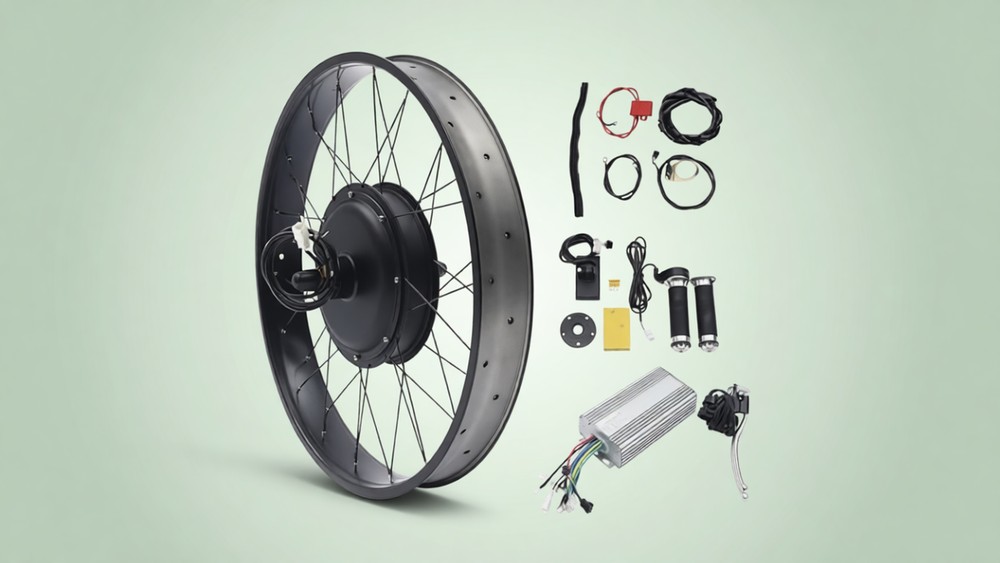
At 149 with a buy box when we checked, the kit sits close to the middle of the 191 conversion kits we track by price, and our own data row still says 210, so the row has drifted high against the live page. What a buyer gets for the money is a 22-pound gearless hub kit with an LCD display and no battery.
The interesting part is not the spec sheet. It is that the two listings now carry two independent owner reports, and both flag the same fault.
The short verdict: the GOSHET 48V 1500W fat snow conversion kit is a mid-pack-priced direct-drive hub whose two written owner reports agree on one complaint, no acceleration or torque, and whose printed speed figure belongs to a smaller wheel than the one this variant wears. It earns a look as a cheap way to motorize a fat bike. It does not earn trust in its claimed wattage or its claimed top speed, and the record is one text deep.
One motor, two listings, two records
The family structure explains most of the confusion on this page. The first GOSHET storefront we reviewed sells four variants: a 20-inch front wheel at 1KW, a 20-inch rear, and two 26-inch rear wheels at 1.5KW. This listing sells the same motor again, and its own spec table prints yet another ASIN than the one in the page URL, so the page you order from and the page that renders may not even agree on which product they are.
The rating blocks disagree the same way. The top of the page reads 4.2 out of 5 from 11 ratings, which is the family number. The reviews page for this ASIN reads 3 global ratings, all five stars, with one written review. Neither block tells you which variant earned the stars, so treat every figure on the page as background noise and read the text.
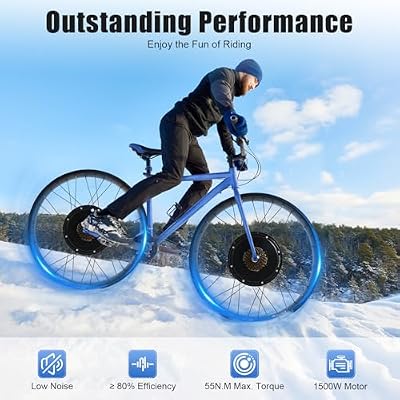
The wattage argument our GOSHET 26-inch review documented is still live here in a new form. Our data and the API title say 1500W. The live page title has dropped the wattage entirely. The live spec table says 1000 watts. That is the same claim stated three ways across two listings, and at 48 volts the difference matters: a 1,500-watt draw is about 31 amps and a 1,000-watt draw is about 21, which decides how much battery your BMS must tolerate.
What the one owner wrote
The single written review on this ASIN is a confirmed purchase from July 2025 with three helpful votes, and it reads like a three-star wearing a five. The owner wishes the rims were better quality metal. The hub hums pretty loud. There is no acceleration or torque. Then, almost in passing, the owner calls the top speed good.
Four facts, one text, and not one of them is about range, install time, waterproofing, or how the kit behaves on the snow it is named for. Nobody has written down whether the 20-inch or 26-inch variant actually arrived. That is the whole record, and it is honest about its size: one owner, one ride report, no follow-up.
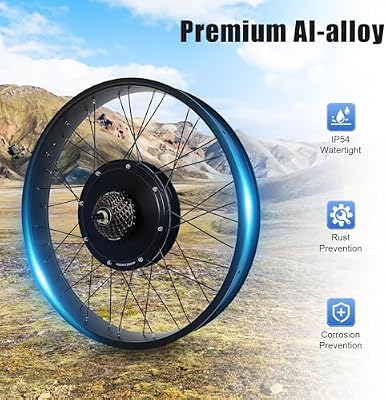
The rim complaint is worth taking seriously because the listing confirms the hardware. The material row reads aluminium plus iron plus magnetic steel, and a bullet advertises iron wheels as a durability feature. One owner has found the same iron rims to be the part they would upgrade first.
Two owners, the same complaint
The first listing's owner, in October 2025, wrote that the kit accelerates well but has no torque worth the name, and floated a controller swap as the possible fix. This listing's owner, a few months before that, wrote no acceleration or torque with good top speed. Two buyers, two pages, same motor, same conclusion.
The agreement matters because it rules out the cheap explanations. One text could be a dud unit, a mismatched battery, or a heavy rider. Two texts on two listings point at the design, and the design is a gearless direct-drive hub, which trades low-end torque for simplicity and fewer wear parts (Wikipedia). On a fat bike, where the motor swings unsprung inside a heavy wide wheel, the low-end deficit shows up exactly where these owners felt it: pulling away and climbing.
The two owners disagree on noise, and the disagreement tells us something rather than cancelling out. One calls the kit not too loud. This one says the hub hums pretty loud. A gearless hub has no gearbox between the motor and the road, so the motor's own sound is what you hear, and how loud that gets tracks speed, load, and how sensitive each rider is. Plan on hearing the motor.
The speed figure that belongs to another wheel
Bullet two prints the kit's most checkable claim: up to 500rpm and a no-load speed of 29.82 mph. The two numbers only agree on one wheel. A speed of 29.82 mph at 500rpm works out to 1.6 meters per wheel turn, and 1.6 meters is what a 20-inch wheel rolls in one turn. The 26-inch fat tire this variant wears rolls about 2.3 to 2.4 meters per turn, which puts 500rpm closer to 43 or 45 mph no-load.
So the printed speed figure was computed for the 20-inch variant and pasted onto the 26-inch page, more evidence that the copy is recycled across the family the way the front-wheel bullets are. The error runs in the buyer's favor on paper, but it still means the only speed figure on the page describes a wheel you are not buying. Treat the real no-load ceiling as unknown and any riding speed as lower than that.
The same bullet block claims the controller can help you ride double the distance, a figure nothing on the page grounds, and the complete-kit bullet promises no separate parts while the included-components row names only a bicycle conversion kit. None of this is unusual in the band. All of it is a reason to ask the seller what actually ships before you order.
Iron rims and what to check before ordering
The build order for this kit is mostly a checklist of things the listing will not settle for you. First, confirm the wheel: 20-inch or 26-inch, front or rear, because the title says Rear/Front and the bullets say front while our row says rear. Second, confirm the wattage, because the page states it two ways and the answer changes the battery you need. Third, measure your dropouts, because a fat-bike hub is wider than a standard mountain bike frame takes.
Then plan the two upgrades the record points at. The rims are the owner-flagged wear part, and a better-quality rim laced to this hub is a normal wheel-builder job. The torque is the design-flagged gap, and a controller swap is the fix the first listing's owner floated. Neither is a reason to skip the kit at this price. Both are reasons to budget for them.
The honest case: a 149 direct-drive fat-snow hub with an LCD display, sitting mid-pack in our conversion kit comparison table, backed by two owners who agree on exactly what it lacks. If your build is a flat-ground cruiser and top speed matters more than punch, the record supports the purchase. If you live where the road tilts, read our GOSHET 26-inch review for the sibling listing and its controller-swap plan, and our Lariden 20-inch 1500W review for the closest cross-brand alternative.
FAQ: picking between the two GOSHET pages, the wattage question the page answers two ways and the direct-drive hum
Which GOSHET listing should I buy?
They sell the same motor family. Each carries one written text, which is why reading both matters: two independent owners of the same motor is the closest thing to a pattern this record will produce. Check both pages' spec tables against each other before ordering, because the spec tables print different ASINs and different wattages, and the rating counts are family numbers rather than verdicts on either wheel.
Is it really 1500W?
The page cannot say. The variant names and our data row say 1.5KW, the live spec table says 1000 watts, and the live title omits the number. Ask the seller which figure applies to the variant you are buying, and size your battery's BMS for the larger figure, about 31 amps at 48V, so the pack survives either answer.
How fast will it go?
The printed claim, 29.82 mph no-load at up to 500rpm, describes a 20-inch wheel. On the 26-inch fat tire this variant wears, 500rpm would be roughly 43 to 45 mph no-load, and real riding speed sits well below any no-load figure. No owner has reported a specific speed, so treat the top speed as unmeasured.
Why does the hub hum?
A gearless direct-drive hub has no gearbox between the motor and the road, so the motor's own sound is what reaches your ears. One owner reports a loud hum and another reports the kit not too loud, so expect some motor noise that grows with speed and load rather than a silent ride.