A battery page you saved six months ago is supposed to be a shortcut. You compared the specs, you maybe even added it to a cart, and when you come back the price and the title should still be there waiting for you.
This one is not. The GOKEEP page that used to sell a 52V 18.2Ah pack for the L20PRO now sells a 48V 15.6Ah pack for a different bike, under the same URL, and nothing on the page says anything changed.
That is a harder situation than it sounds, because the old specs are the reason you saved the page. Checking a listing that swapped under you takes different steps than checking a listing that stayed put, and a page with no reviews at all gives you no shortcuts.
Here is what the live listing actually says, what the numbers on it allow you to work out, and which checks to run before you order a pack whose seller tells you almost nothing.
The pack under this URL is not the pack the page used to sell
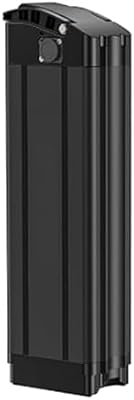
The listing checked today sells a 48V 15.6Ah pack of about 748.8Wh, titled for the EP26PRO, at a checked price of 249.99. That is not a trim update to the old product. The 52V 18.2Ah pack this article was originally written around, the one aimed at the L20PRO, is gone from Amazon entirely, and the URL now points at a different battery for a different bike.
The new listing is also one of the thinnest I have read on this site. It carries one bullet, Removable Lithium Battery, no star rating, no written reviews, and a one-year manufacturer warranty.
At 249.99 the pack costs about 33 cents per watt-hour, which lands close to the middle of the 301 batteries we track. You can see where it sits against everything else on our battery comparison table. Note that our table still holds an older stored price of 199.99, taken before this check, so the specs box shows a slightly kinder cost per watt-hour than the listing does today. It is an ordinary price either way, not a bargain, and the price is the least of the open questions on a page with no owner record behind it.
What changed and who it matters to
The swap matters to two different buyers. If you own an L20PRO and wanted the 52V pack, this GOKEEP page can no longer sell it to you, and no amount of scrolling will bring it back. If you are shopping for an EP26PRO battery, the page is now actually about your bike, but you are buying without a single public report on whether the pack holds its rated capacity.
Voltage is the first thing to check on any replacement, and the change from 52V to 48V is not cosmetic. A controller that expects 52V may refuse to run a 48V pack or may run it badly, and the chargers differ too.
Our comparison table already tracks the new variant at 48V 15.6Ah, so the specs box below this article renders the live product, not the old one. That box is the honest summary. The URL is just where the old summary used to live.
The practical lesson here is one worth keeping: a listing URL is not a product identity. Sellers reuse pages, swap variants and retire packs without leaving a note. When a saved link matters to you, re-read the whole page before you reorder.
A listing that tells you almost nothing
Sixteen spec-table fields and one bullet is what this listing offers. Some of the table is noise: it lists the pack as Single Use under reusability, on a rechargeable lithium-ion battery, which is the kind of template sloppiness that makes the rest of the table worth double-checking. The sales rank sits in the scooter category on a pack titled for an ebike.
What the listing does not state matters more. There is no BMS continuous amp rating, no charger amperage, no cycle-count claim, no cell brand, and no compatibility list beyond the EP26PRO in the title.
Without a BMS figure you cannot check the pack against your motor's wattage. Without charger amps you cannot estimate charge time. Those are not exotic specs, they are the two numbers that decide whether the pack works with your bike at all.
Four questions to send the seller before you order
Ask for the continuous BMS amps in writing, along with your motor's wattage in the same message, so the answer has to account for your build. Ask what the included charger puts out in amps, because that sets your charge time.
Ask which connector sits on the discharge port, and count the pins on your old pack while you are at it. And ask whether the pack physically matches your mount, in writing, so the return conversation has something to point at. A seller who answers four plain questions is a different risk than one who answers none.
Range and charge math from the numbers given
The capacity is the one number the listing gives plainly. At 48 volts and 15.6Ah you get 748.8Wh, which is a decent size for a 48V pack.
At the 20Wh-per-mile figure a throttle-heavy rider sees, that covers about 37 miles. At 35Wh per mile, which is what gentle pedal assist costs, it covers about 21. The honest answer sits between those two, and where it lands depends almost entirely on how much you pedal.
There is no range claim on the listing to argue with, which is one of the few mercies of a thin page. Sellers who invent a 60-mile figure for a pack this size are harder to deal with than a seller who says nothing at all.
Charge time cannot be worked out because the listing states no charger amperage. If the included charger turns out to be the common 2A type, a full charge of 15.6Ah takes roughly 8 hours, but that is an assumption until the seller confirms the amps. On lifespan, the listing claims no cycle count either, so there is nothing to verify there.
Consumer lithium-ion packs are normally specified for 300 to 500 full cycles, per Battery University, and any seller claim beyond that band deserves a question about the test conditions behind it.
Fit and weight checks a thin listing forces on you
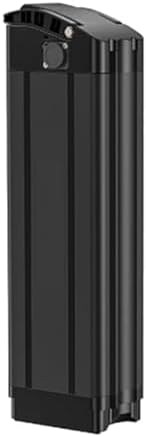
The listing gives external dimensions of 15.75 by 7.87 by 5.12 inches and a weight of 9.8 pounds, and names no bike beyond the EP26PRO. Fit is therefore the buyer's problem, and the listing's thinness does not excuse you from the checks, it just means nobody else has done them.
The weight is worth a moment of arithmetic. 748.8Wh in a 9.8 pound pack works out to about 168 watt hours per kilogram, slightly above the 90 to 160 band a finished pack normally reaches. That is not proof of anything on its own, pack designs vary, but it is close enough to the edge of the band that the first full charge deserves a meter.
Tape, weigh, meter
Tape the old pack in all three dimensions before you order, because a tenth of an inch in the wrong place is the most common fit failure there is.
Weigh the new pack on arrival and compare it against the listing's 9.8 pounds. Meter the first full charge with a watt meter or a charger that reports watt-hours, and see how close to 748.8Wh it actually takes. Those three checks, in that order, catch the fit problems, the mislisted weights and the optimistic capacity figures that reviews would normally catch for you.
FAQ: the switched 48V listing, the one-year warranty on an empty record and the cycle count nobody claimed
Is this still the 52V 18.2Ah battery the old page described?
No. The live listing is a 48V 15.6Ah pack for the EP26PRO, and the 52V pack is gone from Amazon. Our specs box tracks the current variant.
Will it fit my bike?
The listing names only the EP26PRO. Measure your mount, tape your old pack and check the connector before you order anything.
What warranty covers it?
One year per the manufacturer warranty in the spec table. Read the seller's return terms too, because a listing this thin rarely explains its own returns. You can check the listing's current state before you commit.
How long will the pack last?
Nobody knows, and the listing claims no cycle count. Consumer packs are normally rated at 300 to 500 full cycles, and metering the first full charge is the only check available on a page with no reviews.
Is the price good value?
At the checked price of 249.99 the pack costs about 33 cents per watt-hour, close to the middle of the packs we track on /ebike-batteries/. Ordinary pricing on a listing with an empty owner record, so the value case rests entirely on the pack measuring up.