A German pilot half helmet is a style purchase first and a safety purchase second, and the buyers know it. The GFUERUFQ G-0 copies the vintage military crewman look, carries DOT certification on the label, and sells at a checked price of 37.58, which puts it near the bottom of the market.
The record is unusually one-sided about what goes wrong. Eight of the ten newest buyer texts, every one a confirmed purchase, say the same thing: this helmet runs small, the size chart overstates what fits, and there is no XXL to escape to. The counterweight is real too. Three texts praise the build even where the fit failed, one owner wore it 8,600 miles coast to coast, and another bought it instead of a Daytona, the brand that defines this category.
This review walks the record as it stands: what the DOT and ECE labels on the listing actually mean, the sizing failure in the buyers' own words, the low-profile payoff the happy owners name, and who should skip this lid entirely.
The GFUERUFQ German Pilot helmet is a half shell, and on price it sits in the cheapest fifth of the 257 helmets we track. The exact live position renders in the specs box on the helmet comparison table.
The German pilot look, and what DOT on the label actually covers
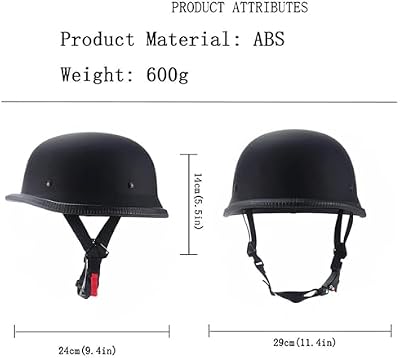
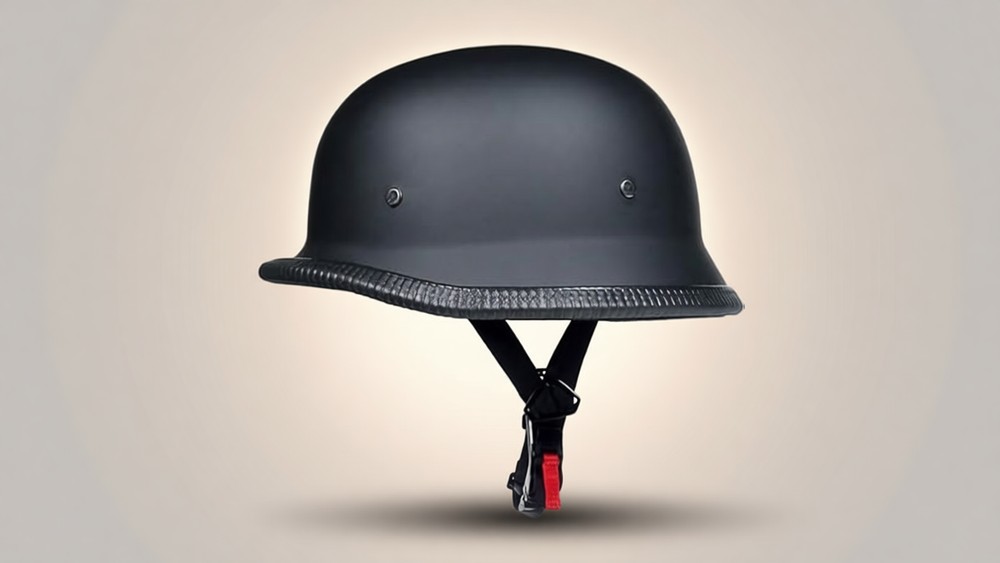
This half helmet mimics the look of a World War II military crewman, and it sits close to the head to avoid the bulky mushroom shape that pushes a helmet shell off the silhouette. It uses a hard ABS shell over multi-density EPS foam, a one-touch buckle, and a listed weight of 1.87 pounds.
The bullet claims the helmet meets or exceeds FMVSS-218, DOT and ECE-2205, and ECE-2205 is a garble of ECE 22.05, the United Nations standard, as covered in Wikipedia's motorcycle helmet article. The spec table is more careful. It lists Certificate Type: DOT and Specification Met: DOT, ECE, so the helmet claims the US federal standard and the European one while the bullet mangles the second.
Both regimes test real helmets, and a buyer is entitled to assume the label means the lid passed. What a half helmet cannot change is its shape: it protects the crown and sides, and leaves the face and chin open. That is the style, and it is the trade.
Eight of ten buyers say the same thing: it runs small
The sizing texts agree with each other more than review records usually do, and every one of the ten newest texts is a confirmed purchase. One buyer with a 24 inch head ordered the XL from the chart, and reports the helmet fits a 22 inch head, while the L from another brand they own is bigger than this XL. Another followed the sizing guide, bought the recommended XL, and returned it because no XXL exists to size up into.
A third text tells you the chart's gap in one line: an L from a different brand is larger than this helmet's XL. Three buyers used the chart correctly, and still received a lid that was too small.
The fix in the record is going up one size, and that only works while a bigger size exists. Some buyers ordered a replacement, and some sent the gear back when the size still didn't match their measurements. A helmet that fights your head does its job badly, because a lid that sits wrong on a ride is a lid you'll want off.
The payoff the positive texts name: no mushroom head
The two strongest positives point at the same thing, the low profile. One owner calls it no mushroom head, says it fits just like their old novelty helmet, and wore it on an 8,600 mile coast to coast trip from Myrtle to Ventura. Their break-in was physical: cushions pushed in with a knee for a couple of days of riding, and then the fit settled. They also note it sits more safely than the novelty lid it replaced, which is the whole argument for a certified half shell.
Another buyer chose it instead of a Daytona, because that brand defines this category, and called it great value for money with really good material. The classic German pilot look is the reason either buyer shows up, and this lid delivers the silhouette while carrying a certification most novelty helmets lack.
What the cheapest fifth of the market buys, and what it cannot fix
At 37.58 this helmet sits in the cheapest fifth of the 257 helmets we track, and you can verify the live position in the specs box on the helmet comparison table. Three texts praise the build even where the fit failed: nice helmet, great quality product, really good material. One dissenting buyer felt it offered less protection than a cheap mountain bike helmet, and that is one buyer's impression rather than a test.
The price does not change what a half helmet is. It has no chin bar and covers less than a full face by design, and helmets cut the risk of head injury by about 69 percent and the risk of death by about 42 percent when they are worn and fitted. The padding compresses as you wear the lid, so the fit you break in is the fit you keep.
Who should buy it, and who will box it back up
Buy it if the vintage pilot look is the point, if a 37.58 certified half helmet fits the budget, and if your head measures comfortably inside the smaller end of the chart, M at 57-58cm through XL at 61-62cm. It's a strong pick when the low profile matters more to you than a perfect out-of-box fit, and the record says the break-in is part of the deal.
Skip it if your head measures at the top of any size band, if you need an XXL the seller doesn't offer, or if a return window is the only thing standing between you and a lid that doesn't fit. The record's returns and replacements all trace to sizing, not to the helmet falling apart. Check the chart twice, then assume the lid runs smaller than it says.
FAQ: the DOT labels with the garbled ECE code, the size chart that sends buyers up one and the light half-shell weight
Is it DOT certified?
The spec table lists Certificate Type: DOT and Specification Met: DOT, ECE. The bullet adds a garbled ECE-2205, which reads as ECE 22.05, the UN standard. Both labels describe test regimes a certified helmet has to pass.
What sizes are available?
M fits 57-58cm heads, L fits 59-60cm, and XL fits 61-62cm. There is no XXL, and one buyer returned the helmet because the chart put them in an XL that didn't fit.
Should I size up?
Eight of the ten newest confirmed texts say the helmet runs small, and the record's fix is one size larger. Three buyers followed the chart exactly and still got a too-small lid, so the chart is the thing to distrust.
How much does it weigh?
The spec table says 1.87 pounds and the bullets say 1.9, which is the same lid rounded two ways. That is light for a certified shell, and in line with the novelty-style lids it competes with.