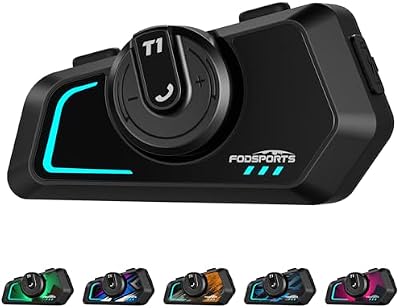
The Fodsports T1 single pack is the last uncovered rung in Fodsports' own T1 ladder. We have reviewed the two-pack, the PRO single, and the PRO two-pack. This one sells one unit for 44.99, and it exists for a buyer the other rungs do not serve: someone who already owns one T1, or someone building a pair one helmet at a time.
That buyer has questions the other reviews could not answer. What does the record for this specific listing say, and does the single behave differently from the pair?
The short answer is that the single's record is the healthiest of the four rungs, and it disagrees with the two-pack's record in one useful way.
The pairing complaints that dominate the two-pack's account do not appear here. What does appear, three separate times, is a complaint about bass. And not one owner in this record has tested the intercom link against another person.
Where the single rung sits in the T1 ladder
Fodsports sells the same basic hardware four ways. The T1 two-pack costs 90.99 today, which works out to about 45.50 per helmet.
Two singles at 44.99 each run 89.98, a dollar less than the pair. That is worth pausing on: the two-pack's only advantage right now is matched hardware in one box, because the arithmetic no longer favors it. If you are equipping two helmets from scratch, either path costs the same within a dollar.
The T1 PRO single costs 69.99, twenty-five dollars more than the T1, and the PRO two-pack lands at 129.99. What the extra money buys is a six-rider group claim at 2000 meters over the T1's two-way link at 1000 meters. If a third rider might join your rides, that is the rung to study instead, and its review covers what a four-rider group actually managed with it.
Each rung carries its own rating record, and they do not pool. This single sits at 4.2 across 37 ratings.
The two-pack shows 3.7 across 8, the PRO single 3.9 across 23, and the PRO pair 3.8 across 28. Same factory, four separate verdicts. The single's is the largest and the warmest of the four, which is its own kind of information: the rung most people actually buy is the one with the best record.
Bass is where this record agrees
Thirteen written texts make up this record, six with purchase markers and seven without. The ratings histogram shows about four in five ratings at four or five stars, and the written record mostly matches that warmth. The one theme that repeats comes from the other direction.
The plainest verdict comes from an owner whose whole review says the units are okay but have no bass. Another writes that the sound is clear but lacks a ton of bass, while noting it gets plenty loud.
The third account is the most detailed: an owner who describes themselves as an audio professional says they have used Sena systems at double or triple the price, and that with previous helmet speakers they had to install the drivers into a spare headliner to get any low range at all.
That is three unrelated accounts pointing at the same weakness, and none of them calls the T1 quiet. Loud seems settled. The bottom octave is what you give up at this price, and no bullet claims otherwise, so the surprise should not cut the other way either.
The volume report comes with a caution worth carrying: one rider says the speakers get uncomfortable at full volume, and recommends against living at the top of the dial.
Cross-brand pairing worked here
The T1 two-pack review is built around one detailed pairing complaint: twenty minutes to connect everything, half an hour of re-pairing before every ride. This listing's record runs the other way.
One owner reports connecting to a device from a different brand without trouble, adding that you have to treat it as a plain Bluetooth connection to get there.
Another bought the single for a partner's helmet and paired it with an existing headset from a different brand, then reports the connection stayed solid. A third compares the audio directly against a Sena Outrush R built into their helmet and calls the T1 better on both volume and clarity.
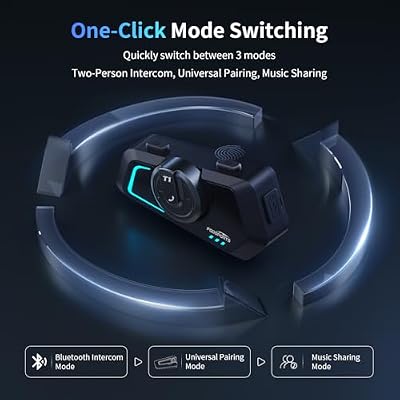
The listing supports that behavior in writing. Universal pairing with most major brands is one of the three modes on the single button, and the bullet includes a line that does the reader a real favor: when you pair across brands, the maximum range is limited by the weaker device. Whatever old headset sits at the other end of that link sets your ceiling, not the T1's Bluetooth 5.4 chip.
The 1000 meter claim and the battery both run on trust
No owner in this record has measured the intercom range, and two of the thirteen texts explain why without trying. One bought a single unit and admits they never had a second to test the communication part.
Another bench-tested the T1 on a countertop and has not mounted it on a helmet this year. The people who wrote about it were making calls, streaming music, and sharing a passenger's music. Nobody was out riding two of them apart on purpose.
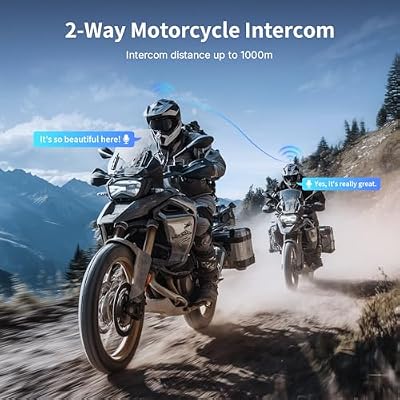
Bluetooth's own reference numbers put the claim in context. Typical use runs under 10 meters, strong line-of-sight links reach about 100 meters, and 5.0-class radios manage 40 to 400 meters at best, per Wikipedia's Bluetooth page. The 1000-meter figure and the 1 km range row are open-air maximums between matched units, and real roads subtract from both.
The battery side has even less to work with, because the listing prints no hour figure at all.
No bullet, no spec row, nothing. The only battery data in the record comes from one rider who uses their motorcycle as daily transport and reports the T1 went almost two months on its first charge. That interval says more about standby time than about a long ride day, so plan around nothing and treat the first week as your own test.
One battery behavior shows up as a genuine annoyance rather than a spec gap. When the charge runs low, the T1 voice-announces it at power-up, then repeats the warning every 30 seconds until you plug in.
One owner calls that very annoying while riding, and it is easy to see why: a low battery you cannot forget is worse company than one that stays quiet. The Type-C port at least makes the recovery quick.
Frequently Asked Questions
Can one T1 link to a rider on a different brand?
The record says yes, with a caveat. One owner paired it with a different-brand headset by treating it as a plain Bluetooth connection, and another keeps a cross-brand pairing working with a partner. The listing's own rule applies: the weaker radio sets the range ceiling for the link.
Is the single better value than the two-pack?
Today, two singles cost about a dollar less than the two-pack. The pair buys matched hardware and one order. If you already own one T1, the single is the only rung that makes sense, and it is also the cheapest way into the family.
How long does the battery last?
The listing never says, and no owner offers a figure beyond one rider's two-month interval on intermittent use. Plan on charging weekly if you ride daily, and expect the low-battery voice to repeat every 30 seconds once you are low.
Does the bass matter for phone calls?
The complaints cluster on music, not voice. The top-rated account reports a caller who could not tell the rider was on a bike, and the loudest criticisms of sound quality are about low-range music. Voice clarity is the strong suit in this record.
Buy the single to add a helmet, the pair to start one
The decision this rung forces is narrow, which makes it easy. If a T1 already lives in your helmet and you want a second unit for another bike or a new helmet, this is the rung, and the record behind it is the warmest in the family. If you are equipping two helmets at once, the two-pack and two singles cost within a dollar of each other, so pick on convenience.
And if your group might grow past two, the PRO's group mode is the feature the T1 cannot grow into, whatever the price gap says.
For everyone else, the intercom comparison table sorts every option we track by price per rider, including the rungs on either side of this one.