The budget shelf of helmet communication is full of boxes that promise six riders talking at once, and almost none of those boxes carries a record deep enough to say whether the sixth rider ever joins the call.
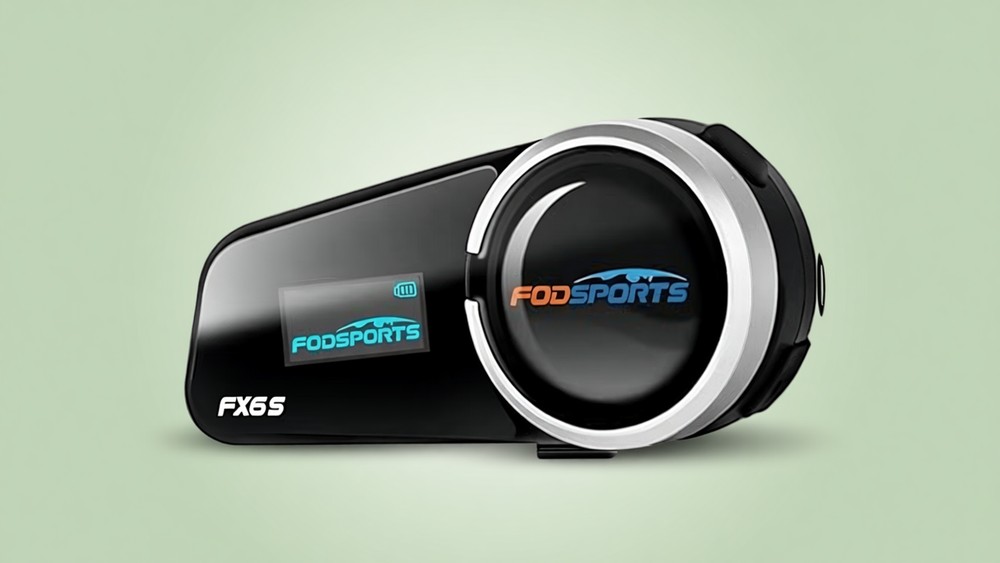
The Fodsports FX6S is one of them: a single-unit listing at 72.99 that shares its design, its seller, and its spec sheet with the FX6, a twin that holds more than twenty times as many ratings at 69.99. The FX6S record holds 45 ratings and 13 written texts, we captured 11 unique texts across both sort orders, and 10 of them carry Amazon's purchase badge.
The listing itself keeps its distance from the FX6S it sells. Its own spec table files this helmet intercom as a pair of headphones, and the Model Number row on the FX6S page names the sibling: it reads Fodsports FX6 Motorcycle Intercom. The 1000M and 6-way claims in the title appear nowhere in the spec rows.
One decision shapes everything else about the FX6S. Used as a phone and music headset, it collects short, happy, purchase-badged praise.
Used as the rider-to-rider link the title sells, the record splits: one four-unit crew reports it works great, the most-voted text describes four units that would not stay synced, and a third owner concluded it is best for a solo rider after two weeks of connection trouble and a mic that came apart.
The short version. The Fodsports FX6S intercom buys a light, easy-to-install headset with clear music at highway speed, and it sits in the cheaper third of the 192 units we track on our intercom comparison table. It does not buy proven group reliability.
The record's loudest voice is a group-use failure, the only long-term account describes range fading inside a year, and the FX6 twin costs less with a far deeper record. The sections below put numbers on all of it.
Buying for two helmets changes the price math before the record even enters it. The FX6S 2-pack prices the pair at 135.99, which saves 9.99 against two singles, and our 2-pack review walks that arithmetic and the listing's identity rows line by line.
A spec table that never met the FX6S
Amazon has filed the FX6S under headphones, and the rows read like a template that never met the FX6S. Ear Placement says over ear, Form Factor says on ear, Impedance says 42 ohms, and Noise Control claims active noise cancellation, a feature no owner mentions and no text exercises. Frequency Response reads 2.4 GHz, which is the radio band the FX6S transmits on, not an audio figure any speaker has.
What the table never prints is an intercom row. There is no range row in meters, no riders row, no battery capacity row, and no battery life row.
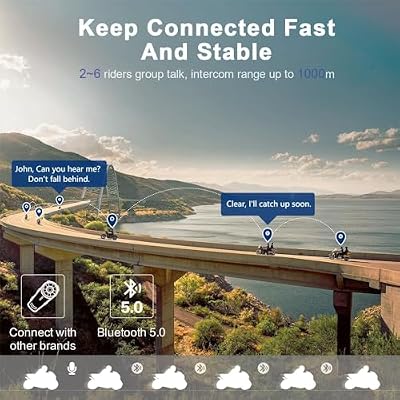
Every claim that makes this an intercom, the 1000M of distance and the 6-way group, exists only in the title. The Bluetooth rows do decode usefully: Version 5, with a range of 0.62 miles, which is the title's 1000M restated in imperial units. That is the category's open-sky figure.
Bluetooth 5 as a radio standard reaches 40 to 400 meters at best with full line of sight, and about 10 meters in the low-power mode phones use, so plan on a fraction of the printed number once helmets, bodies, and terrain enter the path.
Two more rows are worth reading before you order. The Headphone Jack row says Mini USB, and adds that it is not compatible with the charging port, so the FX6S carries two small fragile connectors of an older type.
And the warranty row, in full, reads 1 Month free exchange for quality issue and 12 months repairing service. That is a repair promise, not a replacement promise, and it is the shortest coverage window we have recorded on this shelf.
The Model Number row is the strangest one. It names the FX6, not the FX6S, on the FX6S page. Listings copy rows between sibling products often enough that we flag it rather than decode it, but a buyer should know the two listings share more than a family resemblance.
The group record splits three ways
Three owners have used the FX6S for the thing the title sells, and they reach three different conclusions.
The success account belongs to an August 2026 owner who rides quad trails with a set of four, keeps the crew in contact along the trails, and reports it all works great. Four units linked, group riding exercised, no complaints.
The failure account is the most-voted text in the record, a February 2026 2-star with two helpful votes. This owner also runs four units.
One would not sync with the others, the sets kept disconnecting on the second trip, and the first two had worked amazing together originally. Re-syncing failed. Their verdict is that this can make a trip fail, and it is such a great experience when they work.
The middle account is an August 2026 3-star that ends on a conclusion no listing will print: probably works best for a solo rider. This owner had constant issues connecting to the other rider, and separately reports the glue holding the front mic melted off after just two weeks.
The same owner still calls it ok for the phone connection and the FM radio, which tells you where the FX6S's real strengths sit.
So the honest read is that the pair case and the phone case have evidence behind them, and the six-way case has one success and one failure. Nobody in the record has reported riding in a group larger than four.
The speakers carry the argument
Sound quality is the one feature the record argues about three ways, and all three texts sit within four months of each other.
An August 2026 owner returned the set over speaker quality, wanting clean solid sound for music. One month earlier, a July 2026 owner praised good speakers with decent bass and recommended the FX6S to anyone who does not want to spend big-brand money on a communicator. And a February 2026 owner reports hearing music clearly doing 70 miles an hour in the helmet.
All three can be true, because helmets, ears, and expectations differ, and none of the three texts describes their helmet. What a buyer cannot do is know in advance which experience waits for them. What the record does agree on is volume and install: the texts call it easy to use and easy to install, and nobody reports wind noise drowning the music at speed.
The mic is the weaker half of the audio chain. One owner lost the front mic to failed glue in two weeks. Nobody praises the mic specifically, and the voice-dial feature in the title goes unmentioned by every text in the record.
A year in, the range fades
The only long-term account in the record is also the only text without a purchase badge, an April 2026 4-star.
This owner reports the set worked really good for about a year, and then two things changed: the range started fading away, and the headphone connection started coming loose more often. They would buy again anyway, partly on price, and they have bought extra mounts and headsets for multiple helmets, which makes them a repeat buyer of the family rather than a one-off critic.
One year is the whole long-term record. No other text describes ownership past a season, so nobody can say whether the fading range is common or a single unit's aging. The 45-rating record is young, and this is the kind of question only time answers.
Two structural notes belong here. The battery story is blank on this listing: the spec rows print no capacity and no hours, and no owner text reports either, so nobody has tested them. And nobody reports riding in rain, despite the Water Resistant spec row, which names no IP code and therefore no tested condition.
What the price buys, and the sibling question
At 72.99 for one unit, the price per claimed rider is 12.17, which puts the FX6S in the cheaper third of the 192 intercoms we track and in the cheaper half of the 16 six-way units.
But the honest denominator is smaller, because the record's owners mostly ride two-up or use it mainly for phone and music, and two units of this listing cost about 145, which is about 73 a helmet, mid-table. The live position renders in the specs box below.
What the price buys, by the record: a light headset at 3.53 ounces, an easy install, music that one owner heard clearly at 70 mph, and a phone connection that works. What it does not buy: proven group reliability above a pair, a tested battery claim, a rated water resistance, or a long-term record beyond one account.
The sibling question decides the purchase. The FX6 is the same design family at 69.99 with 1,050 ratings and a six-year record, and it sits a band cheaper on our table. Its record repeats the FX6S's strengths and adds its own failure list, mostly mounting brackets and fragile ports.
Choose the FX6S if the lighter weight and the newer listing appeal and you ride mostly as a pair. Choose the FX6 if you want the deepest evidence base on the budget shelf, which our FX6 review covers in full. Neither has shown the six-rider claim working.
Frequently asked questions
Does the FX6S really connect six riders?
The title claims it and the spec table never mentions it. The record shows one four-unit crew riding in contact successfully and one four-unit owner whose set would not stay synced.
Nobody reports five or six units. Treat six as the marketing number and two as the demonstrated one.
How far apart can two riders be?
The title prints 1000M and the Bluetooth row says 0.62 miles, which is the same figure restated. Bluetooth 5 reaches at most 400 meters line of sight under ideal conditions, and real-world intercom distance lands well below that with helmets and terrain in the way. Nobody in this record has published a measured distance.
Is the battery life any good?
Nobody knows from experience. The spec rows on this listing do not even print a battery figure, and no owner text reports hours per charge. The sibling FX6 claims 10 hours of talk time, and even there only one owner describes a 4-hour ride with battery to spare.
Is it waterproof?
The spec row says Water Resistant with no IP code attached, and no owner reports rain use. A claim without a code names no tested condition, so treat wet-weather use as untested.
Should I buy the FX6S or the FX6?
They are twins from the same seller, and the FX6 costs 3 less. The FX6 carries more than twenty times the ratings and a six-year record that documents both the strengths and the hardware failures.
The FX6S is newer, lighter on paper, and barely recorded. If the choice is evidence, the FX6 wins it.