Not everyone who wants sound in a helmet wants to talk to a group. A solo commuter wants music, GPS voice and phone calls, and the cheapest way to get them is a set of speakers that never tries to link to another rider. FEYA says this one out loud: the first bullet on the Y10's page notes it is for single person use and cannot connect to other headsets.
That honesty matters more than it sounds. The category is full of listings that blur the line, quoting range figures and rider counts on hardware that only ever pairs with a phone. This one sits a fraction of the price of a mesh radio, and the question is what that money does not buy.
The owner record is large for hardware this cheap, and its most-endorsed text is a measured three-star. This review walks through what that text settles, where the listing argues with itself, and what to measure on your own helmet before ordering.
Speakers priced like an accessory, and the listing says what they are
The FEYA Y10 sells at 26.51 when checked, and our intercom comparison table lists it in the cheaper third per rider of the 192 units we track. That split flatters it. The table divides by two riders, and the listing's own first bullet says this is a single person unit, so the honest spend is the full price for one rider.
The record is big for the price: 4.2 from 1,627 ratings when checked, about three in five at 5 stars, with a 1-star share near 8 percent. Every written text in our sample carries purchase confirmation, which is rarer than it should be on cheap hardware.
The page's own build quality is part of the story. The spec table files Noise Control as Active Noise Cancellation on passive speakers wired to a control unit, prints a Frequency Response of 100 hertz, which is one frequency rather than a range, names the model X100 on a Y10, and says Unit Count 2 Count on a one-pack listing.
None of that changes what the hardware does. All of it tells you how much double-checking to do before you order.
The most-endorsed text is a three-star, and its cons are the ceiling
The text three people have voted helpful sets out to answer the question a buyer at this price should ask: is cheap a trap? Its author bought them knowing the price, and reports the pros first. Cheap, easy to install, easy to set up, call audio OK at both ends, the person on the phone hearing them clearly.
The cons are where the ceiling sits. No low end at all, so much high end that the owner taped gaff tape over the speakers to tame it, and not enough volume on a Kawasaki sport bike with the visor open. The plan is to keep them one season and look for something else.
Other texts land on both sides of that line. A dirt bike owner reports it makes rides better with a solid mic on calls. Another calls the quality better than their phone.
The volume reports genuinely split: one owner says the speakers go so loud their ears hurt, while the sport bike report has music present but not great at speed. Helmet type and bike noise decide which side of that split you land on, and no text in the sample describes a cruiser or a touring bike to break the tie.
Two battery numbers, one battery
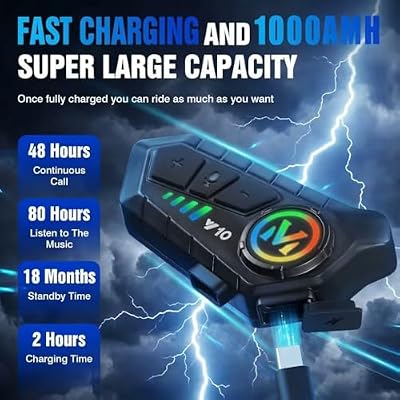
The spec table says Battery Average Life 80 hours. The battery bullet on the same page says working time reaches 20 hours from a 1000 mAh cell charged over Type-C in 2 hours.
One of those numbers is wrong, and the page does not say which. The same table files standby time at 18 months, a figure that says nothing about how long music or calls last, and half a dozen rows describe the battery indicator in incompatible ways: a 4-bar display, a 5-segment bar, a color-gradient ring, and a light bar, among them.
What nobody has done is measure anything. No text in the record reports battery hours in either direction, even though the listing's title sells high battery life. The 20 hour working figure is the one to plan around, and it stays an unconfirmed claim until an owner puts a number on it.
Auto answer, on its own terms
The marquee convenience is automatic call answering after 10 seconds, so hands stay on the bars.
One owner reports the trade: the headset answers calls automatically while in use, and that is the one thing that annoyed them about an otherwise low-interference unit. Both things can be true at once. The feature does what the listing says, and a rider who wants the phone to ring first has no owner report describing a setting either way.
Measure the ear pocket before you order
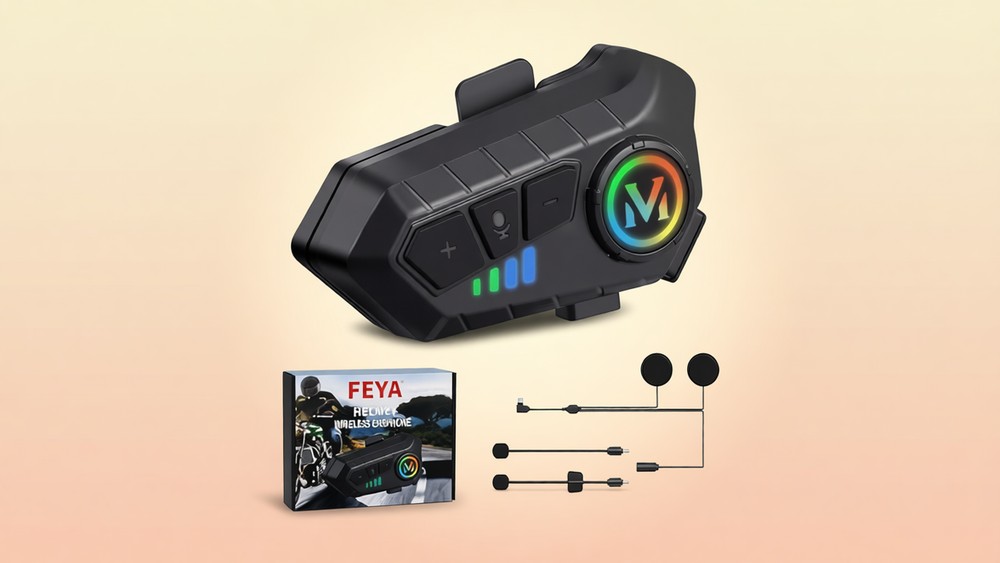
The install bullet carries the listing's best advice: measure the speaker groove in your helmet first. The speakers run 0.6 inches thick and 1.77 inches wide, and the listing warns that a lining cut may be needed when there is no space. One owner reports exactly the failure that warning tries to prevent: the set does not fit the helmet as well as they thought it should.
Thick liner pads hold a driver away from the ear and cut the volume you hear, so a bad fit reads as quiet audio before it reads as a return.
Longevity has one caution in the sample: a text reporting the right side stopped working and audio quality dropping after one day. Every other text is positive or volume-limited. One day is one day, and the listed remedy is a warranty claim within a year of purchase.
FAQ
Can two Y10s talk to each other?
No. The listing's first bullet describes single person use and says it cannot connect to other headsets. It pairs with a phone, not with another rider. Anyone who needs rider-to-rider talk needs an intercom, and our comparison table sorts the ones we track by price per rider.
Is it waterproof enough for rain?
The rating is IPX6, which under the IEC standard covers powerful water jets, not immersion, per Wikipedia's IP code page. The bullet promises storm, snow and -20F operation. No owner in the record reports rain, so the rating stays untested by the sample.
Will it reach my phone across the garage?
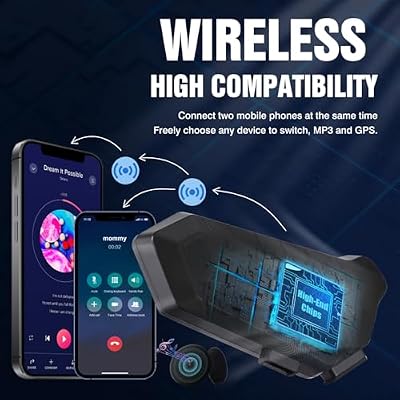
Bluetooth's most widely used mode runs at 2.5 milliwatts and reaches about 10 metres, 33 feet, per Wikipedia's Bluetooth page, and the listing's own 10 meter figure matches it. Keep the phone in a jacket pocket rather than a top box and the link holds.
Is it loud enough on the highway?
The record splits by bike. A dirt bike owner reports enough volume and a solid mic, a sport bike owner with the visor open reports music present but not great, and the most-endorsed text reports harsh highs it taped over. Nobody in the sample describes a large touring bike or a cruiser.
Does one box hold one unit or two?
One. Number of Packs says 1, and the Unit Count 2 Count row is one of the table's errors. Two wired speakers run from one wireless control unit, which is the only way two appears on the box contents.