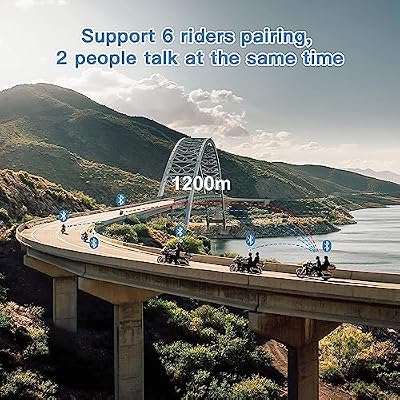
Talking to a rider you can actually see is easy. You shout, they shout back, and if the wind eats half of it you catch the rest at the next stop. The rider half a bend ahead of you is a different problem, and that is the reason rider-to-rider intercoms exist at all.
The hard part is that the cheap end of that market sells on a number. A thousand metres, twelve hundred metres, printed on the box, and almost none of it survives contact with hills, trees and two helmets turned away from each other. What you get for your money instead is a question the listing never answers.
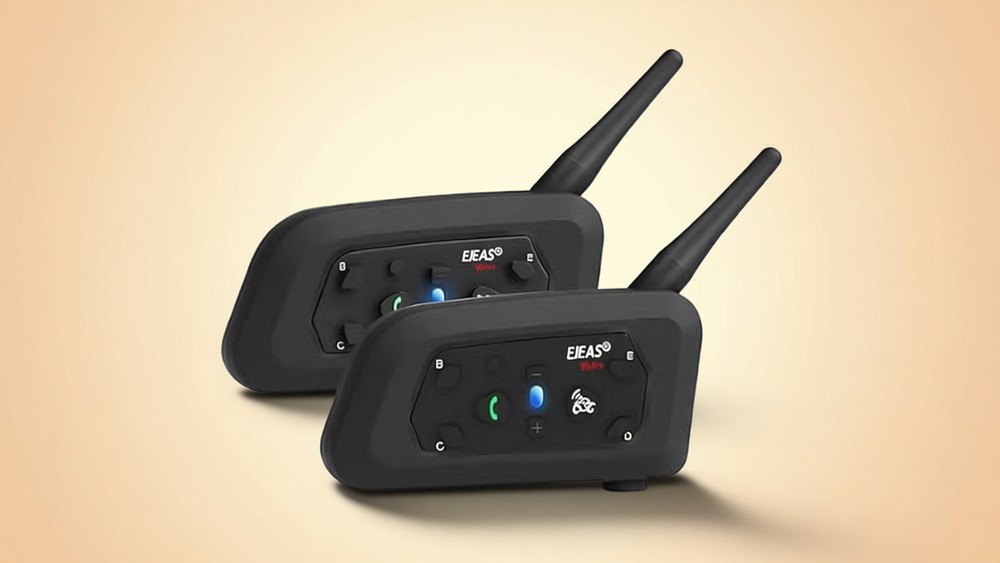
The EJEAS V6 Pro 2-pack sits right in that gap. It costs less than one mid-range unit from the big brands and it arrives as a pair, so both riders get hardware on day one. Its rating average looks strong too.
What sits underneath the average is a thinner record than the number suggests, and one owner who did the measurement most buyers never see.
This review walks through what those owners have actually written, what the range claim holds up against, and where the money lands compared with the other units we track.
Two complete units, and the one number an owner actually measured
The EJEAS V6 Pro 2-pack puts a unit on both helmets for 79.99, which works out to about 40 per rider and lands close to the middle of the 192 intercoms we price per rider. I won't call it a bargain, because on our table it isn't one, and the comparison chart shows you exactly where it sits next to everything else we track.
The ratings look strong at 4.4 from 386, with 72 percent of them 5-star, and all ten texts we could read carry purchase confirmation. What keeps me from calling this a clean recommendation is one line in that record: the only owner who measured the range in real terrain reports 200 to 300 metres, and the title says 1200. That gap is what the rest of this review is about.
What 386 ratings are made of
Every written text in this record carries purchase confirmation, which is rarer than it should be at the cheap end of this market, where unverified praise tends to pile up under listings that sell in pairs. The most-endorsed text is positive: a cross-state weekend trip report holds the only helpful vote in the record, and it describes talking without shouting or catching bugs, easy pairing, and hardware that held up across the whole ride.
Two of the ten texts say almost nothing. One 5-star calls the units great and easy to use in a single short line, and another praises the price and the delivery speed. One more 5-star comes from an owner who admitted the units were still unused when the rating went up.
And one 5-star restates the listing's own phrases about dependable connection and rugged durability without describing a single ride, so I read it as an echo of the bullets rather than evidence about the hardware.
The counterweight is a 1-star from a buyer who wanted a cheap way into a comm system and concluded they got the hardware without the talking. They report the music is no better than the 15 off-brand unit they compared it against, and they describe the buttons as impossible to operate.
A 4-star from a Bell-helmet owner splits the verdict: the fit and comfort win praise, but the volume runs short in some moments.
Holding 1200 metres against Bluetooth itself
The first bullet promises the distance can reach 1200M between two people, with sound that stays clear inside that range. Here's the context the listing leaves out. Bluetooth in its most widely used mode is limited to 2.5 milliwatts of transmit power, which gives it a range of about 10 metres, and every longer figure comes from the radio a vendor builds on top of the standard.
All of those figures assume nothing sits between the two antennas, and Wikipedia's Bluetooth overview is blunt about how short the baseline really is.
One owner has now run the check most listings never face. They have spent a couple of months trail riding in the woods with these, and they report maybe 200 to 300 metres in mountains and thick woods, with 1200 possible only under a clear sight line in open country, and even then they hedge with a maybe.
What makes the text worth reading is that they still land positive for the price, which tells you the pair worked for the riding they actually do.
The pairing structure is worth decoding too, because the listing does it for you in its own bullet: the system supports only 2 riders talking in real time, while the host unit can choose any one of 5 riders it has already paired. Five is a roster, not a conference. If your group ride needs four or six voices at once, you're shopping for mesh, not this.
What the listing promises that owners never checked
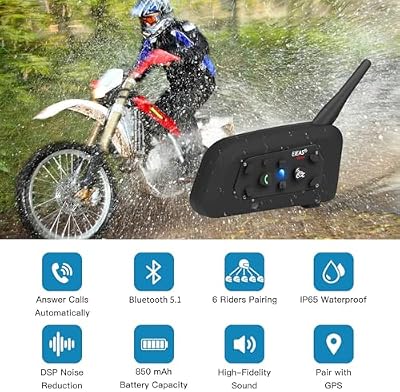
The battery claims sit at the top of the unverified pile. The listing says an 850mAh battery talks for 18 hours and stands by for 260, and no owner has put a number on either figure. The closest thing to battery feedback is one Spanish-language owner saying the battery lasts a long time, which is praise but not a number.
IP65 is on the bullet list as usable in any rainy environment, and the rating itself is narrower than that sentence. IP65 means the enclosure stands up to water jets, not a dunking, per the IEC 60529 scale explained on Wikipedia. No owner text describes rain at all, so the jets rating is the honest ceiling of what anyone can tell you today.
Two more promises have never come up from owners: the Safe-Riding companion app and the optional EUC remote control. Neither appears in any of the ten texts. What owners do confirm is mundane and useful: the mounting hardware fits full-face, half and open helmets, and one Bell-helmet owner reports a comfortable install.
Three intercoms share the V6 name, and only one is this one
Shopping by model number alone will burn you here, because three different products wear the V6 badge. This listing is the EJEAS V6 Pro sold as a pair, with the 1200M claim and a two-voice ceiling. EJEAS also sells the V6 Pro as a single unit, which we reviewed on its own after its listing drifted between variants.
And Novamente, a different company with no connection to EJEAS, sells a V6 Pro+ that claims 6 riders and has its own review here.
The tell is on the page itself, not the name. Check the brand line at the top of the listing, then the pack size in the title. If it says EJEAS and 2PCS, you're looking at the pair this review covers, and the V6 Pro single and Novamente V6 Pro+ reviews cover the other two.
FAQ
Does the V6 Pro really reach 1200 metres?
No owner confirms it. The one real count in the record comes from two months of trail riding and lands at 200 to 300 metres in mountains and thick woods, with the full figure needing a clear sight line. Plan around the owner's number, not the bullet's.
Can it talk to intercoms from other brands?
The record is silent and so is the listing, which only claims pairing between V6 Pro units and phones or GPS devices. Bluetooth intercoms from different makers make no promise to each other, so treat cross-brand linking as a no until someone proves it works.
Is it waterproof enough for rain?
The rating is IP65, which covers water jets rather than a dunking, and no owner has described rain performance. For heavy weather riding that's a genuine unknown, and the honest read is that the paper rating stops at spray.
How long does the battery last?
The listing claims 18 hours of talk time and 260 on standby from an 850mAh cell. The only owner comment is a short Spanish note that the battery lasts a long time. Nobody has put a number up, so treat both figures as untested promises.
Is the 2-pack the right way to buy?
If two riders need to talk, yes, because both riders need hardware and this box holds the pair. On price per rider our table puts it mid-pack rather than cheap, and the written record behind it is unusually clean, with every text purchase-confirmed. Check the intercom comparison against your budget before deciding.