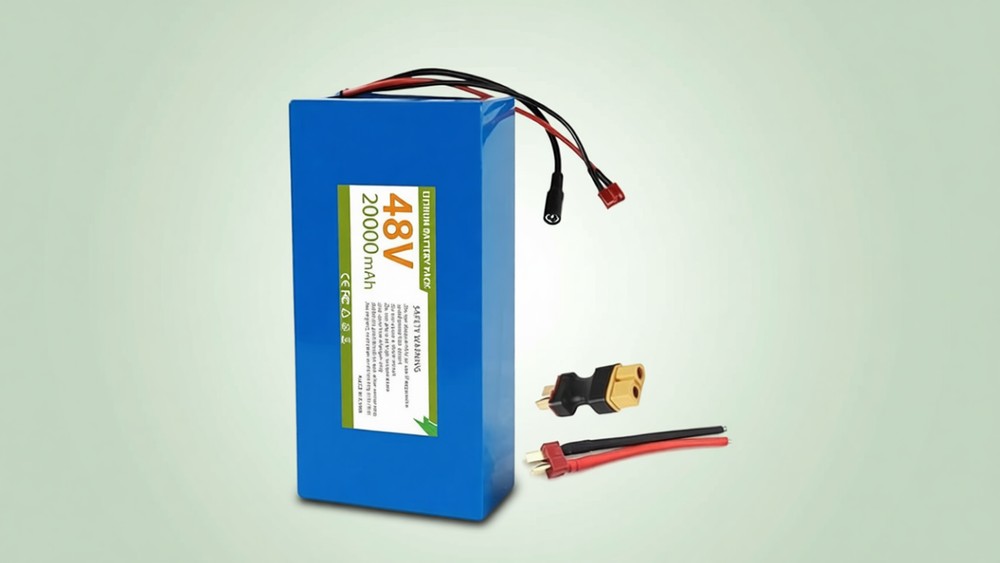
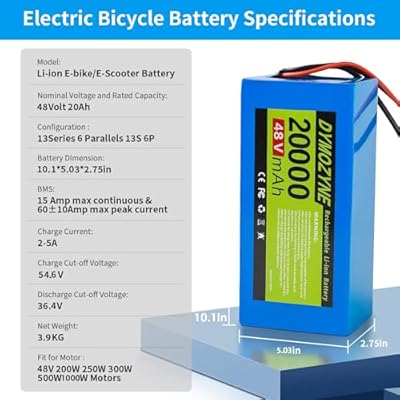
The DYMOZYNE 48V 20Ah pack is a strong deal for riders who need serious capacity on a small budget, sitting in the cheapest fifth of the packs we track by price per watt-hour. It carries 960Wh nominal, with XT60 connectors and a 30A BMS. The trade stack is real though: unknown cell provenance, a UL claim that names neither a standard nor a lab, and a weight that looks light for the capacity. Verify the safety claim with the seller, and treat the first long ride as the capacity test.
The range math, done honestly
Start with the pack: 48 volts times 20 amp-hours is 960 watt-hours nominal. Depth-of-discharge limits mean you realistically draw about 770 to 820 watt-hours before the BMS cuts off to protect the cells.
Now consumption. Pedal-assist riding typically burns 15 to 20 watt-hours per mile, which puts this pack at roughly 39 to 55 miles. Throttle-only riding at 25 to 30 watt-hours per mile lands closer to 26 to 33 miles. If the cells deliver the label, the range is the pack's best feature, and it undercuts most stock ebike packs by a wide margin.
The weight figure deserves scrutiny. 4.45 kilograms is light for a claimed 960Wh pack, and name-brand packs of this capacity typically run heavier, often past six kilos. Light can mean efficient modern cells, or it can mean the label is optimistic. Treat 960 watt-hours as a ceiling until your first long ride proves it, and plan your early trips around the low end of the throttle band so a surprise never strands you.
The UL claim, decoded
The title says UL Certificated, and that phrase needs unpacking. Genuine UL 2849 certification covers the whole electrical system: battery, charger, and controller tested together as a system. A battery-only marketplace listing claiming UL usually holds a cell-level certificate at best, which is a weaker safety statement than the title implies.
The fix costs one message: ask the seller which UL standard applies, which test lab ran the testing, and for a copy of the certificate. A seller with a real cert answers quickly. One that goes quiet or vague has told you what you need to know.
Either way, the charging habits stay the same. Charge on a hard, non-flammable surface, never unattended, and stop using any pack that swells or runs hot. The 3-year replacement warranty is a genuine plus if the seller honors it, and the listing states it applies even when Amazon flags the order non-returnable, which happens with batteries. Get the warranty terms in writing when you ask about the certificate.
The 1000-cycle claim, and what actually determines lifespan
The listing claims over 1000 charge cycles. Industry replacement guidance runs 500 to 1000 full cycles before a pack drops to 70 to 80 percent capacity, and lab numbers assume ideal treatment: shallow discharges, moderate temperatures, prompt recharging. Real garage use involves deep drains, cold sheds, and hot cars, and generic packs land nearer the low end of the cycle range.
Plan for two to four years of regular riding and treat anything beyond that as a bonus. The habits that stretch any pack are cheap: store at half charge, avoid running it to empty, and charge at room temperature rather than in a cold garage or a hot car.
When the pack does fade, you will notice it on hills first. The bike loses punch under load, and the range drops ride by ride. That is normal lithium aging rather than a defect, and it is the signal to start planning the replacement rather than a reason to distrust the pack retroactively.
Connectors, BMS, and what the 1500W claim really means
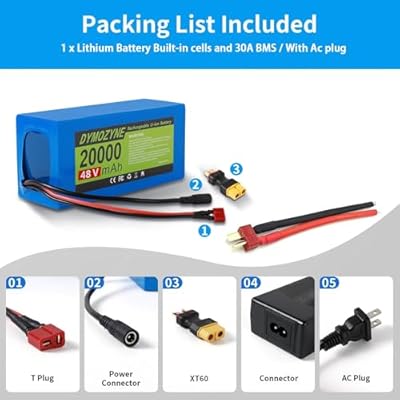
XT60 discharge connectors are the standard for this class, easy to adapt, and easy to service if you ever re-terminate. The DC2.1 charge port is likewise conventional, so replacement chargers are easy to find.
The 30A BMS ceiling at 48V comfortably supports 750W to 1000W controllers. A 1500W motor can draw more than 30 amps at peak, so the compatibility claim describes the BMS limit, not a guarantee of full power on a big build. Push past the ceiling on a steep climb and the BMS cuts output to protect the cells, which feels like a power stutter on a hill. If you run a genuinely powerful build, this is the wrong pack.
The PVC casing with moisture-proofing and anti-vibration cell mounts is standard practice for this market. It handles rain on the case fine, but standing water and high-pressure spray remain bad ideas for any battery.
Who should buy it, and who should spend differently
Buy it if you want big capacity on a small budget, your controller draws under 30 amps, and you are willing to ask the seller for the UL certificate before trusting the title. On price per watt-hour this pack beats nearly everything we track, and the 3-year warranty claim softens the provenance risk.
Spend differently if you need name-brand cells you can verify, because sellers who publish their cell brands charge more per watt-hour but remove the guesswork. The Yose Power 48V line is one frequent comparison for riders who want published cells, and the battery table shows the price-per-watt-hour trade directly. Spend differently if you run a 1500W build at full peak, because the BMS will cut power when the motor exceeds 30 amps. And spend differently if UL 2849 system certification is non-negotiable, because this listing does not demonstrate it. The live price-per-watt-hour comparison is on our battery table.
Frequently Asked Questions
How far will it go on one charge?
Roughly 39 to 55 miles on pedal assist and 26 to 33 on throttle alone, from about 770 to 820 watt-hours of usable energy. Weight, hills, and cold shift these bands.
Is the UL certification real?
Unverified as written. Ask the seller for the specific standard, the test lab, and a certificate copy before relying on the title's claim.
How long will the battery last?
Plan on two to four years of regular riding. The 1000-cycle claim describes best-case lab treatment, and real use lands nearer 500 to 1000 cycles.
Will it run my 1500W motor?
The 30A BMS is the ceiling. A 1500W motor can exceed it at peak, and the BMS will cut output to protect the cells when it does.
What if the battery dies early?
The seller claims a 3-year replacement warranty honored even on non-returnable Amazon listings. Get those terms confirmed in writing when you buy.