A 20-inch wheel usually means one of three bikes: a folder, a compact commuter, or a small-framed build where every inch of space matters. The dkfgtna kit sits near the bottom of the price table for those conversions, which is exactly why it deserves a hard look before you click buy. I spent an evening with the listing, its printed numbers, and the single customer review behind it.
Cheap kits earn scrutiny rather than trust. This article walks through what the page commits to paper, what the motor's own figures say about the speed claim, what a front hub does to a small bike, and how much weight one five-star review can carry.
The short version is that this kit is honest where it counts and silent where it doesn't. The printed motor numbers survive the arithmetic, which gives it a real edge at this price. The page itself refuses to name its parts, which puts it behind the brand's own 700C sibling. I'd order it only after the seller answers the parts question in writing, and I'd pick the dkfgtna 700C kit instead if the paper trail matters more to you than about twenty dollars.
A kit that will not say what ships
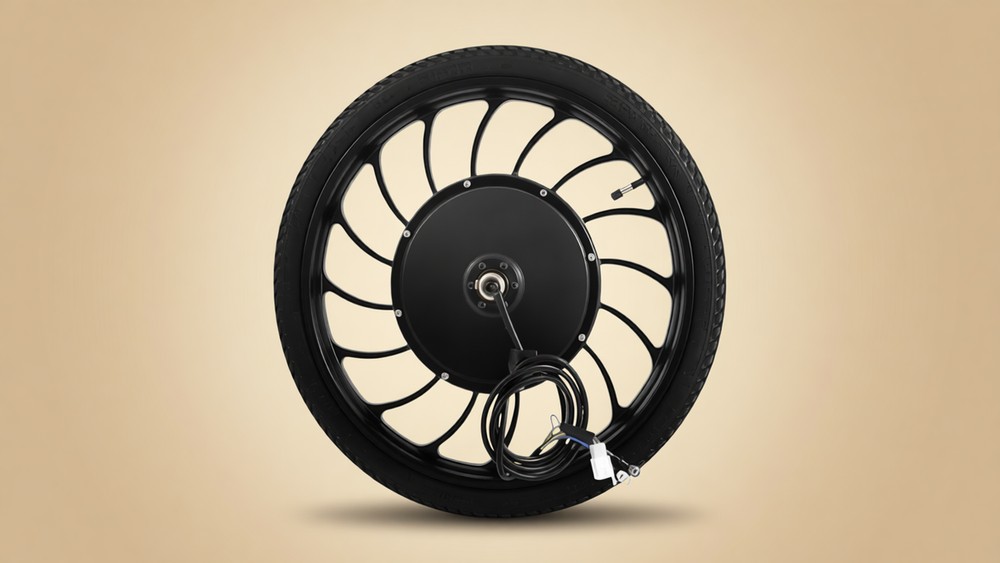
The spec table on this listing runs to nine rows, and not one of them is a parts list. Brand, model, a painted finish, part numbers, a best-seller rank, a first-available date. There is no Included Components row, no voltage row beyond the title, no wheel-size row, and no warranty row at all. Everything a buyer actually needs lives in the five bullets, and the bullets have one job: sell the motor.
The motor does sound good on paper. Brushless and gearless, 1000W, 420rpm, an efficiency figure of 88.7%, a 7-speed freewheel, a standard 6-hole disc mount, and a tire included in the box. What never appears is any mention of a controller, a display, a pedal assist sensor, or a throttle. A hub motor without a controller is an expensive paperweight, and the page never says one ships. Our own dataset row still records the controller as included from an earlier scrape, but the live listing gives that claim nothing to stand on today, so I'd treat the row as unconfirmed too.
The freewheel detail deserves its own question, because a 7-speed freewheel is rear-hub hardware. It threads onto the drive side of a rear wheel so the chain and gears can do their work. This kit is sold as a front wheel. Nothing on the page explains what a freewheel is doing there, and the possibilities range from a copy-paste bullet left over from the brand's rear-hub listing to a motor shell that genuinely carries one. I would not guess.
The same caution applies to the disc mount. The motor wheel takes a standard 6-bolt rotor, but no rotor is named anywhere, so whether your bike's existing rotor transfers is another question for the seller. Send both questions in writing before you order, and keep the answer with your receipt.
Compare it against the rest of the field in our conversion kit comparison table, because the price is the strongest thing this listing has going.
The speed claim survives its own numbers
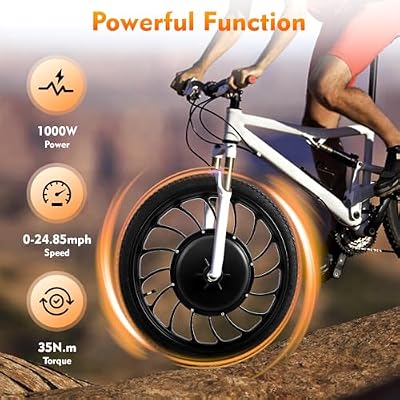
A top speed claim is only worth what the motor figure behind it can back, so I started from the rpm this listing prints. It says 420rpm and claims a top speed of 24.85mph, and the claim holds. A 20 by 2.125 tire stands about half a metre tall, which puts roughly 1.6 to 1.7 metres of road under the wheel per turn. At 420rpm that works out to about 41 to 43km/h with no load, which is 25 to 27mph.
The claimed 24.85mph sits right at the bottom of that band, exactly where an honest claim should sit, and a loaded bike eats the rest of it. That's rarer in this price band than it should be. The closest comparison in the tier is the shzicmy 2000W kit, which printed 550rpm and a 34mph claim that sat honestly inside its own numbers.
The torque figure decodes cleanly too. 35N.m at the hub, on a wheel with a radius near 26cm, is about 135 newtons of push where the tire meets the road. That's enough to feel on a small, light bike, and it matches the single owner account, which I'll come to. The 88.7% efficiency figure is different. It's precise to a decimal point, sourced nowhere, and impossible to check from a listing, so treat it as a claim rather than a measurement.
One more number matters more than all of these. 1000W at 48V draws about 21 amps continuous, and no battery, charger, or connector is named anywhere on the page. Whatever battery you pair with it needs a discharge rating comfortably above that draw.
What a front hub does to the bike
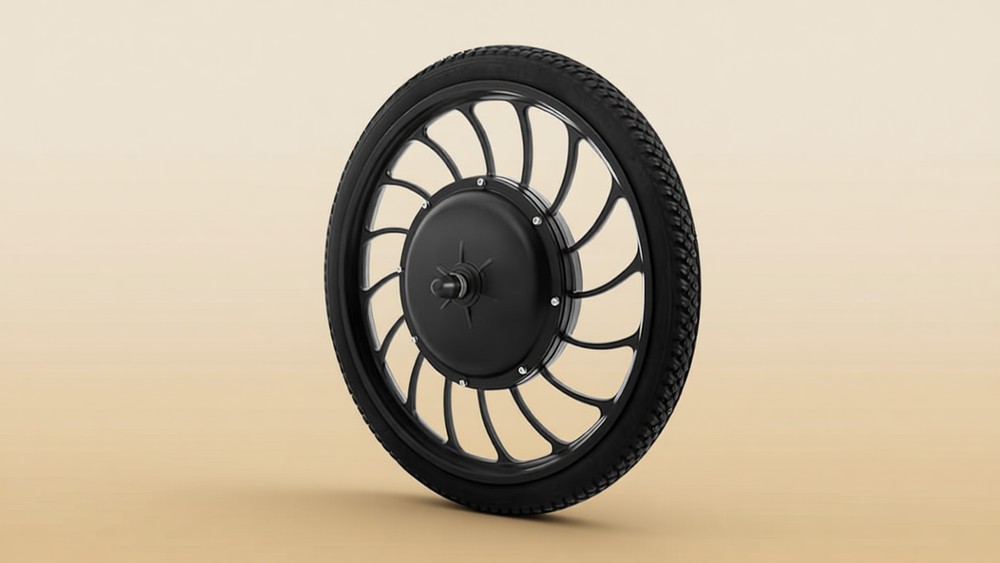
The format choice shapes the ride more than the wattage does. A front hub hangs the motor's mass on a fork leg, and a fork leg steers and takes bumps. That means the motor weight works against steering lightness, and the ride over broken pavement is harsher than it would be with the mass elsewhere. On a small 20-inch bike the effect is stronger than on a big-wheeled cruiser, because the bike is lighter and the fork is usually thinner.
Gearless direct drive, which this motor uses, has a trade of its own. There are no internal gears to wear out, and the motor runs quiet. The cost is drag: when you pedal with the power off, the motor resists you more than a geared hub would, and there's no regenerative braking here to earn any of it back. Whether that trade suits you depends on how often you ride unpowered.
The legal side deserves a straight sentence. The consumer e-bike envelope most US states work from caps a street-legal machine at 750W continuous, and a 1000W kit sits outside it, so where you may ride depends on your state's rules rather than on this listing (Electric bicycle laws). The gearless design itself follows the same principles as any direct-drive hub (Wheel hub motor), which is where the steering and drag notes above come from.
One unconfirmed five-star text, three months in
The rating is 5.0 from a single review, and the review is worth reading carefully rather than admiring. It's dated August 23, 2026, it carries no purchase badge, and it has no helpful votes. The listing itself only went live on July 23, 2026, so this kit has been on the market for about three months and its entire public record is one short, warm, unconfirmed account of an easy setup and good power on hills.
I don't read that as a warning sign by itself. A missing badge doesn't make an account imaginary, and a three-month-old listing from an unknown brand starts with almost nobody to review it. But the text can only tell you so much, and what it leaves out is exactly what a buyer wants to know: no range figure, nothing about durability, nothing about what arrived in the box, and no comment on the parts question this listing raises. One happy account is evidence that somebody, somewhere, was pleased on day one. It isn't a record. If the seller's written answer covers the parts list, the review gap shrinks to something a careful buyer can live with.
Worth the price once the parts question is answered
Price is where this kit earns its place. It sits in the cheapest fifth of every conversion kit we track, and you can see exactly where in our conversion kit comparison table. The motor's printed numbers are honest by the arithmetic, which not every cheap kit can say, and the one owner account points the same direction on power.
What stands between a confident order and a gamble is the page itself. It won't name its parts, it carries a freewheel claim that belongs on a rear hub, and it offers no warranty row to fall back on. My verdict is simple: ask the seller what ships, what the freewheel is for, and what the warranty is, and buy when the answers come back in writing. If the seller goes quiet, the 700C sibling costs about twenty dollars more and lists every part on the page, which is why I'd spend the difference rather than chase a reply that never comes.
Frequently asked questions
Does the kit include a battery?
No. No battery, charger, or connector is named anywhere on the page, which is normal for this tier but worth stating plainly. You'll pair it with your own 48V battery, and it needs a discharge rating comfortably above the roughly 21 amps the motor can draw.
Will it fit my 20-inch bike?
The title says the wheel takes a 20 by 2.125 tire, which is a common size on folders and compact bikes. What the listing never states is the front fork's dropout width or the axle type, and those decide fit more than tire size does. Measure your fork's dropouts and confirm them with the seller.
Is a 1000W kit street legal?
The street-legal envelope most US states use caps continuous power at 750W, and this kit sits above it. Ride it on private land, or check your state's rules before taking it onto public paths.
Should I trust the five-star rating?
Treat it as one data point. A single review, no purchase badge, and a listing only three months old add up to a start rather than a record. The honest read is that one buyer was happy, and nobody else has spoken yet.
What should I ask the seller before buying?
Three things, in writing. What exactly ships in the box, what the 7-speed freewheel is doing on a front wheel, and what the warranty covers. The listing answers none of the three, and a seller who answers all of them quickly is telling you something useful about the support you'd get later.