Converting a 20-inch fat bike with the motor in the rear wheel is a specific kind of build, and it usually starts with a bike the owner already likes.
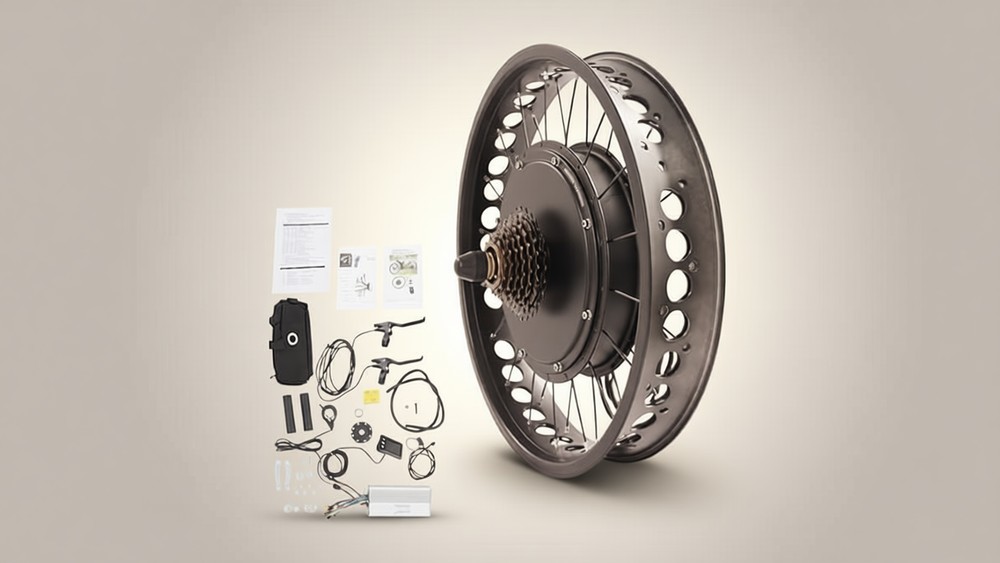
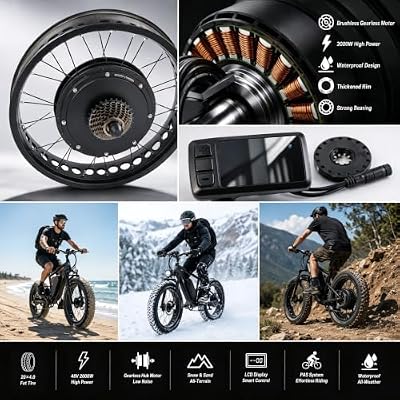
Snow bikes and sand bikes are heavy, the frames are stubby, and the wheel you're lacing a motor into is smaller than the standard conversion advice assumes. The SHZICMY 2000W 48V kit is aimed exactly at that job, and its listing promises a lot for the money.
The hard part isn't the promises. It's that this listing shows a perfect score, 5.0 out of 5, and behind that score sit four ratings and three distinct written texts, one of which appears twice under two different dates. A perfect record on a thin evidence base is one of the easier patterns to over-trust, and most buyers' instincts don't separate the two.
So this page weighs what the record can actually carry, reads the spec table against the page it sits on, checks the 34 mph claim against the kit's own 550 rpm figure, and sizes what a 2000W build asks of the battery and frame you bring to it.
The SHZICMY 2000W 20x4 rear hub kit sold at 247.99 In Stock when I checked, which puts it close to the middle of the 191 conversion kits we price on the comparison table.
The arithmetic on this listing holds up better than most, and I'll show the sums. The evidence behind the score is four ratings, three distinct texts, and one purchase Amazon confirms. That's a good sign wearing a strong disguise, and the rest of the review takes it apart.
A perfect record on four ratings
The histogram prints 5 star 100% and nothing else, across 4 global ratings. Four texts carry words.
The newest, from October 2026, is the only one badged as a purchase Amazon confirms, and it reads "E bike kit worked great easy installation". Six words, and that's the entire confirmed record.
The two texts that carry any detail carry no purchase badge at all. One describes a 20-inch fat bike install that "performs way better than expected", riding smoothly on snow and sand, with a clear LCD and pedal assist that works.
The other describes turning an old snow bike into a commuter, with a month of daily riding behind it. Both are useful sentences. Neither is tied to a purchase, and the record gives you no way to tie them.
Then there's the odd one. The better-than-expected text appears twice on the page, word for word, under two different dates, August 5 and August 19. Same body, same helpful count, different day.
Whether that's a family cross-post from a sibling listing or the same text entered twice, the page prints it once and then prints it again, and I count the detailed record as two unverified texts, not three.
One more number worth reading carefully. Every one of the four texts shows "One person found this helpful", on a product with four ratings total.
At least some of those votes can't have come from people who rated it, so I quote the counts as printed and build nothing on them. Nothing in the record reports a fault, a top speed, a range figure, or a noise measurement. Treat the 100% as a good sign, not a test.
The spec table points at itself
Three rows on this listing argue with the page they sit on. The Horsepower row reads "2000 watts", which is a wattage wearing the wrong unit, not a horsepower figure. The Warranty Description row reads "Any questions please contact us", which is a contact line sitting in a warranty field, promising no term of any length.
And the Included Components row, the one row that should enumerate the box, reads "See details", so the parts list is a pointer to a parts list that doesn't exist on the page.
That last one matters more than it looks, because bullet five promises "full accessories and detailed manuals" for easy DIY installation. With the box row pointing at nothing, the full-accessories promise can't be checked anywhere. The bullets name a sine wave controller, an LCD display, five speed gears, cruise control and pedal assist between them, but no page text enumerates what actually ships, and a throttle appears nowhere.
My advice for a listing built this way is the same one I give on thin listings across this category: put your questions to the seller in writing and wait for the answers before you order.
The table does give real numbers elsewhere. Speed 550 rpm, voltage 48, wattage 2000, item weight 27.2 lb, and a best-seller rank of #88 in Powersports Wheel Hubs. The manufacturer field matches the brand, SHZICMY, with no alias string behind it, which is cleaner than several kits in this price band manage.

The 34 mph claim checked against 550 rpm
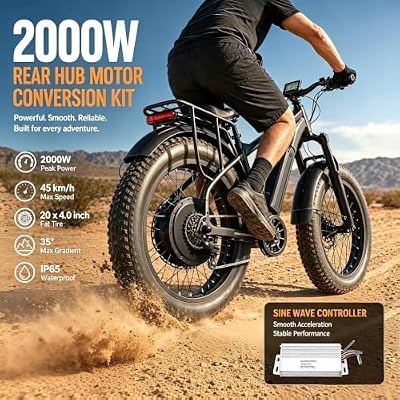
Bullet one promises 34MPH max speed with 65N.m of torque. Unlike most kits at this price, this listing prints the rpm figure that the speed claim depends on, so the claim can actually be checked instead of taken on faith.
A 20x4 fat tire sits on a 406mm rim with two 4-inch tire sections stacked on it, which puts the whole wheel near 0.61 meters across. That wheel rolls about 1.9 to 2.0 meters per ground revolution, so 550 rpm carries a no-load ceiling near 39 to 41 mph.
The claimed 34 mph sits below that ceiling, which makes it honest by the arithmetic. It puts this listing ahead of kits whose speed claims exceed their own rpm figures, and I've audited more than a few of those this month.
Two cautions ride along. No-load speed isn't riding speed, and load, hills and controller current limits pull a real build well under the ceiling. And the 65N.m torque figure arrives with no radius stated.
At the hub on a wheel this small, 65N.m works out to about 215 newtons of push at the ground, and the short radius is precisely why the number reads high for the class. Small wheels turn hub torque into ground push efficiently. The under-55dB noise claim, meanwhile, has no measurement behind it from anyone, owner or manufacturer.
What 2000W asks of the rest of the bike
The listing never mentions a battery, a charger, an amp-hour figure, or a connector type, so the build's biggest cost sits entirely off the page.
The arithmetic you need is one line: 2000 watts at 48 volts draws about 42 amps continuous. Whatever battery you pick needs a BMS that passes 40 amps or more without tripping, and our ebike battery table sorts the field by price per watt-hour so you can see what that pack will actually cost.
The power also decides where you can ride it. United States rules define a low-speed electric bicycle at 750 watts and 20 mph assisted, so a 2000W kit rides outside that envelope wherever you build it. Off-road use is the honest frame for this purchase, and your state's law is the one that counts.
The hub itself is gearless, meaning direct drive, and that carries the standard hub motor trade: no freewheel, so pedaling unpowered drags, and no regen braking is claimed on this page. Rear placement puts the drive where the traction is on snow and sand, but it also puts the heaviest single part of the bike at the rearmost point of a frame whose dropouts were never built with it in mind.
The listing never mentions a torque arm, and at 2000W that's a part you should budget for regardless of what the box includes. If you'd rather keep the steering end light and the install simpler, the SHZICMY 1000W front-hub sibling takes the opposite side of exactly that decision.
Frequently asked questions
What comes in the box?
Nobody can say from the listing, because the Included Components row reads "See details" and no page text enumerates the parts. The bullets name a controller, an LCD, speed gears and pedal assist, so the box is evidently more than a bare motor, but a throttle is never named and the seller is the only source for the full list. Ask in writing before you order.
Does it need a special battery?
It needs 48 volts and about 42 amps of continuous headroom, and no battery or charger is mentioned anywhere on the page. A pack whose BMS trips under 40A will cut power on every hard climb, so match the discharge rating before you buy anything.
How fast will it really go?
The 550 rpm figure carries a no-load ceiling near 39 to 41 mph on a 20x4 wheel, and the claimed 34 mph sits under it. Under load, expect well below the claim, and on public land the legal assisted limit is far lower again in most places.
Should I buy this or the front-hub sibling?
Rear drive buys traction and steering-neutral handling, which is what snow and sand reward. Front drive buys a simpler install and an unloaded rear frame. The sibling's listing carries the same copy style, so audit it the same way before you choose.
The honest summary is this. The arithmetic on the speed claim checks out, the spec table names the numbers that matter, and the record contains no failure story at all. It also contains almost no evidence, one confirmed purchase, and a box list that points at nothing.
Ask the seller what ships, budget the 42A battery and a torque arm, measure your dropouts, and the live listing plus the comparison table will tell you the rest.