Budget battery listings mostly compete on one number: cents per watt-hour. Every few months one of them puts something else in the title instead. The DICHOU UPP 48V 20Ah pack claims UL2271 certification by SGS, and that single claim is why it is worth a look, because certification is the thing almost no budget pack names and the thing a hallway charger deserves.
The trouble is that a claim and a certification are different things. This listing carries no certificate number, no document, and no link. What it does carry is a spec sheet with the strangest filler seen this month, and a review record that consists of two ratings and one written review.
Anyone buying that combination on trust deserves better evidence. The pages that follow run the claim, the spec sheet and the arithmetic against what one warm review from a Tongshen TSDZ2 owner can honestly support.
This 960Wh 48V pack sits near the middle of the price-per-watt-hour rankings for the batteries we track, so you aren't getting a bargain but you aren't being robbed either.
What makes the listing worth a look is the title's claim of UL2271 certification by SGS, a safety standard almost no budget pack names. What makes it worth a pause is the evidence base: two ratings and one written review is everything Amazon knows about this pack. The certification claim and the spec sheet get weighed here against a review record that can't carry them.
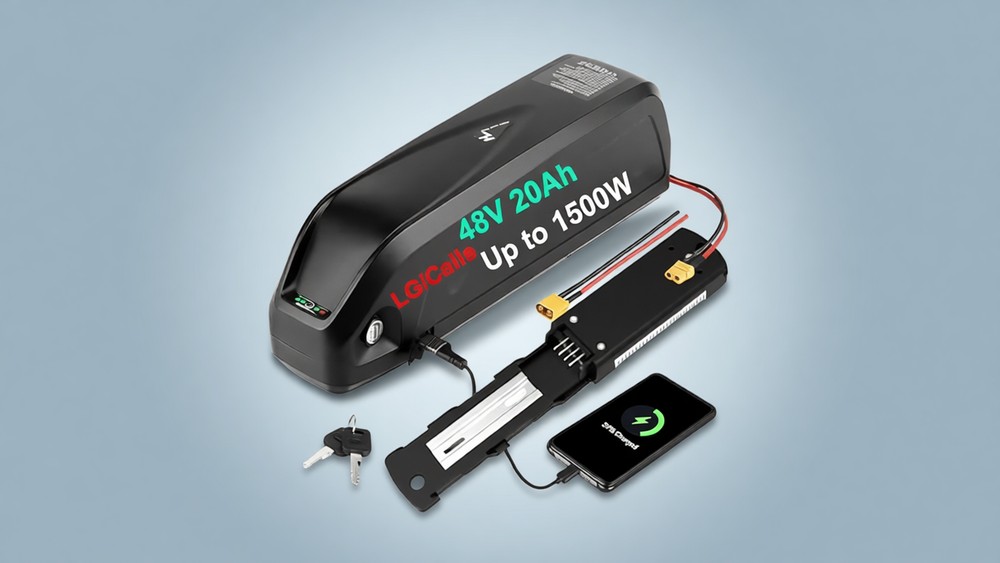
The UL2271 claim, and how you would check it
The title says this pack is UL2271 certified by SGS. UL 2271 is the safety standard covering batteries for light electric vehicles such as e-bikes and scooters, and SGS is one of the labs that can test against it. What the listing doesn't carry is a certificate number, a document, or anything connecting those words to a test.
The listing's own spec table also says the pack needs one AAA battery, which is template filler, and it tells you how carefully this page was built.
You can check the claim for free. UL's Product iQ database lists certified products by company name, so five minutes there settles it one way or the other. Until someone runs that search, the safety claim is a title string and nothing more, and the work of judging fire and short-circuit risk falls on the buyer rather than on a lab.
That trade isn't unusual at this price. What's unusual is a budget listing naming a certification at all, because most skip it entirely. The honest reading: the claim is checkable, the checking hasn't been done, and nobody should count the pack as certified until it has.
The spec sheet, decoded
Forty-eight volts times 20Ah is 960Wh, and the details table's voltage and capacity entries back the title figure rather than contradicting it.
The 50A BMS supports about 2,400W of continuous draw, so the 1500W motor claim in the title is arithmetically real, which is rarer than it should be at this price. One bullet claims LG 5000mAh cells, but no cell model is named anywhere else on the page, so a buyer has no way to check that.
The case is the generic Hailong/Shark downtube shape, so fit depends on your frame's bottle-boss mounts and clearance rather than on the brand name. The discharge connector is XT60 and the battery base is 4-pin, both standard parts.
The included charger is 54.6V at 3A, about 164W, and a full charge from empty takes roughly six hours. The pack weighs 10.4 lb, and the warranty is one year. The listing says nothing about water resistance either way, so that's a question the page can't answer.
On price the pack sits close to the middle of the 301 batteries we track per watt-hour, and the battery comparison table shows the company it keeps.

What 960Wh means on the road
Moderate pedal assist on flat ground usually takes between 15 and 25 watt-hours per mile, so this 960Wh pack works out to roughly 38-64 miles between charges. Held at full throttle near 30 watt-hours per mile, the range drops to about 32 miles. These are arithmetic bands, not owner reports, because no reviewer has published a metered figure and the listing itself never states a range number.
Charging is the slower half of the deal. The included 3A charger pushes about 164W, so a pack ridden down to half needs close to three hours before it's ready again, and a full charge from empty takes about six.
The single owner report sits at the modest end of the motor range: a Tongshen TSDZ2 mid-drive has returned good range for its buyer. What a 1500W build does to that figure, nobody has reported, and a bigger motor pulls more watt-hours per mile.
Two ratings and one review
The battery holds a 4.5 average from just two ratings, which is one five-star mark and a four-star entry with no text attached. The written review carries purchase confirmation, and it's warm: good range on a Tongshen TSDZ2 mid-drive, plus explicit praise for the 3A charger over the cheap units that usually ship with packs. That is one data point about one bike.
What no review answers is what a battery buyer most wants to know: whether the pack really holds 20Ah, how it behaves after a winter, whether it survived rain.
The listing claims up to 800 to 1000 cycles with a five-year life, but Battery University notes that consumer cells are usually specified at 300 to 500 full cycles. Since no specific cell model is named, this cycle-life claim remains marketing until years of use prove it.
You're betting on a pack that nobody has yet reported testing against rain, a winter, or a second year of service.

Wait for a third rating unless you need 960Wh now
The case for buying now rests on arithmetic you can check. The BMS supports the motor claim, the hardware is standard XT60 and Hailong, and the one owner who wrote anything has found good range and a charger worth praising. Run a Product iQ search on the manufacturer's name before you order, because the certification claim is the one thing here that separates this pack from its neighbours.
The case for waiting is just as plain. Two ratings is a coin you have seen one side of, and the silent four-star could be the first capacity complaint or nothing at all. A one-year warranty covers the first winter, not the five years the cycle-life bullet promises.
Riders who need 960Wh this month and are comfortable running the check themselves have a defensible pick.
Everyone else can let the review count grow. The price sits mid-band, so the reward for being early to a two-rating listing is small, and the same money spent on a pack with a longer record buys you answers instead of adjectives. The comparison table is the fastest way to see which packs those are, sorted by the same price-per-watt-hour measure used above.
Frequently Asked Questions
Is the UL2271 certification claim real?
The listing gives no certificate number, no document, and no lab report, so treat it as unverified. UL runs a free database called Product iQ that lists certified products by company name, and five minutes there settles the claim one way or the other.
Will it fit my bike?
The case is the generic Hailong/Shark downtube shape, so what matters is your frame's bottle-boss mounts and clearance for a pack that weighs 10.4 lb, not the brand on the label. The discharge connector is XT60 and the battery base is 4-pin, so check both against your bike's mount and wiring before ordering.
How far will it go on a charge?
The honest answer is arithmetic, not owner data. 960Wh at the 15-25Wh per mile of moderate pedal assist works out to roughly 38-64 miles.
Held at full throttle near 30Wh per mile, expect closer to 32 miles. No reviewer has published a metered figure.
How long does charging take?
The included charger is 54.6V at 3A, about 164W, so a full charge from empty takes roughly six hours. A pack ridden down to half needs close to three hours before it's ready again.
Can I trust the 800-1000 cycle claim?
Consumer lithium-ion packs are normally specified at 300-500 full cycles, and higher numbers assume a specific chemistry or shallow discharge. No cell model is named here, the warranty is one year, and no owner has reported a second year of use, so the claim is unproven either way.