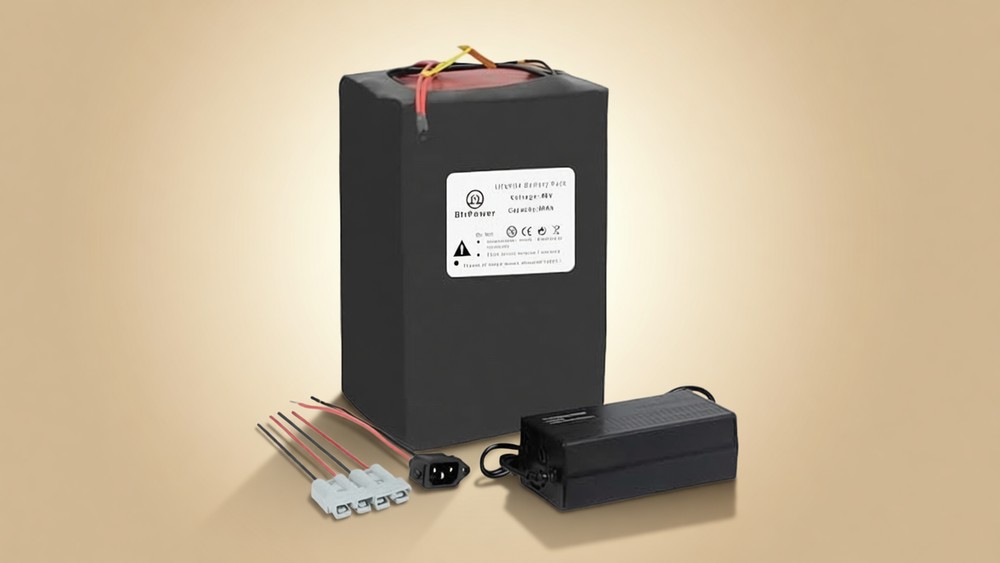
2400Wh is a great deal of energy attached to a bicycle, and it’s chemistry that is going to determine whether or not the above statement should cause concern. Cymoye 48V 50Ah Lithium Iron Phosphate (LiFePO4) battery chemistry replaces NMC (a type of lithium ternary used in most ebike packs) for this size pack and that decision is the most important.
What it doesn’t provide is a fire-proof pack. Therefore, any listing or review that claims it does, is likely selling you something. What it really provides is a much larger margin between a fault and a fire at 2400Wh, a margin at 2400Wh that you would like.
LiFePO4 Safety, the Real Benefit
Thermal stability is the main benefit of LiFePO4. Lithium iron phosphate keeps its oxygen very tightly held, therefore when a cell fails, it can struggle to initiate a quick self-sustaining reaction. In contrast to the oxygen releasing behavior of NMC, the common ternary lithium chemistry found in many ebikes. A single damaged cell can turn into a fire. While LiFePO4 costs a little more per Wh and stores slightly less energy per lb. The trade-off is worth it to those who charge indoors or store their bike in a dwelling space. Just keep your expectations calibrated: more stable does not equal unable to fail, and all forms of lithium abuse can damage a lithium pack.
Specifications and Quality of Construction
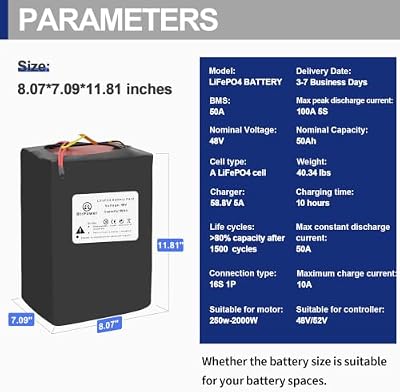
Specifications of the pack:
- Nominal voltage: 48 V
- Capacity nominal: 50Ah = 2400Wh
- Chemistry: LiFePO4 (lithium iron phosphate)
- Integrated BMS: 50 A
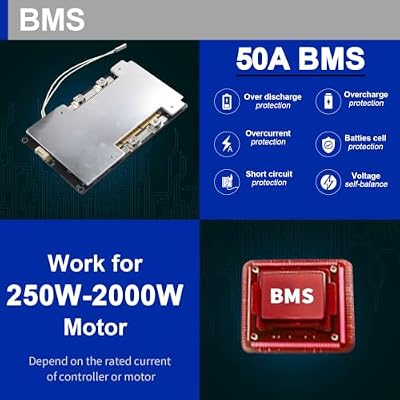
- Compatible with motors: 250W to 2000W
- Estimated range: 50, 60 miles
- Dimensions: 11.8 x 8.1 x 7.1 inches
- Weight: 40.3 lbs
The pack is configured in 16S1P format, this is why you’re able to obtain this amount of capacity within one case. Although larger and heavier than most complete ebike packs, you receive roughly double the usable energy of a normal 48V 20Ah battery in exchange. As such, if you require a large capacity pack and have sufficient area for it, the dimensions are worth the increased weight.
BMS and Charging
Integrated BMS monitors short circuits, over-charging, under-discharging, excessive heat and reverse charge conditions. The BMS also performs cell balance functions to maintain optimal health of the entire pack throughout extended periods of time. Due to the need for specific charge curves required by LiFePO4, utilize the provided charger as opposed to generic 48V lithium-ion chargers. Incorrectly feeding the battery through an improper charge curve is the quickest method to prematurely degrade cell performance. You can check out what is currently available for the Cymoye pack by looking at the product page on Amazon.
Battery Life and Voltage Characteristics
LiFePO4 has significantly longer charge/discharge cycles compared to traditional lithium-ion. Assuming proper management, a pack utilizing LiFePO4 may sustain approximately 1500-2000 cycles down to 80% capacity. For example, after several years of frequent daily commutes, this cycle-life disparity represents the difference between changing batteries versus retaining the original battery.
One aspect to understand prior to purchasing: LiFePO4 exhibits an unusually flat discharge characteristic with an abrupt decline in the latter portion of discharge. Therefore, although your battery indicator may show near-full for an extended duration, ultimately, the chemistry maintains voltage until near exhaustion.
Who Is This Battery Suited for?
This pack suits you if you seek maximum capacity while obtaining the most thermally-stable practical chemistry available. Indoor storage, charging overnight, apartment residents and daily commuters seeking a pack capable of lasting four to five years rather than eighteen months, these are all scenarios where this pack makes sense. However, as a result of the significant weight (40.3 lbs) and bulkiness of this pack, it is less suitable for low-weight applications (such as road bikes) or racing applications, where both factors serve against you.
Consider how 2400Wh actually translates into usable energy on an actual build. A typical 48V 20Ah pack contains approximately 960 Wh, sufficient for a relatively simple commute. This pack contains roughly 2.5 times as much usable energy, thus allowing for a full day of riding, heavy cargo bike usage, or multiple-day trips without needing to find an electrical source. Additionally, given the power requirements of high-wattage motors (1000W-plus), having a reserve bank of energy becomes critical, since smaller packs cannot supply enough energy to sustain operation of such high-power units.
As a final consideration, as of this writing, this product has zero Amazon customer reviews. Thus, you're purchasing based upon specifications listed and benefits offered by LiFePO4 chemistry rather than any history of user experience, even though that's not necessarily a justification for avoiding this product.
For comparison purposes relative to cost-per-Watt-Hour for this product versus others in similar categories, please refer to our Battery Comparison Chart, or continue browsing additional products within our Review Section. For more information about how lithium iron phosphate behaves when used as a battery in an electric bike along with charge profiles and failure modes, I recommend reading the ebikes.ca Battery Learning Guide.
Frequently Asked Questions
Why Select LiFePO4 Over Standard Lithium Ion?
Lithium iron phosphate possesses greater thermal stability than standard lithium-ion, providing it as a better option for indoor storage and nightly charging.
What Is the Actual Operational Voltage of This Pack?
While designated as a nominal 48V pack, due to its nominal design value of 51.2V (as derived from sixteen individual cells at 3.2V each) most standard 48V controllers operate properly with this setup. However, confirmation of your controller and charger capability will prevent potential issues.
What Types/make/model Motors Can I Use with This Battery?
Manufacturer specifications indicate compatibility with motors ranging from 250W to 2000W. The integrated BMS has sufficient headroom for continuous application of sustained current levels at the upper end.
How Long Will My Battery Last?
A LiFePO4 pack that is managed effectively typically retains 80 percent capacity after approximately 1500-2000 cycles. Daily commuters could expect this to equate to four to five years before noticeable degradation occurs.
Do I Need to Use the Provided Charger?
Yes. Due to LiFePO4 requiring unique charge parameters, using an incorrect charger may damage cells and/or reduce overall lifespan. Use either the supplied charger or one specifically designed for lithium iron phosphate chemistries.
What Does the Warranty Protect?
The manufacturer offers a three-month money-back guarantee or replacement window as well as a twelve-month service term on all products sold. Support is available should any issues arise with your purchase.
How Practical Is a 40-pound Pack to Use on an Average Ebike?
The honest answer is, it's probably not. This pack weighs in at 40.3 pounds and measures 11.8 x 8.1 x 7.1 inches. So if your bike or design can't hold the weight, the added capacity will be meaningless. Therefore, get out your scale and take stock of what you have for mounting options prior to buying.
Should You Avoid Purchasing Due to No Amazon Customer Review Ratings?
Yes, and we're being blunt about it. No reviews mean no customer feedback has been generated regarding how well the cells are working. How well the BMS is performing and how long they expect their pack will last through the coming winter. Here again, you'll have to rely solely upon the specs, and the chemistry behind the product.