LiFePO4 packs make a simple promise: more cycles than ordinary lithium-ion, at the price of a heavier pack and a smaller crowd of owners who can tell you whether the promise holds.
The Cymoye 48V 20Ah sits right on that promise. It is a 960Wh iron-phosphate pack with a five-rating record that splits in half, 40 percent five stars and 32 percent two stars and not a single rating in between.
The record is also old. Nothing new has been written since August 2024, and the most useful words on the page date to 2022, from a buyer who ran the pack flat with a meter attached and wrote down the number. Nobody who has reviewed it reports a range figure, a winter, or a warranty claim.
So the decision rests on a small pile of evidence, some of it contradicting itself.
The title says 40A BMS. A bullet on the same page says 30A. What follows works through what the record actually contains, what the listing's own arithmetic supports, and what you would be buying at the current price.
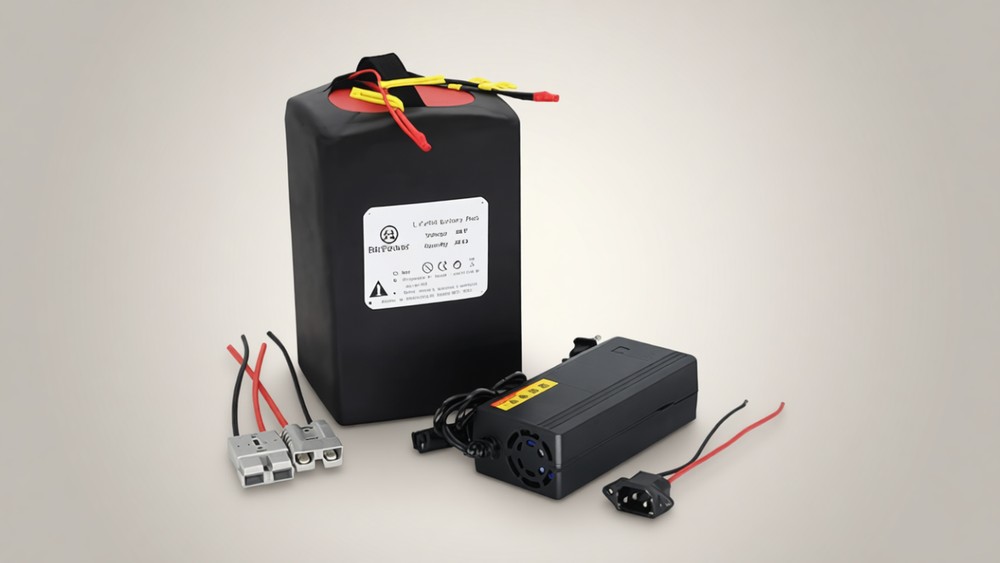
A record split in half, with nobody in the middle
The small rating history for this pack splits with nothing in the middle: forty percent of the ratings are five stars, thirty-two percent are two stars, and not one rating sits between them.
While the data is thin, the written text carries the two facts that matter: one buyer ran the pack flat and measured only 17.87Ah of the rated 20, and a golf-scooter owner's pack died after roughly fifty cycles.
The chemistry is the argument for looking here at all. Iron-phosphate cells carry a higher cycle-count reputation than the cobalt-based cells in ordinary packs, though nothing in this record has tested that promise.
The current live price of 179.89 puts the per-watt-hour cost in the cheaper end of our comparison table, though the specs box still shows an older higher price.
What follows reads that old record honestly, checks the listing against its own numbers, and does the range arithmetic to see what holds up.
What a buyer actually measured
One owner ran the pack flat and found it holds 17.87Ah instead of the full 20, which means it delivers about 858 watt-hours. This measured figure is the strongest evidence we have, and it forces a discount on every range figure you might expect from the label. Since overstating capacity is common in this market, a metered number always beats a claim.
The buyer has noted that their previous 15Ah pack cost nearly twice as much for the same size and weight, yet the live price sits in the cheaper end of our comparison table per watt-hour. Our tracked price still shows the old higher figure, so there is a clear drift.
Because that buyer metered about 89 percent of the rated charge, you'll lose roughly a ninth of your distance on every trip.

The pack that died at fifty cycles
One owner ran this pack on a golf scooter for sixteen months and has watched it die at roughly fifty cycles, deep-cycled and stored in a basement over the winter. It now gives about twenty minutes of use, and when it charges, it charges for only about ten minutes.
Repeated full-depth discharge is the harshest regime lithium tolerates, and the high cycle-count reputation of LiFePO4 describes the chemistry, not any generic pack built from it. The buyer blames themselves for deep cycling, but they also fault the protection circuitry for letting the pack get to that point.
The voltage stayed above 48V right up until the pack fell off a cliff, so the number a rider watches tells them almost nothing about the charge left.
The buyer's first words leave room for a bad unit, and the order behind the text carries no purchase confirmation. What cannot be read around is the arithmetic: a pack dead at fifty cycles has not begun to test a 1000-cycle claim.
Forty amps on the title, thirty on the bullet
The listing contradicts itself because the title and spec table claim a 40A BMS, yet a bullet point lists the max constant discharge current as only 30A. This gap matters because 30A at 48V provides only 1440W of continuous power, while 40A would allow 1920W. With a 1500W motor, that limit decides whether the pack runs the motor continuously or trips before it does.
Metadata is also messy since it calls the cells lithium ion in one field and lithium-phosphate in another, while a bullet claims every pack ran through a full test "in produce," a phrase that doesn't make sense. These errors don't mean the pack is bad, but they show why the metering review carries more weight than the title.
You're betting on a hidden limit when the specs aren't clear. If the pack is limited to 30A, you'll lose power on hills or when you push for speed.

Range the record never tested
Since nobody has published a real range on this pack, all of this is arithmetic rather than testimony. At the rated 960Wh capacity, the watt-hours-per-mile bands give 30 to 43 miles of mostly-throttle riding or 50 to 66 miles of typical assist. The listing's claim of 35 to 40 miles fits the throttle-heavy end and is a bit generous for a pedaled commute.
Because one buyer measured only 17.87Ah, the pack holds about 858Wh, so every range figure shrinks by roughly a ninth. This means the actual distance is likely 27 to 39 miles for throttle use or 45 to 60 miles for typical riding.
The included 58.8V 3A charger takes about 6.7 hours to fill the 20Ah cells, which is longer than the 6-hour time claimed in the listing. You're betting on that extra hour when you plan a long trip, since the math doesn't quite line up with the marketing.
The silence in the record means you won't know how the battery performs under heavy loads or in the cold until you try it yourself.
Frequently Asked Questions
Why does this review's address say 16Ah when the listing says 20Ah?
The seller reworked the listing at some point, and the ASIN now sells the 20Ah pack. The review covers the live figure while keeping the old address readers already have. One consequence: our comparison table still carries the older higher price, so the specs box will disagree with the live 179.89 until the next data refresh.
Is LiFePO4 worth it over ordinary lithium-ion in this price class?
The chemistry is credited with a higher cycle count than the cobalt-based cells in ordinary packs, and it charges to a lower, gentler voltage. Whether this particular pack delivers any of that is untested, because no owner has run it long enough to say.
Can the 1000-cycle claim be believed?
The failure report describes deep cycling and basement storage ahead of a death at about fifty cycles, which suggests the internal protection may not save the cells if you run them flat. The claim describes the chemistry's ceiling, not this pack's history.
Does the BMS limit current at 30A or 40A?
The title says 40A and the bullet says 30A, and the page never resolves the question. Plan around the 30A figure, about 1440W continuous, and treat anything above it as a bonus you cannot verify from the listing.
What does a two-year-old record mean for a buyer today?
The newest written review went up in August 2024, so nobody has described cold-weather use, the charger's behavior over time, or any long-term ownership. You would be buying on a metered capacity test and a failure report, not on a track record.