A cheap unbranded pack is the tempting fix for a dead ebike. The Cavepower 48V 20Ah sits at the cheap end of everything we track by price per watt-hour, it claims 960Wh, and it bolts to a seatpost with a key lock. On paper, there is very little to argue with.
Behind the paper sits almost nothing. That perfect rating comes from two reviews, both unverified, both posted the same day, and both written in the listing's own vocabulary. The spec table warrants the pack for three months.
And the one number that would let you check the 960Wh claim, the weight, is missing from the page entirely.
None of that makes the pack bad. It leaves it unproven, and unproven at this price deserves a closer look than a five-star average suggests. Here's what the page says, what it withholds, and how the two sides line up.
Two five-star texts and nothing behind them
The rating is a perfect 5.0 from two ratings, and both texts carry tells any careful buyer should spot. Neither shows any purchase confirmation. Both went up the same day in August 2026.
And both repeat the listing's own phrases: the 30A BMS, the key lock, the mounting base, the included charger, the 750W motor. One text even closes on product-copy wording, calling it well worth the upgrade for a daily commute.
Read those two texts for what they are: day-one install reports with no long-term use behind them. Nobody reports a capacity measurement, a charge time, a winter, or a warranty claim.
The seller names no cell maker either, only premium A-grade lithium cells. A perfect score built from two same-day unverified posts isn't a signal anyone can lean on, and the honest summary of this record is that it holds no independent evidence about the pack at all, favorable or unfavorable. Compare it against the rest of the field in our battery comparison table.
What the listing does tell you
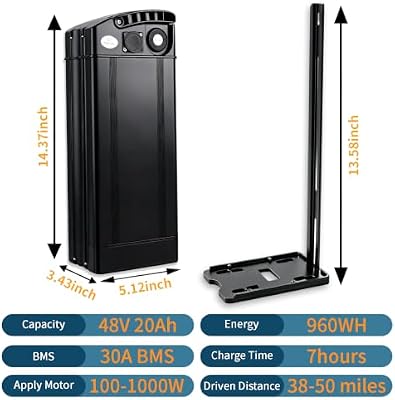
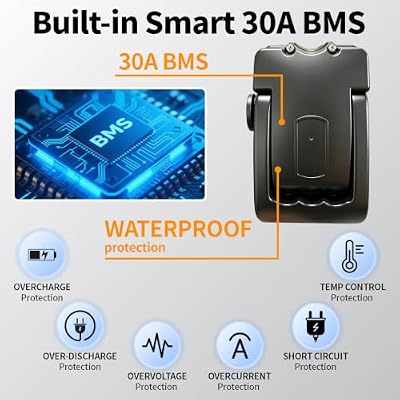
The arithmetic inside the listing is consistent, which is worth more than it seems. 48 volts times 20 amp hours is 960Wh, and the title, the capacity bullet and the range bullet all agree on it. The 30A BMS passes about 1440W on a fresh pack, comfortably above the 1000W motor ceiling the listing names, so the BMS won't be the constraint on any bike in the claimed range.
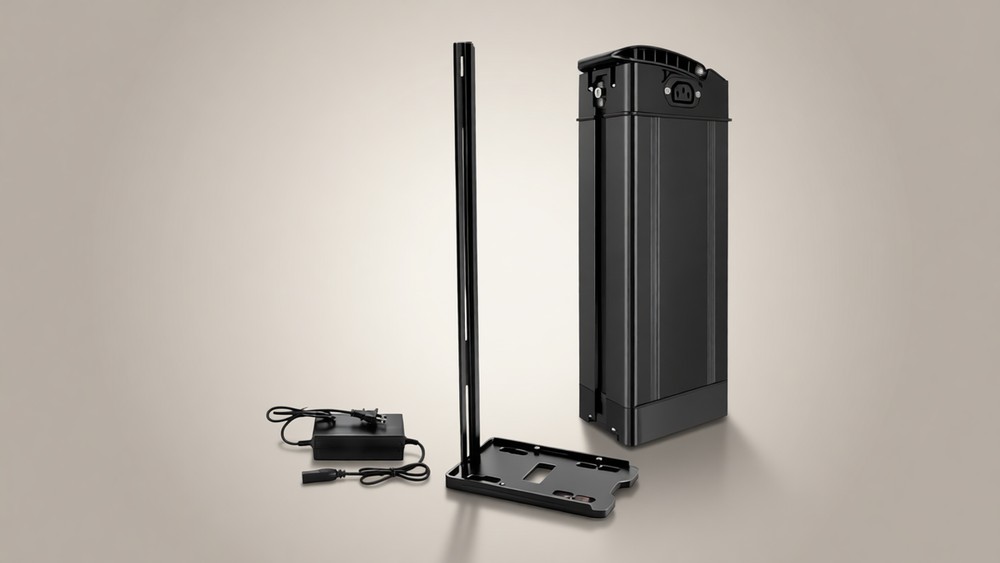
The mount is a seatpost-style base with a top-mounted 3-pin discharge port, a key lock, and a kit with the base, a charger and six screws.
Dimensions are 14.37 by 5.12 by 3.43 inches, and the listing asks buyers to verify voltage and dimensions before ordering, which is the right advice for a pack sold to fit many bikes. What the page leaves out matters just as much: no weight anywhere, no cell brand, no charge-time figure, and no amperage for the included charger.
The check the listing will not let you run
Most listings in this class let a buyer smell-test the capacity claim against physics. Bare lithium-ion cells carry 160 to 300 watt hours per kilogram, per Wikipedia's lithium-ion article, and a finished pack adds case, BMS, wiring and connectors on top, so pack-level density always comes in below the cell figure. A genuine pack this size normally weighs several kilograms.
This listing prints no weight at all. That kills the cheapest check there is, and it matters more here because the record has no independent range reports to cross-check against either.
The practical move is to put the pack on a scale the day it arrives, divide 960Wh by the kilograms, and compare the result against that cell-level band. If a pack implies more than 300 watt hours per kilogram after the case and electronics are accounted for, the 960Wh claim is in doubt, and the return window is the time to act on it.
Range on paper
The seller claims 40 to 60 miles a charge. That's the seller's own arithmetic, 960Wh divided by roughly 16 to 24 watt hours per mile. Set it against the category band and the claim holds up on paper: an e-bike battery usually lasts 25 to 75 miles a charge depending on how much help you ask from the motor, per Wikipedia's e-bike article, and 960Wh is a mid-sized pack at 48V.
The only owner-reported figure is more than 30 miles on a 750W bike, and it comes from the same unverified same-day text as everything else in the record, so it's a claim, not a measured figure.
Plan toward the bottom of the band for throttle-heavy riding and expect more with a light pedal-assist setting. A commuter on mixed assist will likely land somewhere in between, and nobody can promise a number beyond that until a real owner report shows up.
A three-month warranty on a pack sold on cycles
On price, this is the strongest fact on the page. At 199.99 for 960Wh, about 21 cents per watt-hour, it sits in the cheapest fifth of everything we track by price per watt-hour. The live specs box under this article shows the exact position as prices move, and the battery comparison table sorts the whole field on the same math.
On the protection side, the spec table warrants the pack for 3 months. Manufacturers of consumer lithium-ion typically specify 300 to 500 cycles, per Battery University's BU-808, and a rider covering 30 miles a day would put dozens of cycles on a pack in three months.
The warranty ends before the pack has aged enough to say anything, so it covers dead-on-arrival, not a pack that fades in a year. That's the trade the price is offering: real money off, and the long-term risk stays with you. Test the pack hard inside the window instead of trusting the rating.
FAQ
Can I trust the 5.0 rating?
Treat the score as unproven. Both texts are unverified, posted the same day, and echo the listing's wording, and there's nothing else in the record. A five-star average on two ratings says nothing about how the pack ages.
Will it fit my bike?
The listing covers 48V motors from 0 to 1000W with a seatpost base and a top 3-pin discharge port, and it asks buyers to verify voltage and dimensions first. The pack measures 14.37 by 5.12 by 3.43 inches, so measure your mount and check the port first.
What is the warranty like?
Three months per the spec table. That's short for a pack sold on cycle life, and it covers early failure, not aging. The long service life a buyer hopes for is nothing this warranty will ever testify to.
How can I check the 960Wh claim on arrival?
Weigh the pack when it lands and divide 960Wh by the kilograms. Bare cells top out near 300 watt hours per kilogram, a finished pack must come in below that, and a result far above it means the claim doesn't hold. The scale is the cheapest test going.
How far will it go?
The seller says 40 to 60 miles, the category band runs 25 to 75 depending on assist level, and no independent range report exists. Plan on the bottom half of the band with a heavy throttle hand and more with light pedal assist. If it isn't the right fit, the battery comparison table sorts every option we track.