Two riders, one helmet communication budget. That is the situation this box is built for, and it is more common than the marketing admits: a couple on two bikes, a rider and a regular passenger, two friends who always ride the same road together. Almost every group intercom on sale assumes the club ride, and prices climb accordingly.
The Cardo Spirit Duo is the opposite bet. Two complete Bluetooth units in one box, a two-way intercom each, no mesh network to sell you, and a rating record of 4.715 ratings strong sitting in first place in its Amazon category.
Per rider, though, this pack lands among the most expensive of everything we track, and three separate owners in the record say the sound will push you toward Cardo's own upgrade.
This piece walks through what the record shows: what the most-endorsed review can and cannot tell you, the recurring sound complaint, the one rain test against a bullet that promises waterproofing without an IP code, and the two-rider design limit that an owner states more plainly than the listing does.
The Cardo Spirit Duo is two complete systems in one box for 188.96 when we checked, with a 4.5-star record from 4,715 riders and first place in Amazon's helmet communication category. Each unit runs a two-way Bluetooth intercom with a claimed 400-meter range and 32mm speakers, plus phone calls and music, and neither does mesh. The spec table states a two-year manufacturer warranty.
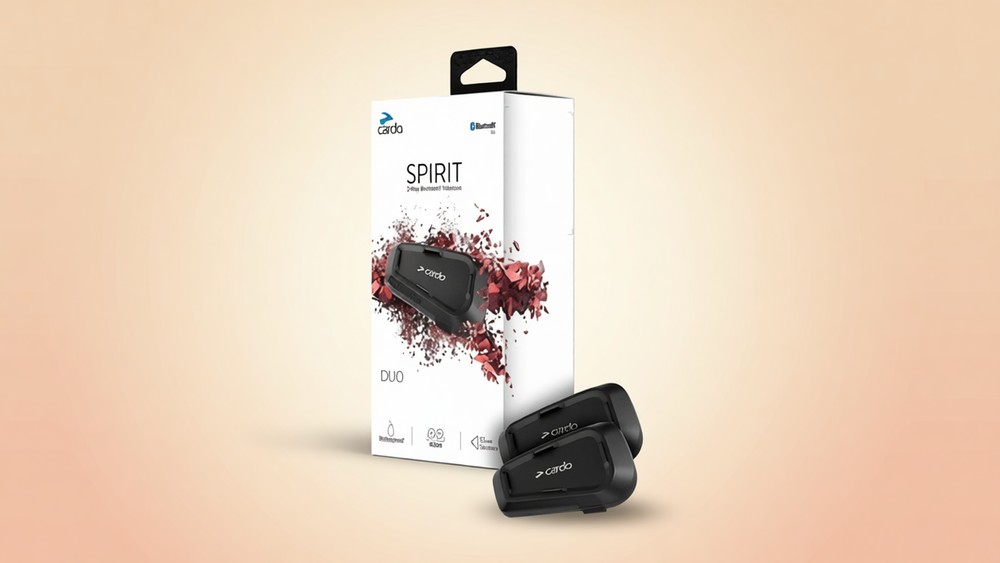
Divide the box by its two riders and you get about 94.50 each, which lands among the most expensive per rider of the 192 intercoms we track. That is the honest arithmetic for a two-unit box, and it is not a bargain position. The intercom comparison table renders the live figure.
The counter-arithmetic runs the other way: a single Spirit HD cost 161.96 when we checked that listing, so two HD singles would cost over 320 for the pair against this box's 188.96.
The record is broad and mostly happy. Seventy-six percent of the 4,715 ratings are five stars, and the written texts are dominated by two-up couples, trail riders, and first-time headset owners. The complaint that repeats is about sound, and it points in one direction.
The review everyone found helpful was written two days in
The most-endorsed text on the page carries thirty helpful votes, and it comes from a rider with five seasons on the bike and two days with their first ever headset.
The owner says so directly, and the detail reads like somebody who did the work. The speakers wouldn't fit inside the shell because of the styrofoam padding, so they went into the ear recesses of the cheek pads instead. The phone paired in minutes, a firmware update took about five more, and the four ridged buttons stayed findable by touch in thick gloves.
Battery evidence from the same two days: five hours of music and intercom left over half a charge, and the module pops off the mount for USB-C charging. The same text is honest about the design limit, one other rider natively, and offers the workaround of routing extra friends through a phone conference. What it cannot offer is comparison, because there was no earlier headset to compare against.
Three owners, same conclusion: save up for the HD
Three owners reach the same place from different directions. One says the speakers seem to put out only highs, with the lows and mids just not there, and calls the Spirit HD a huge improvement after switching helmets.
Another, writing in Spanish, says the sound has too much brightness and the settings don't allow adjusting it, and to choose the Spirit HD instead. A third returned the pack because the sound was shrill with no bass.
The loudness record is better than the tone record. One owner hears it really loud even at 80 mph on the interstate. Another hears music and directions clearly up to 50 mph, with wind taking over at 60 on a naked bike.
A third reports distortion only past 85, and calls the chatting really clear. The loudest owner adds the taper warning: run a full open-face helmet and the sound quality falls off. The Spanish-language review contributes the one feature nobody else mentions, a volume that rises by itself as speed climbs.

The waterproof bullet, one rain test, and the call-mode lock
The bullet promises waterproof against rain, shine, mud, dust, and snow, and no IP code appears anywhere on the listing. The one wet-weather test in the record passed. The trail riders rode through puddles and rain on the Hatfield and McCoy trails, found the units repelled water very well, and still say they wouldn't go soaking them under water.
The most serious defect report is the call-mode lock. One owner describes a headset that stays in call mode after every call ends, leaving music silent until a full power cycle, and calls that dangerous while riding. The same review calls the audio quality shrill and missing bass, which puts it in the same camp as the return above.
Controls draw two different verdicts. One owner praises four ridged buttons that stay findable in thick gloves. Another reports that mute cuts the volume in half instead of muting, and that pausing takes two buttons pressed at once on the side of a helmet.
The same text flags a wear point the bullets never mention: the auxiliary and microphone cables exit the mounting base, so a worn cable means replacing the base plate or the whole headset, not just a wire.
Two is the design case, and nobody has measured the meters
Cardo claims 400 meters of two-way range, and Bluetooth 5.0 class radios reach 40 to 400 meters in the standard's own range table, with the top of that band assuming open air and line of sight.
Cardo's own FAQ copy on the Spirit HD page states the range figure is tested in perfect conditions and that mountains, trees, and powerlines cut it down. No owner in the 18-text record reports an intercom distance of any kind, so the meters stay a lab number until a rider measures one.
Group use is the design's hard edge. One owner states it plainly: if you want to connect to more than one other Cardo, you must upgrade beyond the Spirit line.
The trail riders add the recovery behavior, the link drops out of range and reconnects immediately once you're back together. Two-up praise comes from two owners, one of whom came to this pack after a horrible experience with a Lexin set. The cross-brand connectivity bullet has zero confirmations in the record.
Frequently Asked Questions
Does the Spirit Duo work with other brands?
The bullet claims connection with any Bluetooth headset of any brand is easy and painless. Nobody in the 18-text record confirms a cross-brand pairing, and one owner reports trouble connecting even to other Cardos, sticking to phone calls instead. Treat the cross-brand claim as unproven rather than false.
How long does the battery last?
Three owner data points point in three directions: five hours of music and intercom left over half a charge, a full trail day left around 60 percent, and one owner who says music alone can eat the battery in a few hours while talk and directions last all day. Nobody states a charge time anywhere, on the listing or in the reviews.
Is it waterproof?
There is no IP code on the listing, so the rain, mud, dust, and snow promise has no stated rating behind it. The one wet test in the record, trail puddles and rain, passed, and its author still says not to soak the units under water.
Can it do group rides?
Not natively. Each headset intercoms with one other rider, and one owner states that adding a third Cardo means leaving the Spirit line. The workaround in the record is routing extra riders through a phone conference.
For real groups, mesh is the category's actual answer, and it lives at a higher price.
Should you buy the base Spirit or the Spirit HD?
Three owners in this record push the HD: one for missing lows and mids, one for brightness the settings can't fix, and one implicitly, by returning the base over shrill sound.
The HD costs more per headset, and our Spirit HD review covers it separately. If music matters more to you than the price gap, the record says the HD is the safer pick. If the budget is fixed, the base does the two-way communication job the two-up owners describe, on a per-rider price you can check on the comparison table.