Six people share one chairlift ride and none of them can say where the others went. That is the situation the Cardo PACKTALK Outdoor was built for, and it is why ski trips and family rides keep showing up in its reviews.
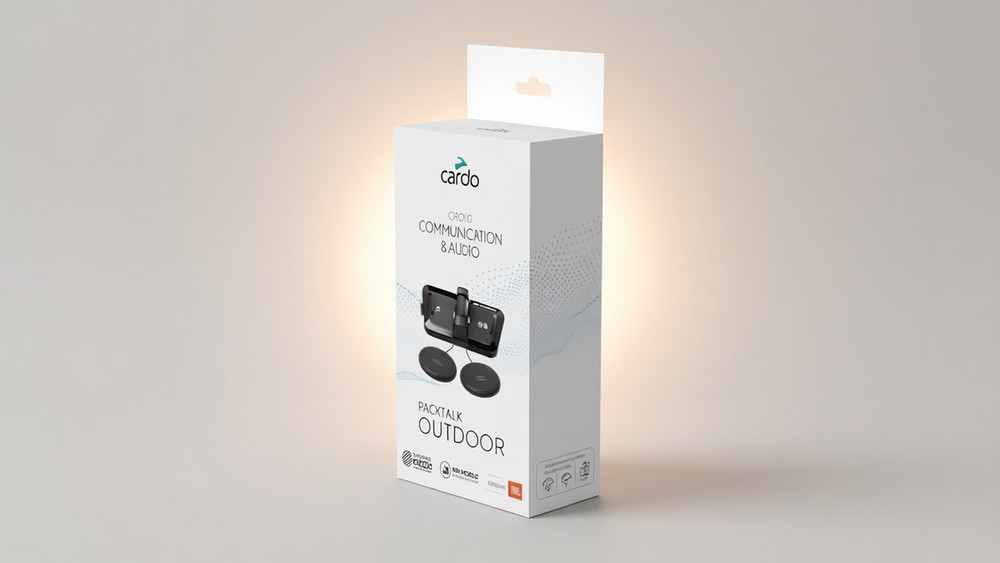
Picking it is not as simple as reading the box. Cardo sells the same mesh platform to motorcyclists in several trims, and the Outdoor swaps the motorcycle mounts for a glue plate and a clip made for winter and full-face helmets. It costs 269.95 for one unit, so a couple or a group multiplies that number fast, and the listing makes claims about range and riders that need unpacking before they mean anything on a slope.
What follows walks through what owners report about range on real mountains, what the battery does across a ski day, what the IP67 rating covers, and what the price looks like counted per rider.
A winter-sports intercom with a motorcycle price tag
The Cardo PACKTALK Outdoor holds 4.6 stars across 287 ratings, and the spread is lopsided in the right direction: 84 percent five stars against 6 percent one star. It was in stock at 269.95 when we checked, and the spec table lists a 2-year manufacturer warranty.
Under the shell sits Cardo's Dynamic Mesh Communication platform, the mesh technology its motorcycle range uses. Dynamic Mesh handles up to 15 riders at a claimed 1 km, the speakers are 40mm units tuned by JBL, and a natural-voice engine answers to "hey Cardo" so you can leave the buttons alone. It carries an IP67 rating, which we'll test against the bullet promises further down.
Where the shine wears off is arithmetic. Split that 269.95 across even two riders and the PACKTALK Outdoor lands among the most expensive of the 192 intercoms in our comparison table, and a family of four pays over a thousand. Nothing else about this listing matters as much as going in with that number clear.
What the mesh does on a mountain, in the owners' words
A mesh network works because every node relays for the others. Each headset passes traffic along, the chain re-forms when a rider drops out, and no single unit is a boss that the rest depend on. That is how one claim can cover both 15 riders and a kilometer: the range figure describes a chain of units, not one radio shouting a kilometer downhill.
The owner reports fit that picture. One group skied with two parties riding separate lifts about 1.25 miles apart and could still hold a conversation, which is exactly the relay chain doing its work.
A snowboarder who rides with her husband describes a tighter working radius, somewhere near a quarter mile, and says it outright: the thing will not connect across a mountain, but on the same slope or nearby slopes it holds. Both things are true of a relay network, and knowing the difference before you buy is the whole game.
Daily behavior sounds painless. Groups that split up and regrouped through a day reported the units reconnecting on their own, with no fiddling and no drama. Music ducked under conversation instead of stopping, so a chatty passenger doesn't kill someone's playlist.
One tip from the review with the most helpful votes is worth stealing: mute the microphone on chairlifts, or you spend the ride hearing yourself.
The battery, where the owners outrun the listing
Here's a strange gap: the listing never states a battery figure. No hours talk time, no capacity, nothing in the bullets or the spec table. For a product asking 269.95 per head, that's an odd omission, and it means everything known about endurance comes from owners.
Their numbers land in a consistent place. One skier who rode lift openings to close, 9am to 4pm, finished the day with the battery between 50 and 75 percent, and guessed the deep cold would shave that margin. Another skied a full day of business calls on black runs and never saw the gauge drop below 75 percent.
A third found the battery ran down faster when music played constantly, and one half of a snowboarding pair reports their phone dying well before the intercom did.
Read together, those reports describe a unit that clears a full ski day with room to spare, in warmish conditions at least. What nobody has documented yet is a genuine deep-cold day, how long it lasts with music hammering the whole time, or anything about cycling, which the title sells as hard as the skiing. You're trusting owner reports over a spec sheet that stayed silent.
IP67, checked against the bullet's promises
The listing claims IP67, and that pair of digits has a precise meaning under the IEC 60529 standard. The 6 means dust-tight, proven by holding the enclosure under vacuum for up to 8 hours with fine dust. The 7 means the headset survived immersion in a meter of fresh water for 30 minutes in a lab test.
The bullet goes further than the test. Rain, sun, mud, dust and snow is a broader list than IP67 measures, and one wrinkle is worth knowing: the water digits aren't cumulative past IPX6, so an immersion rating doesn't automatically guarantee protection against a pressurized jet.
Snowfall and wet powder sit comfortably inside what the rating covers. A blast from a garden hose is where the fine print starts to matter.
The honest limit is that the record here is clean but short. Not one owner in the texts we pulled reports water or snow getting in, which is what you'd hope for on a winter product, but months-long durability reports haven't accumulated yet. Wikipedia's IP code reference lays out the full test definitions if you want the digits decoded in detail.

Counted per rider, the pack price is the whole argument
269.95 buys one headset with its mount and speakers. A couple who both want to talk pays 539.90, and the family setups reviewers describe run well past that. One owner who wired up the kids so they could coach them from the lift calls the price insane and then says it was worth it, and the most detailed review of the bunch calls it pricy if you have a large family or group, before recommending it anyway. People who buy this thing know what it costs.
Two details soften the number a little. The owner with the most helpful votes reports Amazon pricing matched Cardo's own store exactly, so there's no discount hunt to run between them, and bought on a Black Friday special, so timing does move the figure. Our intercom table sorts everything we track by cost per rider, and this one sits deep in the expensive band there, so check the live position before deciding.
The alternative isn't a cheaper competitor, it's another configuration of the same idea. Cardo's motorcycle trims run the same mesh platform, and what the Outdoor adds is the pair of mounts that let one pack move between helmets, which is the feature this version exists to sell.

FAQ: questions a ski or ride day will actually raise
Can two groups on opposite sides of a mountain talk?
Not through the mountain. The mesh relays through units in between, and owners describe exactly that: one pair of groups 1.25 miles apart on separate lifts stayed connected, while a snowboarder confirms the link drops across the mountain itself. If your group splits, riders in between are what keep the chain alive.
How long does the battery last?
Owners report full ski days finishing between 50 and 75 percent remaining, and one call-heavy day never dipped below 75 percent. The listing itself states no figure, so treat these reports as the only data there is until Cardo publishes one.
Can I keep track of my kids on the same slope?
That's the use case two family reviewers describe working well, conversations at normal speaking volume the whole way down. One set wired up children for coaching by voice. The working radius a single pair saw was nearer a quarter mile, so slope-wide tracking relies on the relay chain, not one direct link.
Does it work with my phone and my AirPods?
Bluetooth pairing to a phone for music and calls comes up repeatedly in owner reports, and the bullet adds AirPods pairing plus a 3.5mm to USB-C adapter for wired headphones when you're helmetless. We found no owner text testing the AirPods path, so treat that claim as untested by the record.
What comes in the box?
A glue plate for dedicated winter helmets, a V-strap clip for full-face helmets so the pack can move between helmets, a USB-C charging cable, the 3.5mm adapter, and a wired boom microphone with velcro speaker pads.