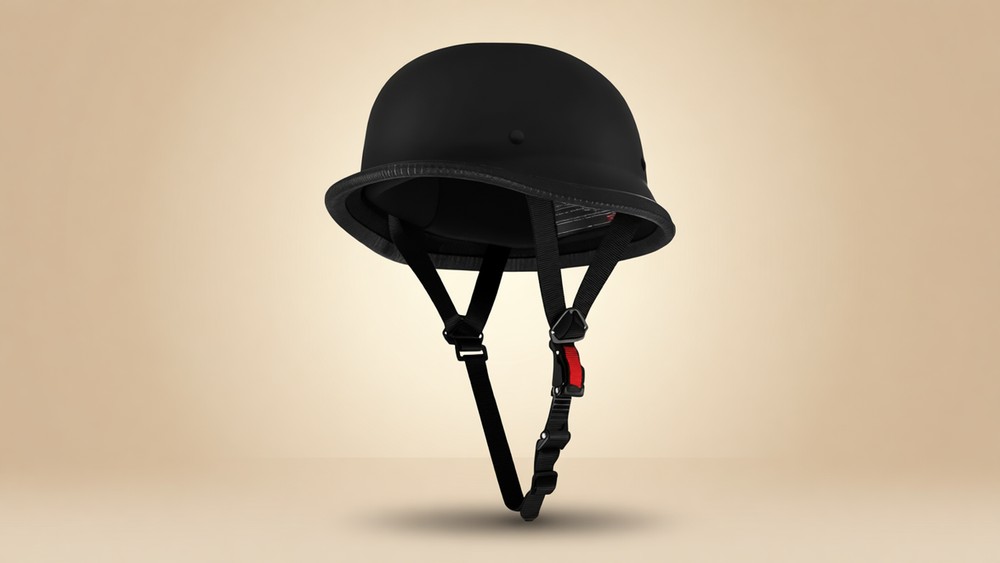
German-style half helmets are the cheapest lids you can legally wear in most states, and they sell on one thing: the look. The BwondMand German-style half helmet nails it. It sits in the cheapest fifth of the 257 helmets we track, carrying 4.4 stars from 323 ratings with 78 written reviews underneath. That written record is where the easy recommendation gets complicated, because the buyers who describe the inside of the shell don't sound as comfortable as the star average suggests.
The foam is what the record keeps coming back to
A helmet is two things: a shell that spreads the hit and a foam liner that slows your head down gradually instead of stopping it dead. That second part does the actual work. Wikipedia's motorcycle helmet article describes the standard construction as a polystyrene foam inner shell that absorbs impact shock, and it's worth knowing that so-called novelty helmets fail precisely because they lack that energy-absorbing foam. They protect your scalp from sunburn and road rash, and that's the whole list.
Now read what owners say about the inside of this one. One purchase-verified text writes that the inside is styrofoam and adds that they wouldn't trust the helmet on the road. Another calls the cushioning very hard and says it won't save you if things go wrong. A third describes thin, rock-hard foam like a children's bicycle helmet, and a fourth puts it more bluntly than anyone: hard as a rock, strictly for decoration, with a suede liner and nothing else worth mentioning. Four separate texts, none of them praising the liner, two of them comparing the padding to things that are not road gear at all.
I want to be careful here, because hard-feeling padding is a real complaint about cheap helmets generally and it isn't proof of anything about crash performance. Nobody in this record has posted a crash story either way, which you'd honestly expect given how the audience skews.
But when four buyers independently describe the padding as hard, thin, or decorative, and the price sits where this one sits, the reasonable reading is that you're buying the look and a shell, and the liner is where the money didn't go. If a park or campground rule is the reason you want a helmet, one owner spells that use case out and then answers their own question with an emphatic no on trusting it for real riding.
The chin strap deserves a five-minute check on arrival
Here's the single most serious text in the record, and it's verified. A buyer reports that the silver pin on the side of the red clip wouldn't stay in, that they tried gluing it, and that the clip came undone while riding, taking the helmet off the rider's head and into the trees beside a highway. The helmet was lost and the return window was gone, so the review ends with advice instead of a refund: double-check the chin strap before every use.
That's one account, and single failures happen with any budget strap hardware. But it sits next to a cluster of smaller strap complaints that make the pattern worth your attention. One buyer had to cinch the strap all the way to its limit just to get a medium to stay put. Another calls the red strap ugly enough that it made them not want to wear the helmet at all. And one two-star text praises the metal buckles as better than the plastic you usually get at this price, even while calling the build poor overall, so the hardware story isn't one-sided.
So the practical move is simple. When the box shows up, work the buckle twenty times. Pull the strap tight with the helmet on and yank it. Check that any pin or retention feature sits solidly before you ever ride on it, and keep doing it periodically, because the account above describes a part that failed after looking fine. Five minutes of fiddling costs you nothing and covers the one failure mode in this record that could actually hurt you.
Sizing runs small on paper and splits in practice
The listing prints a full multi-country size chart, with head circumference bands running from a small at about 21 inches up to an extra-extra-large at just under 25. Chart in hand, you'd expect the usual experience: measure, order, ride. The record says otherwise, and it says it from both directions at once.
The small side is crowded. One buyer says they run super small in capital letters. Another wears extra-large in clothing, gloves, and every other helmet they've owned, and reports that this extra-large is very small. A third bought a medium and found it fits like something made for a kid's head, recommending a large for anyone over sixteen. A fourth ordered a medium and had to ride with the strap maxed out. There's even a two-word Spanish review that translates to "they're small," which might be the most efficient complaint in the whole record.
Then there's the buyer who says it fit too big and didn't sit correctly, which keeps the sizing story from being a simple one-way warning. The most useful detail in the whole pile comes from the medium buyer whose helmet ended up on their wife, which tells you the medium genuinely works for smaller heads rather than being uniformly useless. My take: treat the chart as optimistic, expect to size up, and buy from a seller with returns you've actually read, because one buyer ordered a larger size after a small showed up and reports the replacement never arrived at all.
What the record likes, and the wind disagreement
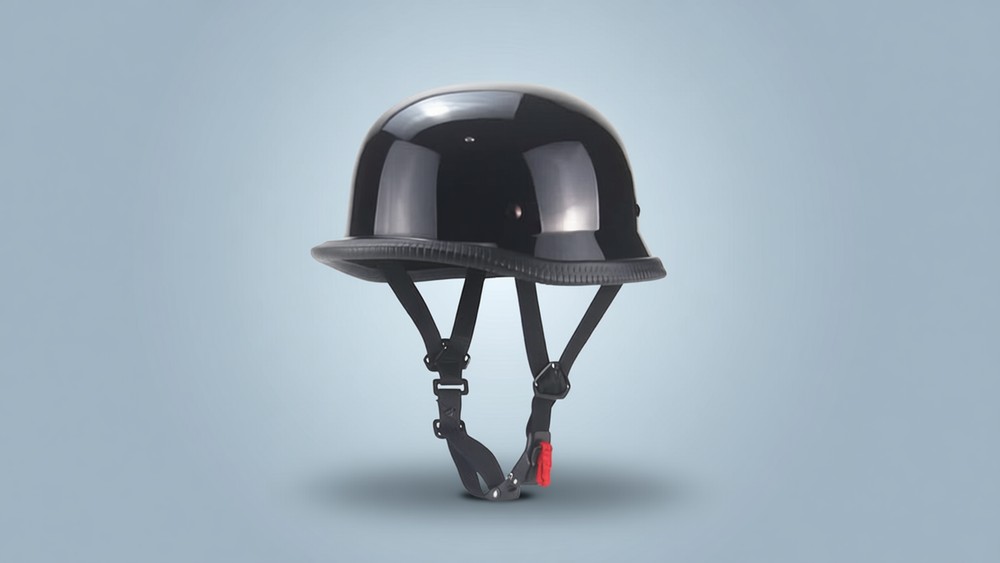
To be fair to the helmet, the positive texts are consistent about a few things. Lightweight comes up twice, once from a rider who says the weight reduces neck strain on longer outings. The low-profile shape gets credit for not having the mushroom look that plagues cheap half shells, and one owner notes it's easy to get on and off.
The most-voted text in the record is a mom describing her son wearing one on his electric moto: it fits well, it stays put, it doesn't make him look like a bobblehead, and several of his friends bought the same design after seeing it. That's a real durability data point too, since the same review mentions the kid tosses it everywhere and it holds up.
The wind question is the one place the record argues with itself outright. One four-star text says the helmet doesn't catch wind at all. An older one-star account says anything above about 25 mph makes it act like a parachute tied around your neck, and recommends a shell that sits flat and tight instead. A newer two-star buyer, who hadn't ridden theirs yet, mentions the parachute effect at highway speeds as something other riders have noted. Three texts, three positions. If there's a pattern, it's that head shape and riding speed both matter enormously with a shell this short, and the honest answer is that nobody in this record can tell you which side you'll land on.
Frequently Asked Questions
Is the BwondMand German half helmet DOT certified?
The bullet list claims it meets the DOT safety standard, and DOT is a self-certification system where the manufacturer does the certifying rather than a government lab testing each helmet. The live product title doesn't mention DOT at all. I can't verify the claim beyond what the listing says, and given the foam descriptions above, I'd treat the certification as unverified paperwork until you've held the helmet and read its labeling yourself. Wikipedia notes that in the US, a small share of riders still wore non-DOT compliant lids as of the last government survey, so checking the sticker on any budget helmet is a habit worth having.
Will it run small or large?
Mostly small. The complaints about undersized fit outnumber the oversized ones several to one, with extra-large wearers hit hardest and one medium buyer recommending a large for anyone over sixteen. If you're between sizes, go up, and read the seller's return terms before you order, because one buyer's replacement never arrived.
Is the lining real impact foam?
I can't tell you, and neither can the listing, which specifies only an ABS shell and a comfort liner. What I can tell you is that four owners independently describe the padding as hard, thin, or decorative, which is the same language people use about novelty helmets that lack energy-absorbing foam. A DOT label on the box is the thing to look for, since DOT-certified helmets are required to have that energy-absorbing layer.
Can you ride it at highway speeds?
The record splits cleanly on this. One owner reports no wind problem, one reports a parachute effect above 25 mph, and a third references the same parachute complaints without having ridden it yet. A half shell this short will generally be noisier and less settled at speed than a three-quarter or full-face design, so if highway riding is your main use, look at more coverage first. Our helmet comparison table sorts full-face and modular options by price if you want to see what a bit more shell buys.
Does it come with goggles?
Unclear, and the listing doesn't settle it. One owner text refers to goggles of dollar-store quality in a way that suggests they came with the helmet, but no bullet mentions goggles and no spec row lists them in the package. If goggles matter to your decision, ask the seller directly rather than assuming either way, or budget for your own set, since wrap-around eye protection is standard practice with open-face helmets anyway.
Who is this helmet actually for?
The style-first rider on lower-speed machines, and the record says so without me having to stretch it. The audience that shows up in the texts rides electric motos, buys it for the vintage look, wears it to satisfy park rules, and bought in numbers large enough that the design spread to a rider's friends. That's a legitimate use, and at the cheapest end of our helmet table it competes with the BwondMand with-visor variant we reviewed separately in our other BwondMand review, which is the same idea in a slightly different trim.
But if your priority is impact protection rather than compliance and looks, a known-brand half shell like the ILM MH201 sells at a similar price and brings a seven-year review record with it. Check the strap on arrival, size up, and read the labeling before you decide which gamble you're comfortable with.