The cheapest thing about the ANEDER intercom is not the 19.99 sticker, though that is cheap enough. It is the review pool behind the listing: six ratings, three written texts, and the only purchase-badged one of the three is a two-star complaint about volume. Everything else on the page, the positive half of the histogram included, comes from buyers whose orders we cannot confirm.
That asymmetry doesn't make the headset bad. It makes the page hard to read honestly, which is a different problem and the one this review solves. We scraped the listing and its reviews, checked every claim on the page against its own spec table, and decoded the waterproof rating against the actual IP standard.
The value case here is real: across the intercoms we track by price per rider, this sits in the cheapest fifth of everything, and among two-rider units it is one of the cheapest ways into the category. Whether you should pay even that depends on how much weight you give one badged complaint.
What the price buys, and the one text you should read first
A pair of these costs less than one mid-pack unit elsewhere in the category, and the price-per-rider math is the reason this listing earned a rebuild. In our intercom comparison table, sorted by cost per rider, this one sits near the top of the cheap end.
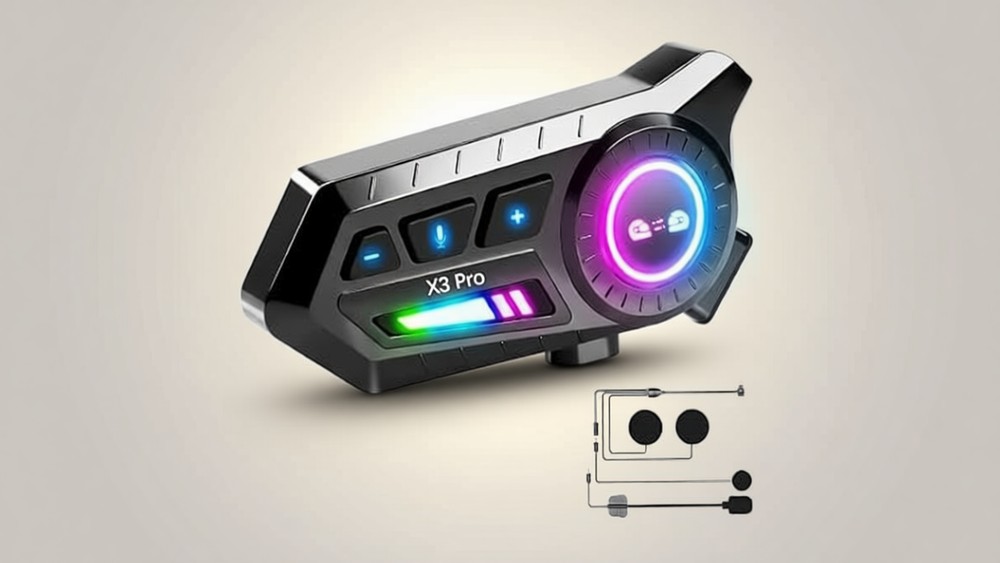
The box holds one unit at 5.3 ounces, with a boom mic for open-face helmets, a hard mic for full-face, six Velcro pads, a back clip and a USB-C cable. The spec table adds a two-year warranty row, which is generous for this price and worth noting before anything else.
Now the text a buyer should read first, because it carries the only purchase badge on the page.
The owner has found the volume too low, could not understand what a passenger was saying, and would not recommend it. That's the entire text, and on a six-rating pool it's the strongest signal present. The two positive texts are longer and more detailed, but neither carries a badge, so their orders are unconfirmed.
The fault itself is specific and hard to dismiss. Volume is not a feature you can check from a listing, and it's the one dimension where cheap speakers, a 16-ohm driver and wind noise meet the road. Whether it describes one weak unit or the design, the record can't say.
What the record can say is that the two unconfirmed positives both describe audio as decent or average rather than loud, which is at least consistent with the complaint.
A six-rating pool and how to read it
The rating line reads 3.2 out of 5 from 6 global ratings. The histogram underneath shows 22 percent five-star, 36 percent four-star, zero three-star, 21 percent two-star and 21 percent one-star. Six ratings can't produce percentages that clean, so the bands read as a small pool rounding against itself, and the shape matters more than the digits: nobody sits in the middle, and the pool splits between mostly-satisfied and genuinely-unhappy.
The demand side of the page is worth noticing too. The category rank sits at number 235 among helmet communication units, deep in the weak tail compared with the units we track, and that scarcity feeds back into the record.
Few buyers means few texts, and few texts means the one badged complaint stays the loudest signal for months. This is what buying on a thin record actually involves: you are not averaging anything, you are deciding which single account you trust.
One honest option is to wait. Thin pools thicken or they do not, and nothing about the hardware changes while you wait. The other option is to accept the price as the cost of finding out, which at 19.99 is a different risk calculus than it would be at 10 times the money.
The listing argues with itself on three numbers
Bullet two carries the heading 120H Music and 60H Talk Time, then its own body says 30 hours of intercom talk time.
Same bullet, same page, two numbers for one claim. The spec table's Battery Average Life row says 120 hours, which matches the music figure and not the talk figure in either place. Whatever the true talk-time number is, the listing has not settled on it.
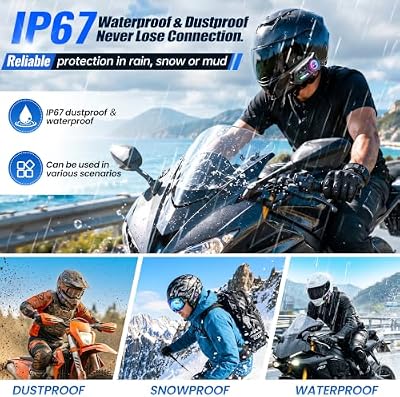
The waterproof rating needs a decoder ring. IPX67 is not a valid IP code: under the standard, codes carry two digits after the letters, the first rating protection against solids from 0 to 6 or X, the second against water from 0 to 9 or X, and X means not tested rather than zero (Wikipedia, IP code).
Three characters after IP reads as a mashup of IPX6, which covers powerful water jets, and IP67, which covers dust tightness plus immersion to a metre for 30 minutes. A device actually tested for both is written with a slash, IPX6/IPX7. The spec table row says only Waterproof, so the rating on the title is marketing shorthand, and buyers should not read it as two certifications stacked.
Third, the spec table lists Active Noise Cancellation under Noise Control. No text in the record mentions noise cancellation of any kind, and the only audio fault reported is raw volume. On a unit at this price, an ANC claim with zero owner support is a spec-table row, not a feature.
The model number row reads Motorcycle Communication System, a category label where a model code belongs, which tells you how much engineering identity this headset carries.
Install: the five-minute promise and the one-page manual
The bullet promises tool-free installation in under 5 minutes. The one detailed install account says otherwise: a first-time installer, who had previously had a shop fit a unit, found this install much more difficult than expected because the manual is a single page with vague steps and minimal description. The installer worked it out by trial and error, and the text still lands on four stars despite the friction.
Budget an evening rather than five minutes if nobody has installed a headset on your helmet before.
The part that earns real praise is the mount. The physical clip or clamp that grips the helmet shell, rather than relying on adhesive tape alone, gave the reviewer much more confidence at speed, and it's the detail most worth keeping when comparing against other budget units that glue on.
Once installed, both positive accounts found the controls reachable and the headset unobtrusive, with one noting the speakers took repositioning before they sat comfortably in the helmet.
Check the box contents against the bullet list when it arrives, because the kit includes both microphone types and the mounting hardware, and the install account suggests the manual will not tell you which mic suits your helmet. Boom mics suit open-face and modular lids, hard mics tuck inside full-face chin bars, and the Velcro pads do the holding either way.
What the record leaves untested, and where that leaves a buyer
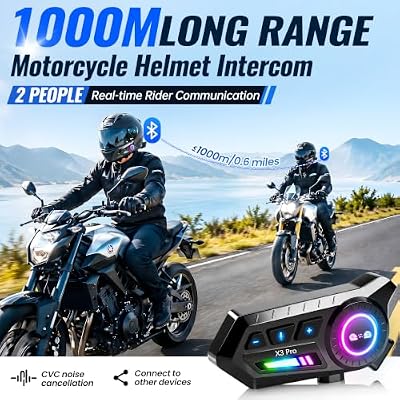
Nobody has tested the 1000 m intercom range, and no text reports any intercom distance at all. One unconfirmed account praises Bluetooth stability without numbers, which is a different claim than range.
The waterproofing has no rain report. The battery hours have no owner figure. The passenger complaint in the badged text is the only rider-to-rider account on the page, and it is negative.
The durability record runs two months. On paper the intercom is the headline feature. In the record it is the least-tested part of the headset.
What the record does support, thinly, is the phone use case: pairing straightforward, music and navigation clear, calls workable at moderate speed. That's what 19.99 reliably buys here, with the two-rider intercom as an untested bonus.
A buyer whose real need is rider-to-rider talk should weigh the near-sibling budget unit we rebuilt, the BTQILEYOO Y10-2X, whose record includes a dated durability account and three intercom reports, or sort the full field in our intercom comparison table by cost per rider and see what sits beside this one.
The decision this listing forces is a small one, and it's honest to name it plainly. At 19.99 with a two-year warranty, the downside of being wrong is bounded, and the value band is real.
The upside is unproven in the exact dimension the headset is named for. Buy it for phone audio at a very low price, with eyes open about the one badged volume complaint and the untested intercom claim, and treat anything the record cannot confirm as marketing until owners say otherwise.
FAQ
Does the box include one unit or two?
One. The spec table lists Number of Items 1 and Unit Count 1 Count, and the 5.3-ounce item weight covers a single headset. A rider-to-rider pair means buying two boxes, which doubles the price but still lands the pair among the cheapest two-rider setups we track.
What does IPX67 actually mean?
It's not a valid IP code, so it means less than it looks. The standard's codes use two digits after the letters, with X marking a category left untested.
IPX67 appears to mash up IPX6, which covers powerful water jets, and IP67, which covers dust tightness plus immersion to a metre for 30 minutes. A device tested for both carries the notation with a slash between the two.
Is the 1000 m range claim real?
Nobody has measured it. The record contains no intercom distance report of any kind, and the one account that praises connection stability gives no numbers. Classic Bluetooth phone links typically run under 10 metres, and intercom distances depend on line of sight, so treat 1000 m as an open-terrain best case until owners report otherwise.
What did the purchase-badged owner find?
One badged text exists, and it is a two-star complaint: volume too low, could not understand a passenger, would not recommend. The two positive texts on the page carry no purchase badge, so their orders are unconfirmed.
How long does the battery last?
The listing cannot decide: the bullet heading says 60 hours of talk, the bullet body says 30, and the spec table says 120, which matches the music playback figure. No owner reports hours. What the record supports is the 2-hour charge time on the 1000mAh cell, and nothing more specific.