Most camera listings exaggerate upward, so a listing that argues itself down deserves a second look.
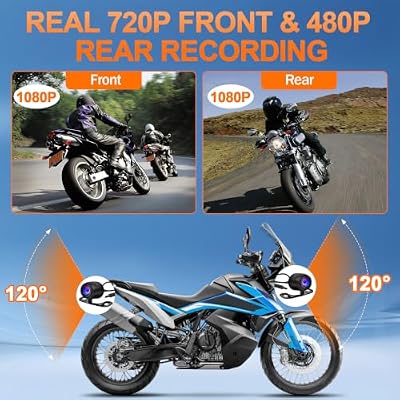
The TEWOLISES dual motorcycle dash cam records 720p at the front and 480p at the rear, and the first bullet says so in bold print before adding that this is entry-level definition and not 4K cinema. That is an unusual thing for a seller to admit. It makes the listing easier to trust and the camera easier to judge, because there is no inflated claim to knock down.
The harder problem sits in the review record, not the spec sheet. Seven people have rated this camera and six of them wrote something, which is a very small pool.
Every text in it went up in a single two-week stretch in September and October 2026, the oldest is from late September and the newest landed eleven days after it, none of the six carries a purchase badge, and one of them discloses that the camera arrived free through Amazon's Vine program.
This article walks through what the listing actually promises, what the record does and does not establish, and where this rig sits on price against everything else we track.
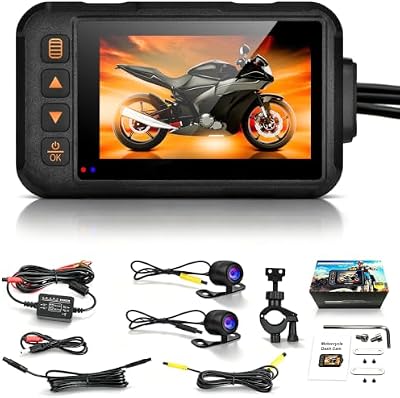
The TEWOLISES dual dash cam is the cheapest fifth of the dash cam comparison table, and it earns that position on paper: two cameras, a hardwire kit and a 3-inch screen at a price that undercuts most of the table.
Nothing in the record disproves the specs, but nothing in it confirms them either, because no buyer in the pool has owned one long enough to report how it wears. It suits a rider who wants dual coverage for the smallest possible outlay and accepts that the record behind the rating is two weeks deep.
What the listing gets right by understating
The resolution honesty is the headline, and it is worth taking seriously because resolution is where budget dash cam listings lie hardest.
Across the category, 1080p is the standard for a front camera and 720p is the typical rear, with 1440p the common upgrade step (Wikipedia's dash cam overview covers the norms). This rig's 720p front and 480p rear sit below both standards, and the listing says so. The rear angle is 90 degrees against the front's 120, which is narrow but keeps edge distortion down.
The electrical spec is the quiet strength. Input runs 8 to 36 volts, which covers both 12-volt bikes and 24-volt setups, and the hardwire kit ships in the box. That matters more than it sounds: parking mode needs a permanent power feed, and on most budget dual rigs the hardwire kit is an extra purchase that quietly doubles the real price.
Here the 24/7 parked-bike recording is workable out of the box, with the G-sensor triggering a 30-second clip on impact while parked.
The water protection splits in a way that reads carefully rather than carelessly. The main box is IP65, rated against rain and low-pressure jets, and the two camera pods are IP67, sealed against heavier weather. That split makes sense for a motorcycle install, where the cameras live out in the weather and the recorder rides somewhere sheltered, and the listing suggests exactly that, under the seat.
The template junk in the spec table
Not every row deserves the same trust. The details table claims ten items in the box, a roof mount on a motorcycle camera, and an item weight of 3 pounds on a unit measuring roughly four inches wide. Those rows are template filler and should be ignored.
The parts list that matters is the plain one: main unit, front and rear cameras with extension cables, charger, mount, USB power cable, hardwire kit, and a wired remote for locking files by hand.
A record too young to lean on
The rating is 4.8 from seven ratings, and the arithmetic behind that deserves unpacking. The histogram shows 82 percent five-star and 18 percent four-star with nothing below, but only six texts exist, all of them written inside an eleven-day window in late September and early October 2026. This is not a record with a history. It is a launch window.
Every text is unbadged, and one self-discloses Vine, which means the camera was free. Free units are not disqualifying, but they explain how a record grows this fast and they deserve plain disclosure rather than quiet omission.
The two texts that discuss motorcycle use directly restate the bullet specs almost phrase for phrase, right down to the resolution figures and the feature list, which reads more like listing-shaped writing than independent observation. The text that leads the helpful sort is a warm gift story with a single helpful vote, so the record has no real ranked center at all.
The most useful text in the pool is also the least motorcycle-shaped. One buyer mounted the rig on a tractor to watch implements while leveling land, and their four-star account is the only one that reads like extended hands-on use. They praise the build, call the functions easy to learn without the manual, and count both power options as a win. That is a real data point, just not a motorcycle one.
What nobody has tested yet
The gaps are the story. Nobody in the record has owned one past about two weeks, so there is no durability signal of any kind. Nobody reports how the night footage actually looks, and low light is where cheap sensors fall apart.
Nobody reports parking mode catching a real event. Nobody says whether the rear cable reaches the back of a large bike without extensions. A buyer at this price is not reading a track record, they are funding the next chapter of one, and the price should be weighed accordingly.
One category pattern is worth knowing here, without claiming it applies to this specific unit. Budget dash cams usually carry a lithium polymer backup battery rather than a capacitor, and those batteries have an estimated life of two to three years, after which degraded cells cause random power cycling and card errors (Wikipedia's dash cam article documents the trade).
Capacitors cost more and tolerate heat better, which is why they turn up in pricier units. Whatever is inside this one, no buyer has owned it long enough to find out.
Price, and what the money buys
On our comparison table this rig sits in the cheapest fifth of the 82 dash cams we track, and the live figure renders in the specs box beside this article. The box list is generous for the band: two cameras, the hardwire kit, a wired remote and a 3-inch screen.
The catch is the memory card. The loop recording that anchors the listing cannot run without one, the parts list includes no card, and category practice is a class 10 or faster microSD of 16GB or more. Budget for the card before you order, and check the current TEWOLISES listing because early-listing prices move.
If the resolution floor bothers you, the alternatives on our table trade up in different ways. The TERUNSOUl D018D adds a 4K front channel and a cabin camera for more money, and the realdio front dash cam covers the 1080p baseline with a single lens. Neither matches this rig's included hardwire kit at the price.
Should you buy it
Buy it if you want front and rear coverage on a bike, you can live with 720p front footage, and you accept that you are an early adopter of this particular listing by default. The honest specs, the included hardwire kit and the 8-36V input are real strengths for the price band.
Skip it if you need footage quality you can trust for plate reads, if you want a record of owners who have ridden a full season, or if night riding is your main use case. In those cases the small premium to a unit with an established record buys more than resolution.
FAQ
Does the TEWOLISES dash cam include a memory card?
No. The parts list covers the main unit, both cameras with extension cables, the charger, mount, USB cable, hardwire kit and wired remote, and no card appears anywhere on it. Loop recording needs a class 10 or faster microSD, so add one to the order.
Is parking mode usable without extra purchases?
Yes, as far as the listing goes. The hardwire kit is in the box, and the G-sensor records a 30-second clip on impact while parked. The caveat is that nobody in the record has demonstrated this catching a real event yet.
Is the video quality good enough for license plates?
The listing itself warns against expecting that. A 720p front camera at the category baseline sits below the 1080p standard, and the 480p rear is well under the typical 720p rear. The one detailed buyer account praises clarity in general terms without testing plate reads, so the honest answer is that nobody has measured it.
Do the written reviews carry purchase badges?
The 4.8 average comes from seven ratings, and none of the six written texts carries a purchase badge, with one disclosed as a free Vine unit.