A 20-inch fat bike with no motor is a heavy pedaler, and a front hub kit is the cheapest way to fix that. No mid-drive teardown, no rear wheel disassembly, one bolt-on wheel and a box of wires. Prices start low enough that the math feels obvious.
The math is where cheap kits get strange. Amazon's listing says 1000 watts in the title and in every bullet, the name people search for says 2000, and the two five-star reviews posted on the same day quote the listing's own numbers back at it. A buyer has to decide which number, if either, is real.
The buyer record is thin either way. Eleven ratings, three of them detailed, and the one-star side carries a warning about a wheel working loose that nobody should scroll past. Front hub kits also ask things of a fork that rear hubs never do, and the fork is the part you can't return.
What follows sorts the verified reports from the marketing-shaped ones, runs the wattage arithmetic the listing leaves unstated, and puts the price against the 191 other kits we track.
The SRTYGHW front hub kit is one of the cheapest routes we track from a pedal fat bike to an electric one, and the five purchase-confirmed reports read better than the 3.7 average suggests. Installation goes easily for most of the people who wrote in, the 20x4 fit checks out, and one owner has reached 24 mph on a heavy bike.
What holds it back is everything around the motor: a listing that cannot keep its own wattage straight, a three month warranty, no battery and no display, and a safety-washer warning from one buyer that nobody should skip. It's a real motor at a real price, sold with thin paperwork.
The wattage on the page, and the one in the name
The title and every bullet claim this is a 48V 1000W kit, yet the address of this article still says 2000W, and one unverified review repeats that number too. Listings drift the other way far more often than they drift down, so the safe assumption is the lower figure. Plan around 1000W and treat anything more as a bonus you can't count on.
Arithmetic sharpens the picture. 1000W at 48V works out to about 21 amperes of controller current at full load, and the page never states the controller's amp rating, so the real output can't be verified up front before you buy.
Twenty-one amps is not a small number either. A battery and its BMS are rated for continuous discharge, and a pack that can only deliver 15 amps will sag or cut out long before the motor shows what it can do.
The listing never says what the controller pulls, so a buyer choosing a battery for this kit is choosing blind. Size the pack for the full 21 amps and whatever the controller actually asks for is covered. Our battery comparison table sorts packs by price per watt-hour, which is the cheapest way to find one that fits.
There is a legal line in this too. A 1000W motor sits above the limits in electric bicycle laws, which allow 750 watts and 20 mph on motor power alone for a machine to count as a bicycle in the United States, and Canadian provinces cap the motors at 500 watts. Whether this kit is street legal where you live is a question for your jurisdiction, not for the listing.
What five verified buyers actually got
Five of the eight written texts carry confirmed-order badges, three positive and two sharply negative, and the pair of negatives are the ones with practical detail.
One owner has found the fit perfect on a heavy bike, everything needed in the box, and 24 mph out of it.
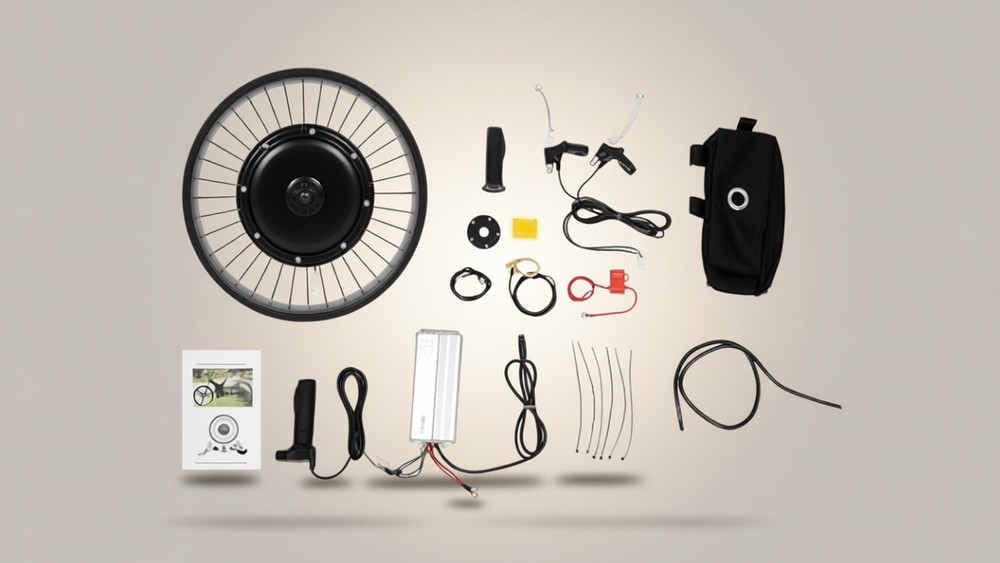
Another has described a straightforward front wheel swap with no complications, one adjustment to the front hydraulic brakes, and a controller with hookups for a throttle, pedal assist, and brake levers. The same text notes what the box lacks: a display. A third keeps it short, easy to install and operate.
The negative side is where the money gets real. One buyer reports that the brake handles named in the included-components table never arrived.
Another warns that the kit includes only one style of safety washer, not the universal fit the listing implies. The wrong washer can let the wheel work loose, and one buyer says that is exactly what happened to them, with a ride that ended in a hospital. That text has no helpful votes yet, and it deserves them.
Two reviews that read like the listing
Both July 7 five-star texts are unverified, posted the same day, and they recycle the bullet numbers 500RPM and 29.82mph word for word.
One even calls the kit 2000W on a 1000W page. Nothing in either text describes an install, a bike, or a problem. They read like the listing wearing a review's clothes, and the safest habit with any cheap kit is to weight the confirmed texts and let the rest slide.
An unverified one-star from October describes a rear hub that died two weeks in, which is odd on a front-kit page and may belong to a sibling listing instead. It does contain the longest support complaint in the record, a month of being told the fault was everything except the connector, and no replacement part offered.
Whether it belongs to this listing or a sibling, that support pattern is worth knowing before you buy.
Between the marketing-shaped praise and the misfiled complaint, the record leaves real gaps. No text mentions range, which battery the buyer paired with it, rain, winter, or the LED light named in the title. Treat all of those as unconfirmed.
A front hub asks something of your fork
Putting the motor inside the wheel makes the hub motor simple and cheap, but the weight raises the load on the wheel and changes how the bike handles. Because this motor sits at the front, those tradeoffs land on the steering wheel: heavier steering feel, a wider hub to house, and a motor exposed to everything the road throws at a wheel.
The gearless design in the title is the direct-drive kind, quieter and simpler than a geared hub, with a bigger motor at the axle in exchange.
The install checklist follows from all of that. Measure the fork spacing before ordering, because a fat hub in a narrow fork is a return waiting to happen.
Check which safety washer style your fork needs and confirm it is in the box, since one buyer learned the price of skipping that step. Expect to adjust the front hydraulic brakes after the swap. And pick a 48V battery rated to deliver the full 21 amps the math allows, because the controller's true draw is the one number the listing withholds.
Cheap per watt, and short on promises
At 140.50, this kit costs about 14 cents per watt of claimed power, which puts it in the cheaper third of the 191 conversion kits we track.
The comparison table holds the live figure in the specs box, because prices on listings like this one move often. Part of why the per-watt number looks so good is that the kit includes no battery and no display, and a box that did would cost more for a different reason. Compare kits on what arrives, not just on the motor's nameplate.
The promises are shorter than the price. The warranty runs three months, among the shortest we see on any kit, and one text describes support as a month of finger-pointing with no part offered. Nobody has reported how long the motor lasts past the returns window, so the honest answer is that nobody knows.
This setup fits a second bike, a private-land machine, or a rider who can verify the washers and the fork fit before the first ride. It's the wrong kit for anyone who needs a display, wants to ride streets legally, or expects a warranty that outlives a single season. Buy it here only with your eyes on the small print.

FAQ
Is it 1000 watts or 2000 watts?
The live listing says 1000W in the title and in every bullet, while the URL of this review and one unverified review say 2000W. Listings drift, so read the title on the page in front of you before ordering and treat the lower rating as the one you are buying.
How fast does it go?
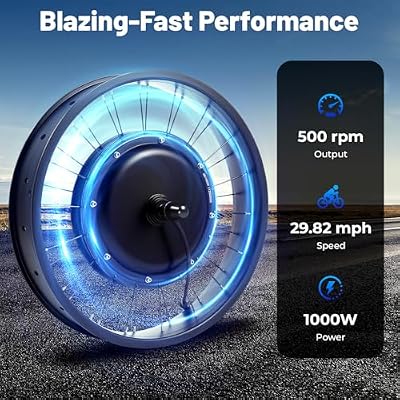
The bullet claims 500RPM and a 29.82 mph no-load speed. No-load means nothing bolted to the wheel and no rider on the bike, so real speed sits below it. The only owner report in the record is 24 mph on a heavy bike.
Does it come with a battery or a display?
No to both. The confirmed texts and the included-components table agree on a wheel motor, a controller with pedal-assist, throttle and brake-lever hookups, brake handles that at least one buyer says never arrived, and nothing with a screen. Plan a 48V battery rated for about 21 amps of continuous discharge.
Can I ride it on the street?
A 1000W motor sits above the 750 watt United States line and the 500 watt Canadian line that keep an electric bicycle classified as a bicycle. Jurisdictions differ, and some riders restrict the kit in settings or software. Check your local rules before the first road ride.
What is the warranty like?
Three months per the spec table. One text in the record describes a failure two weeks after install and a month of support messages that blamed everything except the motor. That text is unverified and may describe a sibling product, so weight it accordingly, but the three month window is printed and short.