A rear-hub kit for a fat bike lives or dies on frame fitment, and the SanBouSi 26 inch 1500W fat bike conversion kit can't decide in its own listing which wheel it powers. Bullet one calls the motor a front hub. The title and the parts bullet call it a rear wheel. Both can't be true, and the numbers inside the listing settle which one to believe.
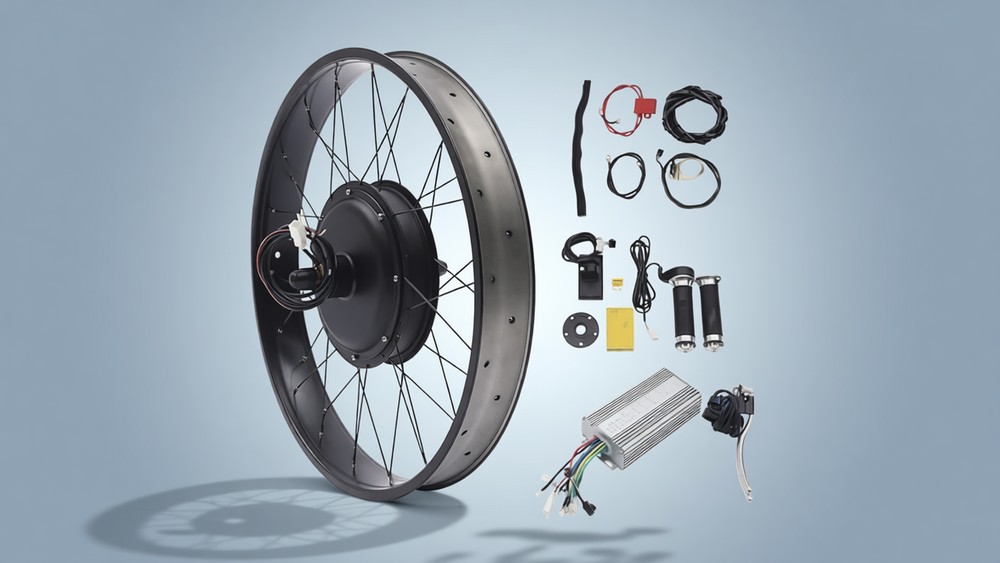
The parts that matter are real. The kit sold for 245.10 when I checked, In Stock with a buy box, carrying a claimed 1500W brushless gearless hub built for fat tires on a 26-inch wheel, a controller, an LCD display and a speed throttle. On the conversion kit comparison table that price sits close to the middle of the 191 kits we track, which is the honest way of saying the value is average rather than good.
Buyer evidence is thin. Two five-star texts, both confirmed purchases, written one day apart in November 2024, plus one untexted two-star rating providing the only dissent anywhere on the record. This article works the listing from its contradictions outward, then reads both texts closely, because what the ride report describes is exactly the fitment labor the bullets never mention.
The listing argues about its own wheel
The front-rear split isn't a typo, it's a copy pattern. Bullet one reads: "48V 1500W Brushless Gearless Front Hub Motor is suitable for 170mm open size snow bike". The title says Rear Wheel. Bullet two says "Full Kit Includes: Rear Wheel Hub". And the 170mm figure inside bullet one settles the argument, because 170mm is rear dropout spacing on a fat frame. Front fat-bike forks run 100 to 150mm. A front hub doesn't span 170mm, so the number and the word Front in the same bullet disagree, and the number is the one that matches the rest of the listing.
Bullet four doubles down on the template tone: "High Quality Brushless Toothless Motors, It Is The Best Choice For Snow Bicycle Lovers". Toothless means gearless, so it restates bullet one without adding anything. Bullets three and five are filler, "Professional Manufacturing, Stable Characteristics" and "High Sensitivity, Easy To Install And Operate". Every bullet opens with a bicycle emoji, which is as clear a template tell as this tier produces.
The spec table keeps the pattern going. It labels 1500 watts as Horsepower, a unit error rather than a spec, since 1500W is about two horsepower. There's no voltage row, no wheel-size row, no rpm figure, no pedal-assist row and no warranty row. Amazon files the kit under Powersports Wheel Hubs, a shelf for a different kind of vehicle, which fits a listing this careless about its own category.
What the box list leaves out
Bullet two's parts list runs: rear wheel hub, motor controller, "harness", LCD display and speed throttle, followed by "Etc", a word doing real work in a listing this thin. No pedal-assist sensor appears anywhere on the page, so treat this as a throttle-only kit. No brake levers either, which means your bike's existing brakes do all the stopping. That detail matters more than it looks, because the one ride report on this kit is about keeping disc brakes working. No battery and no charger, which is normal for kits at this price and still worth saying plainly.
The missing battery raises the one electrical question the listing never answers: what pack fits? A 1500W motor at 48V draws about 31 amps continuous, so the battery, its BMS and the wiring between them all need headroom beyond a casual 13A pack. The spec table carries no voltage row, so even the 48V comes from the title and bullets rather than from a proper spec.
Where a 1500W machine sits legally is worth knowing before the wheel goes on. United States rules define a low-speed electric bicycle as a machine with a motor of 750 watts or less and a 20 mph assisted ceiling, and a 1500W kit is outside that envelope. States add their own rules on top, some of them a lot stricter, so check yours before ordering rather than after.
Two texts from one November weekend
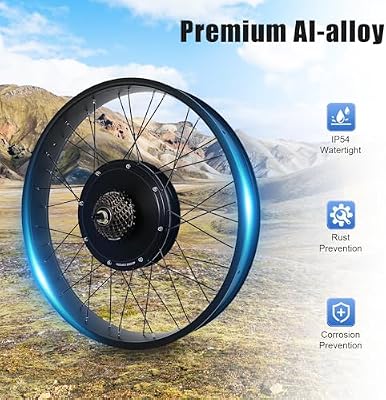
The rating sits at 4.1 from 7, and the reviews page returns two written texts. Both carry the confirmed-purchase badge, both are five stars, and both went up in November 2024, one day apart. The recent sort and the helpful sort return the same two, so there's no hidden older record behind them.
The histogram prints 58 percent five-star, 19 percent four, zero three, 23 percent two and zero one. Seven ratings can't produce those percentages exactly, so take Amazon's numbers as printed. The 23 percent two-star band is one untexted rating, and it's the only dissent the whole record holds. Nobody has written a critical word about this kit.
Be clear about what that record can't do. Two texts from a single weekend in 2024 means no long-term ownership, no failure report, no second winter, no warranty claim either way. The kit could be excellent or could die in month six and the record would look identical today. That's not a reason to skip it, it's a reason to price the risk yourself.
What the one ride report teaches
The top-voted text, at 6 helpful, is the only ride report, and it's the reason to read this listing carefully. The owner wanted to keep the original disc brakes, and the fitment wasn't plug-and-play. They bent the rear forks carefully to get the brake caliper to fit, then moved the existing rotor onto the new wheel. "In the end, I'm impressed," it ends. Read that as a report, not advice: bending a fork trades strength for caliper clearance, and this owner accepted that trade knowingly on their own bike.
The background worth knowing is that a hub motor puts its mass inside the wheel where the frame absorbs every bump directly, which is part of why hub-motor fitment fights the frame.
On speed, the owner reports a drop "from around 42 to now 36" mph while carrying a 200-pound body. The arithmetic says the post-fit number is the believable one. A fat tire on a 26-inch wheel covers somewhere between about 2.1 and 2.35 meters per turn depending on width, so the post-fit 36 mph needs roughly 410 to 460rpm, inside the normal no-load range for a 48V gearless hub. The remembered 42 needs 480 to 540rpm, at or past the top of that range. Both figures are one owner's report on one bike, and the same text garbles its mileage claim, "I've read out several 05 miles", which we won't stretch into any figure at all.
The same owner closes with a practical worry the marketing never touches: the finished bike weighs about 60 pounds, and they doubt their Thule rack will hold it. If a converted fat bike is going on a rack, weigh it first.
The second text, at 2 helpful, reads like an edit: "The item that I purchased is good quality but I didn't pay attention to the connection. And I apologize for the ranting about Amazon and the third party seller." Whatever the original complaint said is gone, replaced by an apology, and the only surviving trace is the connection mention. Don't guess at what was deleted. The pattern across both texts is still worth naming: the only two people who wrote anything both had to solve a fitment or wiring problem themselves, on a listing that promises easy installation.
FAQ: the forks one owner bent to fit, the 36 mph a 200-pound rider rode and the pack the listing never sizes
Will it fit my fat bike?
The 170mm spacing inside bullet one is rear fat-bike frame spacing, which matches the rear-wheel title and contradicts the bullet's own Front wording. Measure your dropout spacing and your brake mount before ordering. The one owner who reported fitment had to bend the rear forks to keep disc brakes working.
How fast is it?
The only speed number on the record is one owner's 36 mph after the swap, carrying a 200-pound rider. The listing itself claims no top speed anywhere, which for this tier is almost refreshing. Expect the real number to depend on your battery voltage, your weight and the tires.
What battery does it need?
The listing doesn't say, and that's a real gap at 1500W. About 31 amps continuous at 48V means you want a pack whose BMS is rated well above that. The ebike battery comparison table sorts every pack we track by price per watt-hour.
If the rear-hub, throttle-only, bring-your-own-brakes shape of this kit matches your frame, the current SanBouSi listing has the live price. Measure the dropouts first.