A 1500W direct-drive rear hub at the cheapest fifth of the conversion kit prices we track sounds like the deal of the month, and the RTUSUML 48V 1500W hub motor is exactly that good if you already own everything else. The catch is printed in its own spec table: the box holds one bare motor and nothing else.
Five ratings average 4.7 stars, but only two texts on the page carry words, and they tell two different stories. One confirmed-purchase buyer overclocked the motor to nearly double its rating and it survived. The other, an unconfirmed account, wrote the integration manual in miniature: what you still have to buy and what plugs you still have to make.
This review walks both texts, decodes the 500rpm figure against the wheel sizes the title claims, and reads the warranty row, which promises more than anything else in this price band. The live numbers sit in the kit comparison table if you want the full field.
The honest verdict: the RTUSUML rear hub motor is a strong cheap motor for builders who hold a controller and battery already, and a trap for anyone ordering it as a conversion kit, because no kit arrives.
It is a motor, not a kit
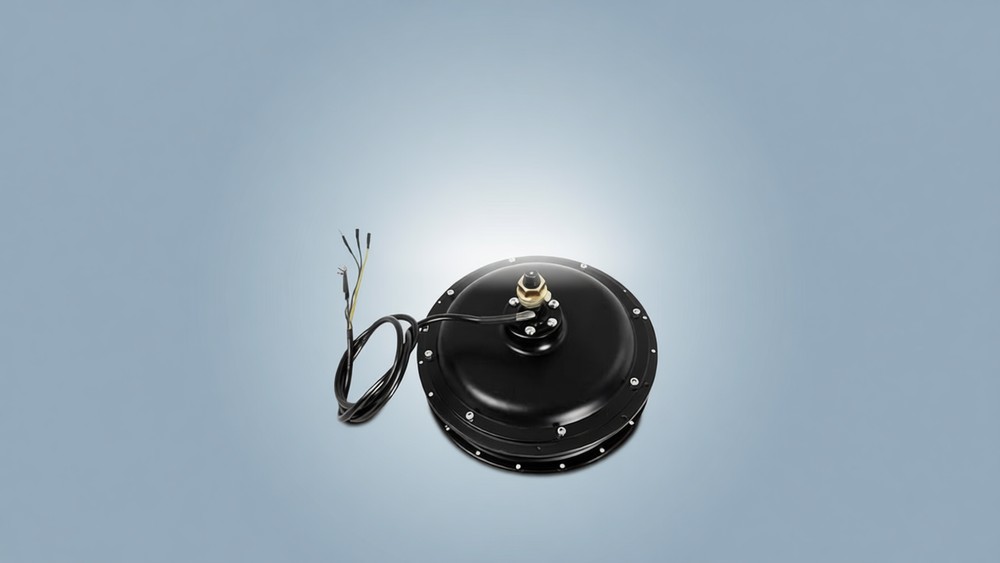
Our own table files this listing under conversion kits, because there is nowhere better to put a bare hub motor, but the spec table gives the game away in its Included Components row, which reads "sports-scooter-motors". That is template junk, not a parts list. No controller, no battery, no throttle, no pedal-assist sensor, no display, and no wiring harness ship in the box.
The August 2025 text says the same thing from the buyer's side. It is not a confirmed purchase, and we treat it as guidance rather than a purchase record, but it is specific where it matters: "Hub motors need a hub motor controller. If you can figure out how to connect it correctly, you're in business!" The same buyer explains that the controller they bought came with matching wire colors and "comes with everything except the plugs that connect the controller to the motor."
That last detail is the one worth planning around. The motor and a generic controller will share wire colors, and the crimps between them are your work. If you can't crimp connectors or read a color code, this motor is not your starting point, and a complete kit that plugs together will cost less than the frustration.
One more oddity sits in the spec table: Product Dimensions reads 11 inches wide by 11.41 high, and Item Weight reads 15.43 pounds. That is the heft of a direct-drive hub, and all of it lands in your rear dropouts.
The 2900W text
The April 2026 text is the only performance datum on the listing, and it is a confirmed purchase: "Pushed this motor to 2900w and it survived great budget option very strong does get warm when pushed." Nearly double the 1500W rating, and the motor lived to be praised for it.
The arithmetic behind that line is worth knowing. 1500W at 48V draws about 31 amps continuous. Push the same system to 2900W and you are asking the battery and controller for about 60 amps, which is precisely the kind of load that makes a direct-drive hub run hot. The owner's "does get warm when pushed" is the honest footnote on their own overclock, and it is the only thermal report this record has.
Gearless direct drive explains both halves of that account. With no internal planetary gears there is less drag when you pedal unpowered, fewer parts to wear, and quieter running, which is the design's whole appeal, per Wikipedia's brushless DC motor article. The trade is a tall effective gear, so low-speed hill torque is weaker than a geared hub of the same wattage. And the placement is unforgiving: hub motors sit unsprung, taking every hit the road serves, per Wikipedia's wheel hub motor article.
One line by one owner is not a durability test. It's a floor: this motor survived one buyer's abuse. Treat the 2900W report as evidence the windings have margin, not as permission to plan a 3kW build.
What 500rpm means on the wheels it fits
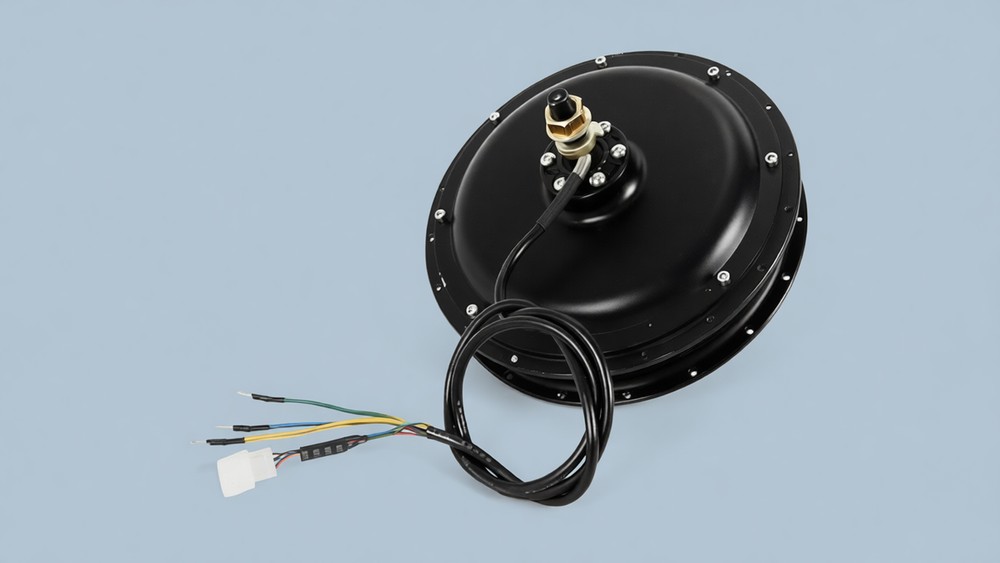
The title claims fitment from 20 to 28 inches, with 5.31 inch dropouts, which is 135mm, the standard rear spacing on conventional adult bikes. The title also calls the hub threaded, which on an e-bike hub is the standard mount for a single-speed freewheel, so your gears bolt on once the wheel is built.
The 500rpm figure is a no-load ceiling, not a cruise speed. On a 28 inch wheel rolling about 2.2 meters per turn, 500rpm is about 41 mph with the wheel in the air. On a 20 inch wheel it is about 29 mph. Under a rider, hills, and wind, both numbers land lower, and the legal ceiling usually lands lower still.
Torque reads better than it sounds once it reaches the ground. 55N.m at a 28 inch wheel's radius works out to about 150 newtons of push. On a 20 inch wheel the same 55N.m becomes about 215 newtons, because the small wheel turns the same torque into more force. If your build runs a smaller wheel, this motor punches harder than its numbers suggest.
What the listing never mentions is a torque arm. A 1500W rear hub is past the power level where bare steel dropouts are assumed to hold, so plan on one unless your frame has integrated torque plates. The under-55dB noise claim in the bullets is unmeasured by anyone on the record, and wind drowns the question above 20 mph anyway.
Free replacement forever, untested
The warranty row reads "Free replacement forever", which is the longest promise we have seen in this price band, where two-year rows count as generous. It's also completely untested by the record: five ratings, zero failure reports, and no account of anyone using the warranty at all.
That cuts both ways. Nobody has needed it, and nobody has proven it. The spec table at least names voltage, wattage, speed, weight, and a warranty, which is more than several complete kit listings in this band manage, but the rank sits at #891 in Bike Hubs, deep enough that this listing lives on price alone.
What the record never says is almost a section of its own. Neither written text names the wheel size they ran. No range figure exists anywhere. Nobody measured the noise claim. And the forever promise has never met a claim form, at least not on this page.
Who this fits
This motor suits a builder who already holds a 48V battery and a gearless-capable controller, wants a strong direct-drive hub at the bottom of the price table, and owns a crimping tool. The August text is the skill check: if "figure out how to connect it correctly" sounds like the fun part, this is your part.
It doesn't suit a first build. A complete kit costs more and arrives with the controller, throttle, display, and plugs matched, and the learning curve is friendlier for it. The battery is the other half of the budget either way, and our battery comparison table is where that cost gets decided.
There is a legal layer too. Most US states cap continuous motor wattage at 750W across e-bike classes 1 through 3, per Wikipedia's e-bike article, and a 1500W motor sits at double that. Where a build around this hub can be ridden depends on local law, so check before you lace the wheel.
Check the latest price on Amazon.
FAQ: the plugs that ship with neither part, the 135mm dropouts you measure and the gearless-versus-geared choice
What else do I need to build with this motor?
A 48V controller rated for gearless hub motors, a matching battery, a throttle, a PAS sensor if you want pedal assist, and the plugs between controller and motor, which the one install text says do not ship with either part.
Will it fit my bike?
The title claims 20 to 28 inch wheels and 5.31 inch dropouts, which is the standard 135mm rear spacing on adult bikes. Measure your dropouts before ordering, and plan on a torque arm, because none ships in the box.
How fast will it go?
500rpm is the no-load ceiling: about 41 mph on a 28 inch wheel and about 29 mph on a 20 inch, both measured with the wheel in the air. Expect less under a rider, and less again wherever the law applies.
Is it street legal?
Most US states cap continuous motor wattage at 750W for classes 1 through 3, and this motor claims 1500W. Legality depends on your local rules, not on the listing.
Gearless or geared, which should I buy?
Gearless is quieter, drags less when you pedal unpowered, and wears less. Geared makes more low-speed hill torque at the same wattage. Buy gearless for flat cruising and simplicity, geared for hills.