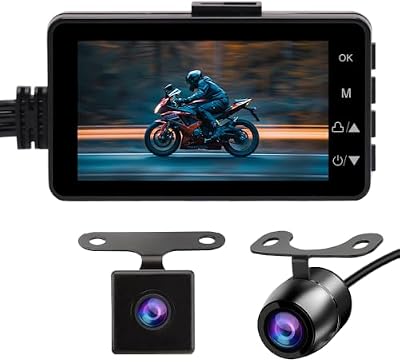
Three-star products don't normally get articles. The OBEST motorcycle recorder camera gets one because it's clear about what it is: a 720p dual-camera system that has a built-in screen. There are only six reviews (with a 3.8 avg) for this item, which is a "niche" selection for a specific rider. This article is about figuring out if that is you.
Specs and What You Get
Installation and Daily Use
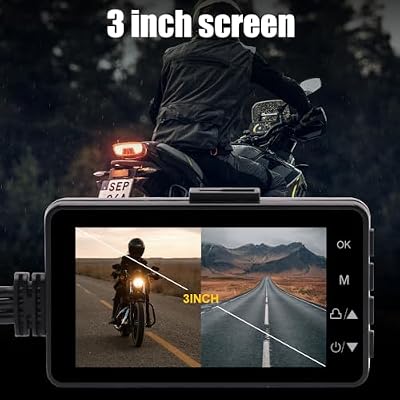
The best feature is the built-in 3-inch LCD screen on the recorder itself. You can view both camera feeds, review recorded footage, and make adjustments to the recorder settings all without needing to pair a smart phone or pull the SD card. Given how popular apps are used to access cameras in the category (which causes issues with multiple devices competing for resources), this is actually a great feature for riders that want to avoid having another gadget compete with their phone.
Each camera records at 720p for the front feed with a 480p rear feed. While that doesn’t get you the level of detail that higher-end cameras provide (such as reading plates at high speeds), it is sufficient enough to prove what occurred in the event of a parking-lot accident. As there are only six reviews and an average rating of 3.8 stars, the sample size is too small to consider statistically relevant. However, given that these reviewers are providing feedback based on their experience using the OBEST, we can reasonably say that their experiences are typical of those using the OBEST.
What Amazon Reviewers Are Saying
Setting up this unit involves mounting the cameras and reviewing them on the built-in LCD. The process is dramatically easier than using app-accessible cameras because you do not need to pair your smart phone to the camera to start recording. A single tap of the ignition switch starts recording on both channels. Once you're done riding, simply turn off the engine, select a clip from each camera angle, and export it directly onto an SD card. No phone needed, no app required, no interruptions due to a dead battery during a firmware update. Riders that have grown tired of smartphones controlling every electronic they buy will appreciate the simplicity of this design philosophy.
Who Is This for
Given the small number of reviews (six) and very limited sample size (3.8 stars), take this as directionally indicative of the reviewer’s overall satisfaction rather than statistically representative. Reviews praising the OBEST mention the ease of setting up and viewing recordings on the LCD screen vs. using an app-based system. Reviews criticizing the OBEST focus on the low resolution provided by each camera. the OBEST captures video at 720p, which is true. It would be disingenuous to pretend that 720p represents anything other than basic video capabilities. The lack of hardware failures noted within this small sample size is irrelevant, but again, given such a small sample size, it tells us almost nothing.
You are making a trade-off: autonomy from your smartphone in exchange for lower-resolution images. Some riders will gladly accept that trade, and based on the review history available to date, it appears that some of them understand exactly who they are.
Sizing It Against the Alternatives
Riders looking to equip themselves with two camera feeds that do not depend upon their smartphone in order to function. And riders whose evidentiary requirements are modest, i.e., proof of fault in low-speed incidents rather than capturing license plate numbers while traveling at highway speed. Urban scooter-commuters, delivery riders, and others who use their phones for navigation in addition to fighting numerous other battles will likely find this appealing as well. If capturing license plate numbers is important, you could get better image quality for a similar price elsewhere in our comparisons table.
Long-Term Ownership Notes
The built-in LCD screen provides a unique aspect regarding comparison to similarly-priced competitors. We framed this unit as a trade: resolution sacrificed for autonomy from your smartphone. All similarly-priced competitors route their setup and review of footage through a mobile app, which means users must create an account, establish a Bluetooth connection, and endure periodic frustration when trying to update the firmware. This unit accomplishes all of its functionality utilizing a three-inch LCD screen. For a significant segment of riders, that distinction will be the only factor determining their purchase decision.
Compared to the similarly-priced app-accessible units above this listing, the OBEST has a noticeable disparity in terms of resolution per camera channel. Specifically, while the OBEST captures 720p in front and 480p in back. Most of its rivals include 1080p or even 4K. Although we included specifications showing that the price differential between these models is relatively modest, we recommend readers prioritize their preference between image quality and app-free operation.
We specifically highlighted 480p rear channel as something riders considering purchasing this unit should be particularly mindful of. In spite of capturing adequate documentation of events, position, and sequence. The rear channel cannot capture readable license plate information unless you are parked immediately adjacent to someone else's vehicle.
The Verdict
Units equipped with screens have two distinct characteristics that relate to ongoing maintenance: a benefit and a drawback. On the plus side, since this unit does not rely on an app, it will never become obsolete due to a software update breaking an un-maintained companion app (a common lifecycle issue in app-enabled categories). The downside relates to the fact that the screen module is essentially the failure mechanism. While LCD modules are durable components in general terms, they represent the singular component that screen-less designs do not possess.
Camera seal durability follows conventional motor-elecric guidelines and the screen compartment should remain protected from precipitation regardless of camera ratings for wet conditions.
High endurance SD cards from reputable manufacturers with regular rotation (as previously mentioned) are absolutely necessary when employing dual-channel recording because low-cost storage is mercilessly punished by continuous write activity.
Another major benefit of owning an uncomplicated unit like this one relates to long-term reliability. Because there were no additional features introduced post-purchase and therefore no firmware updates were applied post-purchase, you can reliably anticipate your unit will behave just as it did in Week 1 throughout its lifespan. For evidence infrastructure (especially for applications requiring long-term retention), this kind of predictability has inherent value.
Setup Without an App
This is the antithesis of smartphone-driven category options, and based on buyer reviews (3.8/6) who identified who they were prior to selecting this unit. It is clearly intended for riders who identify with that description.
Frequently Asked Questions
The ability to configure this unit independent of any smartphone is part of its character, and once you develop familiarity with its rhythms, first day configuration becomes enjoyable rather than cumbersome. The user interface employs button control over touchscreen input, which may seem counterintuitive until you develop muscle memory for accessing menus and functions while wearing gloves. Each camera angle can be adjusted while using live dual-view capability on the screen. And verifying proper alignment requires examining camera views with your bike standing upright after initial adjustment rides, as suspension travel affects rear camera alignment in ways novice riders underestimate.
Reviewing and managing recorded footage follows the same self-sufficient design principles as configuring: footages are viewed on-screen and selected for export using an SD card. Automatic looping allows deletion of oldest recordings when space becomes limited. And reviewing footage on a weekly basis with monthly backups stored on computers is a common rhythm that many owners settle into. Independent operation from smartphone ecosystems tends to age well in one key respect: updating your OS will never render an incompatible application version.
Smartphone-controlled dashcam units have been found to suffer from lifecycle problems in OS upgrades that orphan companion apps. This unit inherently avoids that problem by virtue of its non-app based design methodology, which benefits owners seeking to keep their equipment active for extended periods of time.
Is 720p Really Acceptable in 2026?
Yes: as proof-of-concept regarding collisions occurring at low speed. No: as regards reading license plate numbers from distance. Identify your desired standards for evidence prior to deciding what type of resolution is suitable for your needs.
How Useful Is the Built-in Screen?
Very useful for riders who hate apps. The screen shows both feeds live, lets you review footage, and adjust settings with physical buttons. No pairing, no Bluetooth, no dead phone batteries getting in the way.
Does It Work in Rain?
Extremely: when comparing this unit favorably against similarly priced app-only units. Moderately: when comparing it unfavorably against app-only units at higher price points.
What Is the Parking Situation?
Both camera modules can withstand exposure to road spray and rain. However, the recorder with its screen should ideally be mounted in an area sheltered from rain or snowfall.
Can the Rear Camera Handle Night?
It works similarly to every ignition-switched recorder. Thus, if you wish to enable "parking mode", you'll need power constantly supplied, which isn't typically supported effectively by budget-tier units.
Who Should Skip This?
If you require plate-readable footage as part of your insurance or legal obligations. Spend more money for better-quality image output instead.
Live pricing fluctuations occur regularly. Please verify current pricing prior to finalizing any purchase decisions on Amazon.
Compare every option on the motorcycle dash cam table, and browse more reviews and guides. You can also check Amazon pricing for this model.