Most 20-inch bikes were never meant to carry a motor. Folders, BMX cruisers, and old department-store frames all share the same problem: nearly every conversion kit on the market is built for a 26-inch or 700c wheel. When you find one that fits your small wheel at all, the choice usually comes down to one or two listings, not a field of options.
The LOYALHEARTDY 20-inch 72V 2000W rear hub kit is one of those rare fits, and it swings for the fences on paper. But the listing sells every variant it makes at once, the whole customer record is a single review, and that review was written before the owner ever rode the finished bike.
That combination makes this a story about reading a listing carefully as much as it's about a motor. The spec sheet and the title disagree in places, the speed claims need arithmetic to check, and the price sits higher than most kits we track. That's the ground worth covering before you spend anything.
The verdict, straight: the LOYALHEARTDY 72V 2000W conversion kit fits a wheel size almost nobody else serves and its single review describes a clean install, but it asks 72V-battery money at a price that lands in the pricier third of the 191 kits we track, and its record is one text written before the bike was finished.
That's a bet on the spec sheet, not on owners. If you make it, test inside the return window. If you want an owner record behind your purchase, the conversion kit comparison table sorts the alternatives by price.
One text, and it stops before the riding
The entire customer record is one review, five stars, posted in December 2024, and eight people have since marked it helpful. It reads genuine. The writer says the kit was easy to set up, the motor fit perfectly, and the brake levers slipped right into the handlebars, then lands the line the listing could never write itself: if an 11 year old can build this, so can you.
But look at where the text ends. The owner still needed to get a battery, so the bike had never been ridden when they wrote it.
The 40 to 50 mph figure is their estimate, and the words themselves say so: the top speed is "going to be around" that. It's a projection from the spec sheet, not a measurement from a road.
That means the record can't answer the questions that matter past day one. Nobody has described durability, a wet ride, range on a real battery, how the pedal assist behaves, or whether the LCD's advertised error codes help when something goes wrong.
The one text we have is an assembly impression, and a positive one. It just stops at the garage door.
What the box holds, and what it leaves out
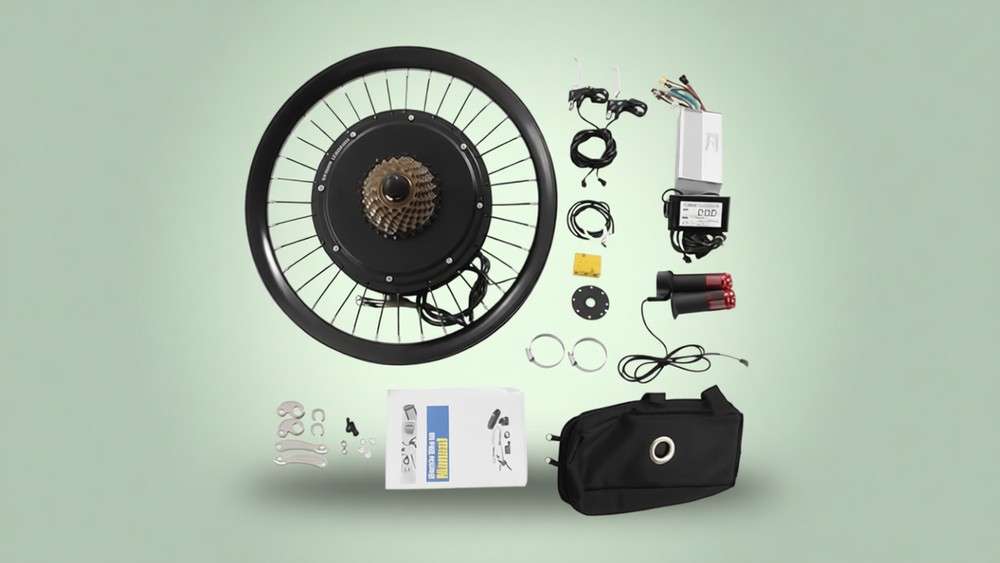
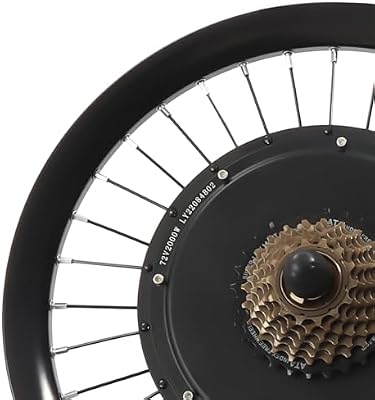
The Full Set bullet lists a motor wheel with a 9-speed flywheel already fitted, a controller, an LCD display, an ordinary throttle, a pedal assist sensor, a power-off brake lever, and a controller bag. No battery, and no tires. That's a normal kit loadout, and the flywheel is a genuine extra, because a 9-speed cassette on a hub motor wheel can be fiddly to source separately.
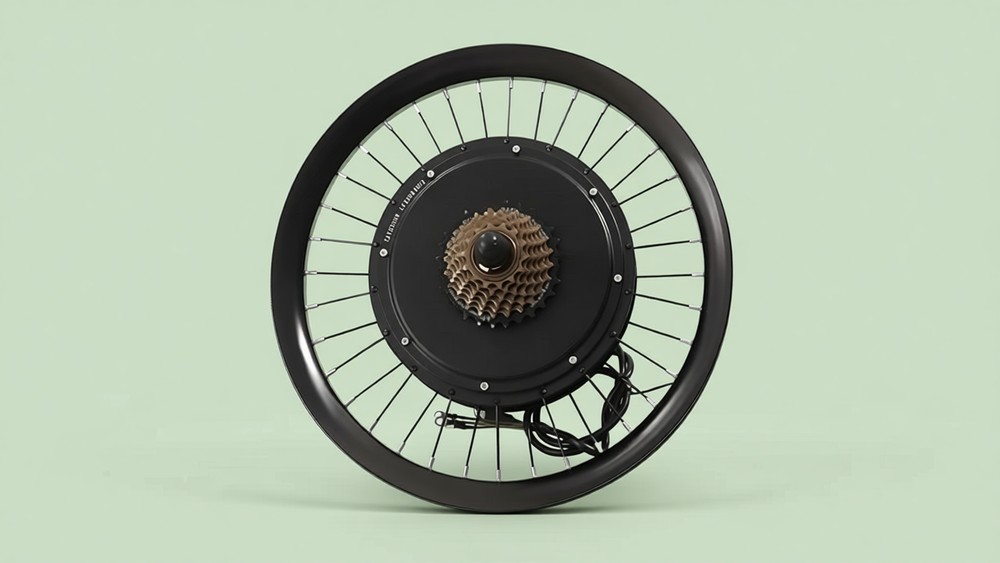
The motor is described as brushless and toothless, which in kit-speak means gearless direct drive. A gearless hub has no gears to wear or whine, and some controller setups can use a direct-drive motor for regenerative braking.
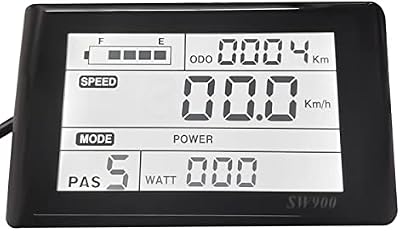
The trade-off is size: a direct-drive motor has to be physically larger to make the same torque as a geared one, and the spec sheet's torque row prints 60 N.m. The LCD claims to show speed, mileage, and error codes for troubleshooting, and the listing credits the motor with nine-speed and cruise control functions.
Now the price. On our comparison table this kit sits in the pricier third of the 191 kits we track, and neither the record nor the sheet explains the premium. Cheaper 1000W kits abound.
What you're paying for here is the 72V rating and the 20-inch fit, and whether that's worth it depends entirely on your bike.
What the speed math allows
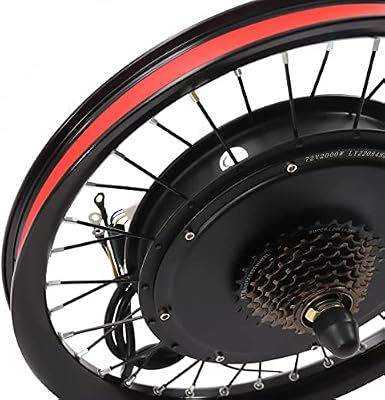
The listing's own numbers set a ceiling, and it's worth doing the arithmetic before you believe anyone's estimate. The motor is rated at 560 rpm. On the wheel diameter the spec sheet prints, 430 mm, that works out to about 45 km/h, roughly 28 mph with no load.
A 3.0-inch tire stands taller than the bare 430 mm rim-and-motor figure, and a taller tire lifts the same rpm to somewhere in the mid-30s mph. Even in the friendliest case, the sheet's own rpm doesn't reach the owner's 40 to 50 mph estimate.
To be fair to the estimate, rated rpm figures are conservative and real no-load speeds can run higher. But nothing on the record tests it either way, so both numbers deserve skepticism: the owner's because the bike wasn't finished, the sheet's because we can't verify the rpm row against a ride.
The amperage is more concrete. 2000W at 72V is about 28 amps continuous, so whatever 72V pack you source needs to deliver that with headroom. That's also the number that decides your battery budget, and 72V packs cost real money.
The speed you get will be decided by the battery and the controller as much as by the motor's rating.
Where the listing argues with itself
The title is the first problem: it sells 20, 26, 27.5, and 29 inch variants, 48V and 72V, and 0.75, 1, and 2KW motors all in one line. That's variant soup, a common listing pattern where one page carries every SKU the seller makes. The buy box decides what actually ships, so confirm the variant before you order rather than trusting the title.
Inside the bullets, the spec run describes a wheel with "Suspension Type: Rear" and "Number of Speeds: 9" jammed together.
A hub motor kit has no suspension, and the 9 speeds belong to the flywheel, not the motor. The wheel row gives a diameter of 430 mm, about 16.93 inches, under a 20-inch title. That's the rim-and-motor assembly figure rather than the tire's outside diameter, so it doesn't contradict the 20-inch fit, but nothing on the page explains it.
The last split is the company behind it. The brand is LOYALHEARTDY and the manufacturer row reads FAWEIUS, the alias-brand pattern we keep finding in this tier, where the selling name and the factory name differ.
None of that proves anything bad. It does mean the listing won't pin down what ships, so the buyer has to.
What a 2000W 72V kit asks of your bike
This is the real decision the listing never states. A 72V pack is uncommon next to the 48V standard, more expensive, and harder to source, so the first question isn't whether you want the kit but whether you can feed it. Plan for about 28 amps continuous and buy the pack before the motor.
The physical side matters too. Hub motor mass rides inside the wheel, where it counts as unsprung weight and gets less shielding from shock and debris than a frame-mounted motor, and a gearless direct-drive motor of this power generally wants a torque arm to keep the axle from spinning out of the dropouts.
A 20-inch wheel also steers quicker than a 26-inch one, and at the speeds this kit implies your bicycle-grade brakes deserve a hard look before the first ride.
Then there's the law. A 2000W motor sits far above the 750W continuous cap that US three-class definitions set for street-legal ebikes, so where you can ride it legally depends on your state's rules for off-road and registered vehicles.
Wikipedia's hub motor overview covers the unsprung-weight trade-off if you want the background. If the battery bill or the thin record gives you pause, the conversion kit comparison table shows what else fits a small wheel.
FAQ: the 72V pack outside the box, the 430mm figure that is not a tire size and the speed the record never tested
Is a battery included?
No. You need a 72V pack, and it should be rated for at least 28 amps continuous to feed a 2000W motor with headroom. Expect the pack to cost more than the kit itself, and expect fewer 72V options on the market than 48V ones.
What wheels does it fit?
20-inch wheels running 20x2.5 to 3.0-inch tires, per the compatibility bullet. The 430 mm diameter row is the rim-and-motor assembly figure, not the tire size, so don't let it scare you off a 20-inch bike. Measure your rim and check the ISO marking on the sidewall.
How fast does it go?
The sheet's own numbers work out to about 28 mph on the printed 430 mm wheel, and roughly the mid-30s with a taller 3.0-inch tire. The one owner text estimates 40 to 50 mph, but that was written before the bike was ever ridden, so nothing on the record tests it.
Is it easy to install?
The one review says yes: the motor fit perfectly, the brake levers slipped into the handlebars, and the writer jokes that if an 11 year old can build this, so can you. The whole review has drawn eight helpful votes. That's one install, on one bike, and no other account exists to confirm it.
Is it street legal?
A 2000W motor sits well above the 750W continuous cap that US three-class law sets for street-legal ebikes. Where the build can be ridden legally depends on your state's rules for off-road and registered vehicles, so check locally before you build.