Anyone who has priced a proper ebike conversion knows the pattern. A full kit with controller, display, throttle and wheel runs a few hundred dollars, and every listing in the category blurs the line between what arrives and what you still have to buy. So a 1500W rear hub for under a hundred dollars stops the scroll.
The LiHUiee motor is that listing. At 98.99 it isn't a trick exactly, but the fine print is blunter than most: what ships is one rear wheel motor, and the controller, rim, throttle, display and battery are all separate decisions the page offers no help with.
Five stars from two ratings make it look safer than it is. The single written review comes from an account Amazon doesn't mark as a confirmed purchase, and the second rating left no words at all. That's not a reason to walk away, but it is a reason to know exactly what you'd be early-adopting.
Measure the frame before anything else. The motor is built for 5.31-inch dropouts, the 135mm standard on most adult bikes, and that single measurement decides whether any of the rest matters.
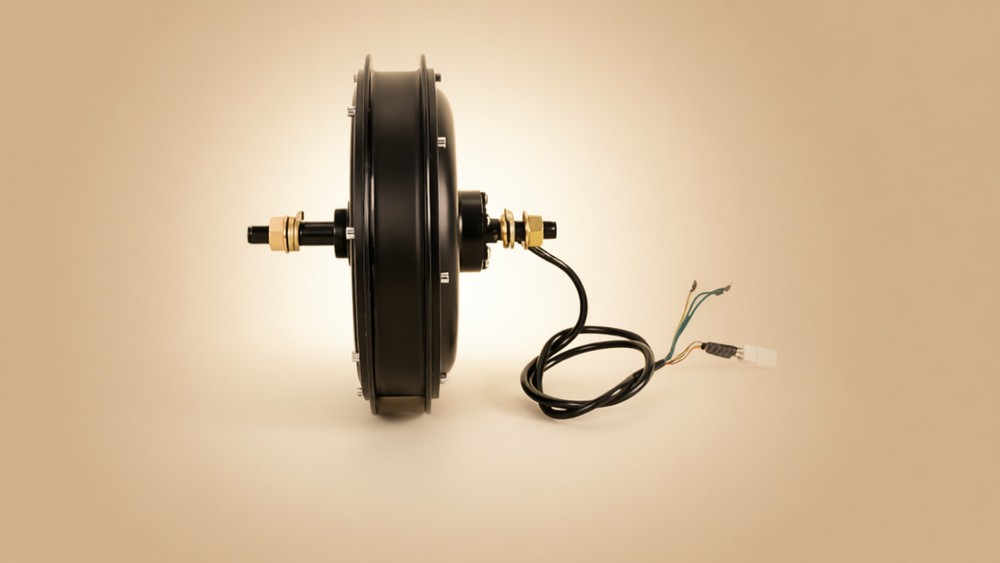
The cheapest way into a 1500-watt rear hub, sold as one part
The LiHUiee rear hub motor costs 98.99 for a claimed 1500W, which works out to about 0.066 per claimed watt and puts it in the cheapest fifth of the 191 conversion kits we track. That value position is genuinely good, and our conversion kit table shows where the price sits against everything else on the market.
But the page sells one part. Included Components reads exactly "1* Rear Wheel Motor": no controller, no rim, no throttle, no display, and no battery.
The record cannot carry even the price claim yet. The rating is 5.0 stars from 2 ratings, the single written text is not a confirmed purchase, and the second rating left no words at all. The price is real and the evidence is nearly empty, so this page rewards a buyer who knows exactly what they would be assembling.
One text, three helpful votes, and what a perfect score can carry
The whole written record is one five-star text from June 2026, and Amazon does not mark it as a confirmed purchase. Three people found it helpful, which makes it the most-endorsed words on the page by default, because they are the only words on the page.
What the text actually contributes is a fit report. The owner installed the motor on a 27-inch bike, reports the 5.31-inch dropout spacing fit exactly, and calls the brushless gearless design quiet and smooth. They report it handles stop-and-go city traffic and has enough power for carrying groceries, and they give one honest line about the weight.
What the text does not contribute: a top speed, a range figure, a hill climb, anything about the 55 dB noise claim, or anything about the 55N.m torque figure. The second rating left no words at all, so the perfect 5.0 rests on one unverified account. Treat the score as an absence of complaints rather than a presence of proof, and let the marketplace return window do the proving.
What arrives, and the three parts you still have to pick
The box holds one rear wheel motor, 15.4 pounds of aluminum, iron, copper and magnetic steel, with a threaded hub. The listing sits where conversion kits are sold and the title calls itself a kit, but nothing else in the system arrives. No controller, no wheel rim, no throttle, no PAS sensor, no display, and no battery.
That makes the motor the cheapest part of a three-part decision, and the other two parts decide whether the build works at all. First number to work through: 1500W at 48V needs about 31 amps continuous, so the controller a buyer picks needs an amp rating at or above that figure, and the page prints no controller recommendation at all.
Second: the battery has to carry that same 31-amp draw continuously, which is a sizing question most casual listings never answer. Pair it with a 48V battery rated for high continuous output, not just a big amp-hour number.
There is a legal ceiling to keep in mind too. A 1500W motor sits outside the 750W federal e-bike definition, so the finished bike may fall under state motor-vehicle law, which the page does not mention.
What 500rpm turns into on the road
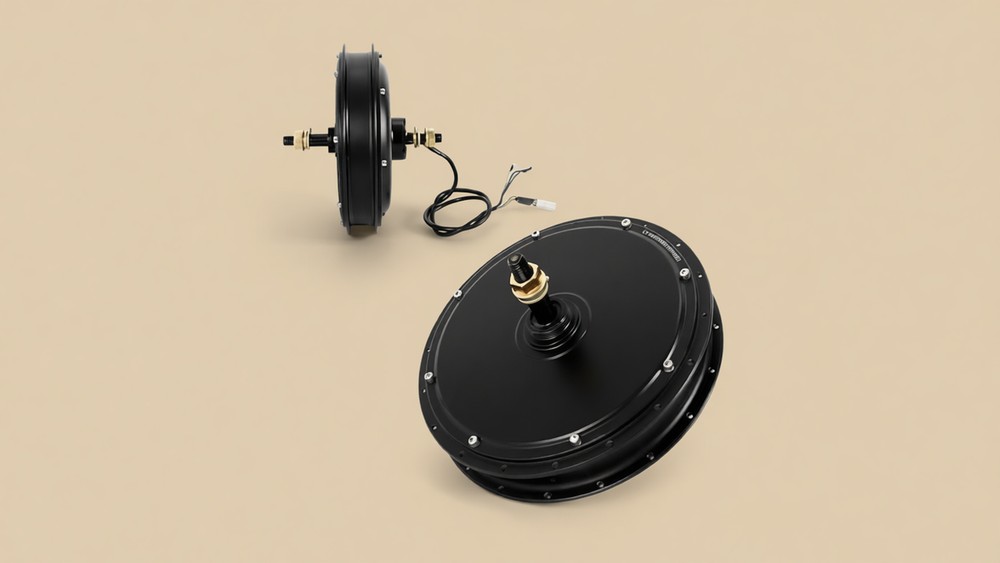
The motor is rated at 500rpm, and road speed comes from rpm through the wheel's rollout. A 20-inch wheel rolls out about 1.5 meters per turn, which puts the no-load figure near 28mph.
A 26-inch wheel rolls out about 2.1 meters, near 39mph. A 28-inch wheel rolls out about 2.25 meters, near 42mph. All three are no-load figures, before rider weight, terrain, and controller limits pull them down.
The listing itself claims no top speed, which is honest of it and leaves the arithmetic to the buyer. The 500rpm figure is the only performance number the page prints that converts cleanly to road speed.
The gearless design deserves a decode, because the bullets lean on it three times. A direct-drive hub has no internal gears, which keeps it quiet under power and makes it mechanically simple. Bicycle hub motors are simple, durable and affordable compared with other designs, but they fall short at high speeds.
The trade-off is weight and drag: the motor always turns with the wheel, so it resists pedaling more when unpowered than a geared hub would. The 55 dB low-noise claim and the 55N.m torque figure are unexercised, because no owner mentions noise or torque.
Fit first, then the return window as the only backstop
The one measurement that matters before ordering is the frame's rear dropout spacing. The motor is built for 5.31 inches, which is the 135mm standard on most adult bikes, and the single text that reports a fit says it matched exactly on a 27-inch bike. Wheel range is 20 to 28 inches, and the application bullet excludes snow bikes.
After the mechanical fit comes the system. A 48V battery with the amp ceiling to carry roughly 31 amps continuous, a controller with a printed amp rating, and a throttle or PAS sensor to run it. A torque arm is worth serious thought: a 1500W axle turning inside steel dropouts is a known failure point, and the page sells nothing that addresses it.
There is no warranty row anywhere on this listing. The part number field just repeats the brand name, and no warranty description exists in the details table. The marketplace return window is the only recourse a buyer has, so use it: spin the motor and listen against the 55 dB claim, check for heat on the first hard rides, and confirm the dropout spacing against the frame before the window closes.
Frequently Asked Questions
Is it a kit or a motor?
A motor only. Included Components reads exactly "1* Rear Wheel Motor", and the controller, rim, throttle, display and battery are all separate purchases. The listing is filed where conversion kits are sold, which is why it appears in kit comparisons, but nothing except the motor itself arrives in the box.
How fast will it go?
The motor turns 500rpm, which works out to roughly 28mph on a 20-inch wheel, about 39mph on 26 inches, and about 42mph on 28 inches, all no-load before real-world sag. The listing claims no top speed of its own, and the single owner text reports none either.
What else do I need to buy?
A 48V battery able to carry about 31 amps continuous at full draw, a controller with a printed amp rating at or above that figure, a throttle or PAS sensor, and ideally a torque arm for the dropouts. The page recommends none of these, so the sizing work is on the buyer.
Does it have a warranty?
No warranty row exists anywhere on the listing, and the part number field just repeats the brand name. The marketplace return window is the only recourse, which makes the early fit and heat checks the real warranty process.
Is it worth 98.99?
About 0.066 per claimed watt, in the cheapest fifth of the kits we track. The price is real, but the record is one unverified text and a second wordless rating, so the price buys the motor and the buyer's own diligence buys the proof.