A 20-inch bike leaves little room on the frame for a battery, and it leaves even less room for a motor that turns at 560 rpm. That's the corner a lot of folding-bike and BMX riders end up in when they go looking for power.
The kits built for the bigger wheel sizes dominate the market, and the ones built for 20-inch wheels tend to be either weak or strangely expensive.
The Lariden kit sits in a strange spot even for that market. It claims 2000 watts, which is more power than most riders will ever use, and the asking price sits at 208.49, which is less than half of what a serious kit usually runs. Both numbers look wrong in opposite directions, and neither can be checked against the listing alone, because the page never states what the included controller is actually rated to deliver.
There's also nothing behind the listing but the listing itself. No customer has rated this kit, so there's no owner record to lean on, no speed reports, no range reports, no failure stories. What follows works through what the page does specify: the parts in the box, the speed math, the 72V battery it needs, and the checks worth making before money changes hands.
A 2000-watt kit for about two hundred dollars, and no record behind it
The Lariden kit puts a claimed 2000W brushless gearless motor in a 20-inch rear wheel for 208.49, about 0.104 per claimed watt and close to the middle of the 191 conversion kits we track. Our conversion kit table shows exactly where the price sits against everything else on the list.
There's no star rating and no written review anywhere on the listing, so nothing about this kit has been tested in public, and every claim below is the seller's until a buyer proves otherwise. That also means the value math is the only measured thing on the page, and it's ours rather than theirs.
The number this listing never prints is the controller's amp rating, and that's the one spec that decides whether 2000 watts arrives at the wheel or stays a ceiling on the box. Read every section below with that gap in mind, because it's the thread that runs through the whole record.
What is in the box: a controller listed twice and no battery
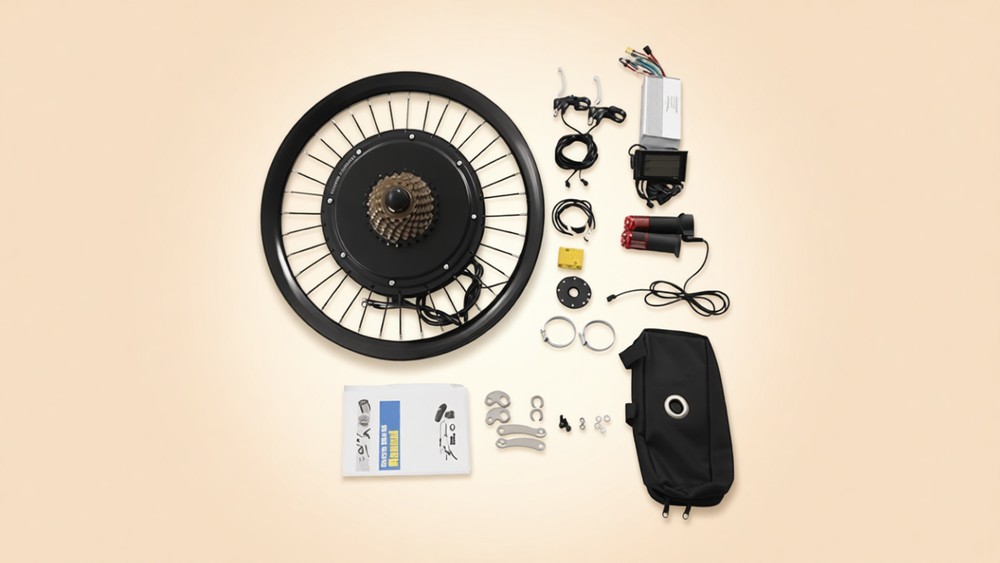
Before you order anything, count what the box actually holds, because the Included Components string lists the controller twice and doesn't list a battery anywhere on it. The rest reads normally enough: a 20-inch motor wheel, a 9-speed flywheel, an LCD display, an ordinary throttle, a pedal assistant sensor, a power-off brake lever, an English manual, and what the page calls all accessories for assembly.
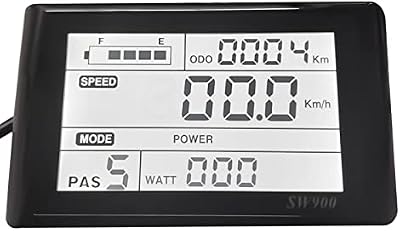
The display claims deserve more scrutiny than usual on this kit, because with zero reviews there's no owner record saying whether the fault code readout, the nine speed settings, and the mileage counter actually work the way the bullet list says they do. The power-off brake levers sit in the same category.
The listing sells them as reliable stopping power, but levers on a hub kit only cut motor power, and the brakes that stop the bike remain the bike's own.
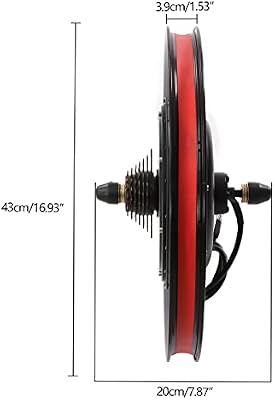
It weighs 30 pounds all in, and all of it hangs off the rear axle of a 20-inch frame.
Measure your rear dropout before ordering, because the bullet copy says the kit works with most standard bicycle frames while the detail rows say Vehicle Specific Fit, and the page never resolves which of those is true. Check that the 9-speed flywheel matches the gearing your bike already wears, since a mismatch there turns the first ride into a parts hunt.
The 560 rpm claim and the amp rating the page never prints
The claimed 560 rpm turns into a real number only after you do the rollout math yourself. A 20-inch rim with a street tire covers roughly 1.6 to 1.9 meters per turn depending on the tire fitted, so at 560 rpm the wheel turns about 9.3 times a second, and the no-load speed works out to somewhere in the mid-30s to about 40 mph.
Brushless motors are most efficient at no load or light load, so treat that band as a best case measured with the wheel off the ground, before rider weight, hills, and controller limits pull it down. Gearless hub motors are direct drive, meaning the wheel is the motor, which makes them simple and durable and affordable, at the cost of extra weight and unpowered drag when you're pedaling without assist.
What the page can't tell you is which end of that band your build will reach, because the controller's amp rating is missing from every row and every bullet.
2000 watts at 72 volts needs about 28 amps continuous, and a controller that delivers less turns the motor's rating into paperwork. With no owner reports anywhere, nobody has published a real speed with a rider on this motor, so the honest answer arrives after the return window has already started.
The 72V battery is the real purchase
The most expensive part of this build is the one the box doesn't include, because no battery ships with the kit and 72V is a much rarer voltage than the 48V and 52V most kits run.
You'll likely be special-ordering the pack, and one that can feed 28 amps continuously at full throttle isn't the cheapest cell option on the shelf. Compare packs by price per watt-hour in our battery table before you commit to the motor.
Plan range from the pack you buy rather than from anything this listing says, because hard-throttle riding on a high-power hub build consumes far more energy per mile than pedal assist. Divide the pack's watt-hours by an honest usage figure for the way you ride and treat the result as the ceiling, not the promise.
A 2000W motor also sits outside the United States federal e-bike definition, which caps the motor at 750 watts. Above that line a finished bike may be treated as a motor vehicle under state law, which can mean registration and licensing depending on where you live. Check the local rules before the build rather than after, because the answer changes whether the kit makes sense at all.
Buying from a page nobody proofread
The detail rows are worth reading slowly, because they're the best evidence available about how much care went into this listing. The Warranty Description row reads a bare 90 with no unit attached.
The Manufacturer Part Number field says Motor Wheel, on a listing for a whole kit with a display, a throttle, and a sensor in it. The controller appears twice in the box contents. None of these proves anything bad on its own, and together they say nobody proofread the page before it went live.
The page also contradicts itself on fit, selling the kit for most standard bicycle frames in one place and Vehicle Specific Fit in another, and the Best Sellers Rank sits at number 1178 in Bike Hubs, one more sign that very few riders have taken the chance so far. A thin record like that isn't a verdict, it's an absence, and it shifts the checking work onto you.
So make the seller do the work the page didn't. Email them for the controller's amp rating and the actual warranty term before you order, photograph the box contents when the kit arrives, and exercise every claim, the display, the gears, the levers, inside the return window. The listing is here if you want to read those detail rows yourself.
This kit only makes sense if you already own a healthy 72V pack rated near 28 amps continuous, because the pack is the most expensive part of the build and the box doesn't include one. For that rider, a claimed 2000W direct-drive hub at 208.49 is one of the cheaper ways onto a 20-inch bike, and the price sits close to the middle of the conversion kits we track.
For everyone else, the honest arithmetic says the pack is the real purchase and 208.49 is only part of the bill, so price the whole build against packs in our battery table before deciding this kit is cheap.
Restated once, because it matters: the listing has zero reviews, so the buyer is taking the seller's word plus a warranty row that reads a bare 90 with no unit, and the return window is the only backstop anyone has actually shown to exist. Ask the seller the two questions above, get the answers in writing, and keep the receipt until the kit has proven itself.
Frequently Asked Questions
What battery does this kit need?
A 72V pack that can deliver about 28 amps continuously, because 2000 watts at 72 volts works out to roughly 27.8 amps at full output, and a pack that can't hold that draw will sag or cut out under throttle. Nothing ships in the box, so budget the pack as its own purchase and compare options by price per watt-hour in our battery table.
How fast will it actually go?
The no-load math lands in the mid-30s to about 40 mph on a 20-inch wheel, but that's a wheel-spinning best case before rider weight and terrain. The controller's amp rating, the one spec that decides where in that band a build lands, appears nowhere on the page, and with zero reviews nobody has published a measured speed on this kit.
Is a 2000W kit street legal?
Not as an e-bike under the United States federal definition, which caps the motor at 750 watts, so a finished build around this kit may be treated as a motor vehicle under state law. That can mean registration and licensing, the rules vary by state, and the time to find out is before you buy the pack, not after you build the bike.
What warranty does it have?
The Warranty Description row reads a bare 90 with no unit, and no bullet on the page mentions a warranty at all, so the listing doesn't say whether that means 90 days or something else entirely. Email the seller and get the term in writing before you order, and treat the Amazon return window as the backstop you can actually rely on.
Is it worth 208.49?
About 0.104 per claimed watt, which lands close to the middle of the 191 conversion kits we track, and the price is fair for the hardware the box claims to hold: a motor wheel, a controller, a display, a throttle, a pedal assistant sensor, a brake lever and a flywheel.
What the price doesn't buy is any evidence, because no buyer has rated this kit, so every performance number on the page is still unverified. If a 72V pack is already on your shelf, that's a reasonable bet to take while a return window is open. If the pack is a new purchase, price the whole build first.