A front-hub conversion kit puts the motor inside the wheel your fork steers. That makes it the cheapest route to an electric bike and also the least forgiving one, because the wiring lives on the part of the bike that turns, bumps and takes the brunt of every pothole.
The LARIDEN 48V 1000W kit sits near the cheap end of the 191 front and rear hub kits we track, and its buyer record is one of the smallest we've come across on a live listing: two verified texts, no helpful votes, no star histogram, and nothing written after a first powered ride.
What makes it genuinely hard to read is that the two texts disagree about the one step that decides the whole install, the wiring between the control box and the rest of the kit.
This review walks through both wire accounts in the buyers' own words, what the complete-kit promise actually holds, the arithmetic behind the 31.69mph claim, the spec table's missing rows, and the bench checks worth doing before the wheel goes on the bike.
The honest verdict: the LARIDEN 48V 1000W 24in ebike conversion kit prices in the cheapest fifth of the conversion kits we track, and one buyer has wired it up without a fight, but the other buyer met bare, color-mismatched wires and ended up throwing the bike and the system into the dumpster, so you'd be buying a cheap front-hub kit with a coin-flip wiring story.
Bench-test the wiring while the return window is open, and budget for the battery the box doesn't hold.
Two buyers, two opposite wire stories
Both texts on this listing carry Amazon's confirmed-purchase badge, and they could hardly disagree more. The October text calls the install easy: "It was an easy installment and all the connections were color coded for exact plug in. I was very pleased with the kit." That's the whole account, and it ends before the riding starts. The same buyer is still waiting on a battery.
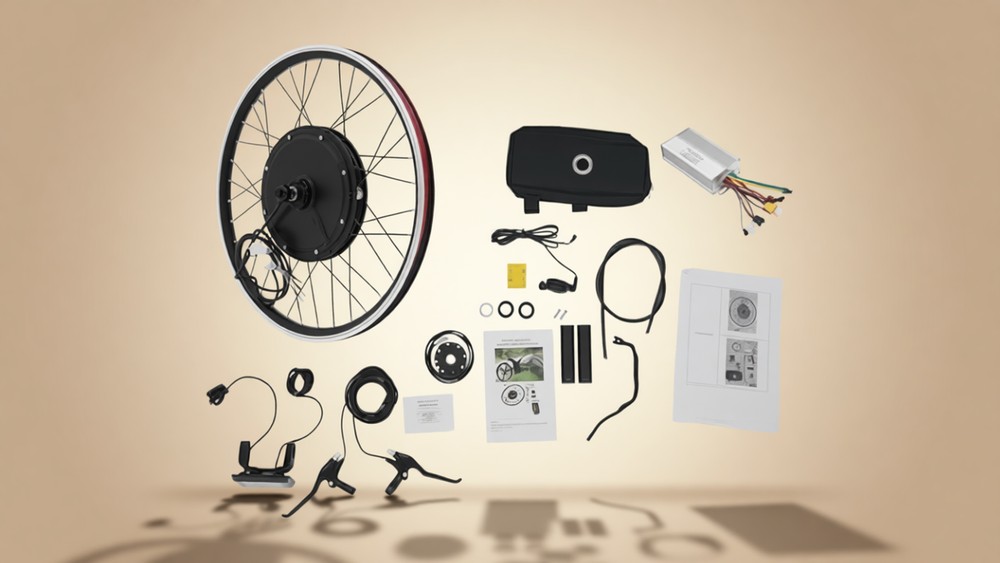
The September text describes a different box, or the same box read a different way. The smaller wires from the control box didn't match the colors of the component wires, they arrived without connectors, and after many attempts to match them that buyer threw the bike and the system into the dumpster.
One month separates the two accounts. Neither mentions a seller response, a replacement cable set, or a fix of any kind. So the record can't tell you whether LARIDEN changed the wiring between September and October, or whether two people met the same harness with different results. That uncertainty is the honest summary of this kit, and it's worth more than either text alone.
What complete kit means when the battery is waiting
The listing's install bullet promises motor, LCD, throttle, brakes, and all hardware, with no extra parts needed. Read against the record, that promise holds for everything except the one component that makes the bike move. The only forward-looking line in either text is the October buyer's closing note: "Just awaiting my 48v 24ah battery."
That battery is the biggest remaining cost of the build, and the listing never says what chemistry it expects, what connector it takes, or where it mounts.
A 48V 24Ah pack stores about 1,150 watt-hours, and on our battery comparison table that capacity band is where the price of a build really gets decided, so the kit's low sticker is only half the budget. There's a second gap worth naming: no battery means no charger story either, and nothing on the listing says which charging voltage the kit expects beyond the 48V in the title.
The 31.69mph claim, decoded
Start with the power. 1000W at 48V draws about 21 amps, which is ordinary territory for a direct-drive front hub. The speed claim needs a bit more work: 31.69mph is about 51 km/h, and a 24 inch wheel rolls roughly 1.9m per turn, so the motor would need to spin about 440rpm to hit it.
That's a normal no-load figure for a 48V hub, which tells you the claim is a ceiling measured with the wheel in the air, not a speed you should expect on the road. Under a rider, hills and wind, the number lands lower.
The torque figure is modest once it reaches the ground. 40N.m at the wheel's radius works out to about 130 newtons of push, enough for flat city riding with light pedaling and not a hill machine.
Front-hub placement adds two caveats that apply to any kit in this class: the motorized wheel is also the steering wheel, and Wikipedia's wheel hub motor article notes that in-wheel motors, without shock absorbers between them and the road, are less shielded from shocks and debris, which shortens their working life. This listing never mentions a torque arm, the standard reinforcement for front dropouts at this power level, so assume you'd want one.
There's also the legal layer. Most US states cap continuous motor wattage at 750W across e-bike classes 1 through 3, per Wikipedia's e-bike article, so a 1000W kit sits above the line and where you can ride it depends on local law.
A thin spec table on a thin shelf
The spec table is where the listing stops helping. It carries no voltage row, no wattage row, no rpm figure, no controller description, and no warranty row of any kind. Nearly every number on the page lives in the bullet copy, where it can't be checked against anything.
Two of the rows that do exist are template junk: Pitch Circle Diameter and Wheel Backspacing both print 24 inches, neither of which belongs on a bicycle listing.
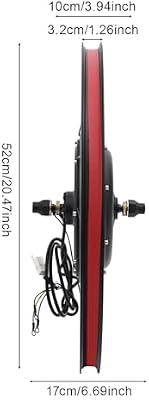
One real number survives: item weight, 30 pounds. That's plausible for a direct-drive 24 inch front wheel with a tire on it, and it's worth knowing before the wheel goes on a lightweight fork, because the fork carries all of it. Stock was thin when we checked, only 2 left in stock, and the listing shows no star histogram, which fits a two-rating record.
Before ordering, the questions worth asking the seller are the ones the listing answers nowhere: the wire colors and connectors on the control box harness, the battery connector type, whether a warranty exists in writing, and whether a torque arm ships in the box.
How to wire-check a kit like this before you mount it
The September text reads like a buyer who met the wire mismatch with the wheel already on the bike and no easy way back.
Nothing in the record says anyone bench-tested first, so here's the sequence that gap suggests. Unbox the kit on a bench and lay out every connector next to the component it should feed, matching colors while the box is still returnable. The two texts disagree on whether those colors match, so trust your own eyes over either account.
Photograph the control box wiring before the first power-up, because a photo is the only reference you'll have if a connector burns or a wire works loose later.
For the first spin, power the system with the front wheel off the ground, so a reversed motor wire can't throw you off a bike that's moving. None of these steps is complicated, and together they take less time than the September buyer spent trying to match wires that couldn't match.
Two people bought this kit a month apart, one has a working install and one has a dumpster story, and nothing on the listing tells you which box is in the mail.
FAQ
Does the kit include a battery?
No line in the listing or the record says so, and the one buyer who speaks to the future is still "awaiting my 48v 24ah battery". Treat the battery as a separate purchase and check the connector type with the seller before you order either part.
Is it hard to install?
The record answers both ways. The October buyer found the install easy with color-coded connections that plugged in exactly. The September buyer couldn't match the control box wires at all and gave up.
The honest reading is that the harness decides the install, and you won't know yours until it arrives.
How fast is it really?
The listing says 31.69mph, which the arithmetic puts at a no-load ceiling for this motor and wheel. Expect less on the road, and less again on hills or against wind.
Will it fit my 24 inch bike?
The listing says it's made for 24 inch bikes and fits most standard city and road bicycles, but it gives no fork spacing figure and no brake type anywhere. Measure your fork's dropout spacing and check your front brake before ordering.
Is a 1000W kit street legal?
Most US state e-bike laws cap continuous motor wattage at 750W for classes 1 through 3, and this kit's motor claims more. Where it can be ridden legally depends on your local rules, so check them before you build.