There's a bike in most garages that still works fine and gets ridden less every year, and a front hub kit is the cheapest way to make that bike electric again. No chain line to redo, no cassette to pull, no mid-drive mount to check. You swap a wheel, wire a controller, and the bike you already like carries a motor.
The Ktaxon 48V 1000W kit sells exactly that swap, with the motor built into a 26-inch wheel, an LCD display, a pedal assist sensor and brake levers that cut power when you squeeze. At 109.99 it sits in the middle of the price range across the 194 kits we track, cheap enough that the battery you pair with it will cost more than the kit does.
But the motor is not the part that decides whether this kit works for you, because the fork is the part that does that job. Front hubs push all of their drive torque into the fork dropouts, the wheel only fits certain spacing, and one owner has already reported this kit not fitting the bike they bought it for.
A complete kit with one deliberate hole
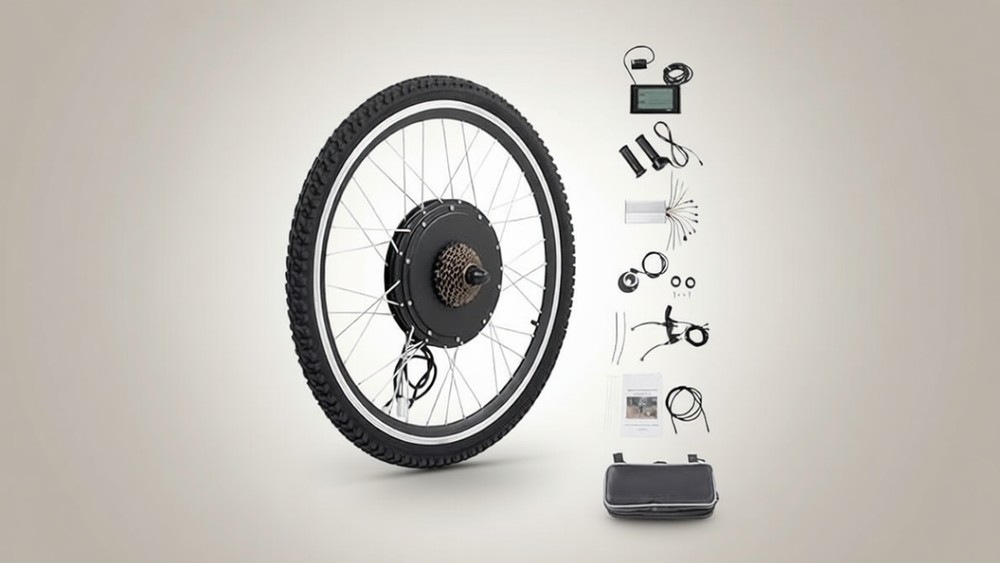
The box carries the converted wheel with its brushless gearless hub motor, a controller in its own bag, the LCD display, a pedal assist sensor, brake levers with the power cut-off built in, mounting hardware and instructions with videos. Four riding modes cover throttle, presets, pedal assist and plain manual pedaling, so the bike still rides like a bike when the system is off.
The hole is deliberate, printed on the listing in bold, and it's the battery that's missing.
A 48V pack is the single most expensive part of any build like this, and the listing tells you straight that you need to bring one, which is more honest than the kits that bury theirs. Budget for the pack before you budget for the kit, because the kit's price is the small number in this equation.
Measure the fork before the motor
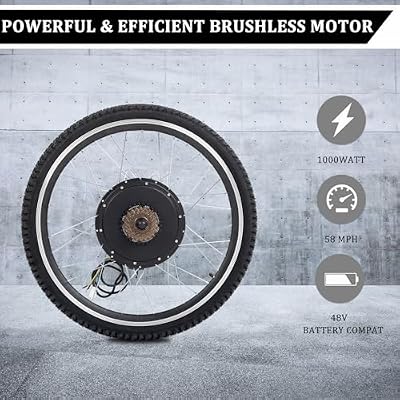
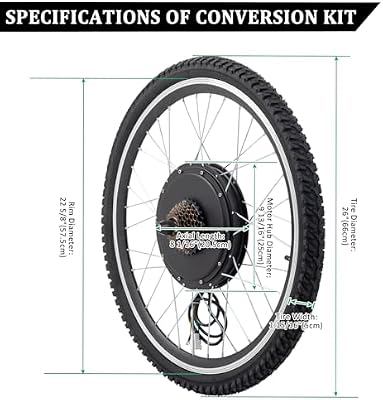
Two measurements gate the whole purchase. The wheel is 26 inches, so the bike needs 26-inch rims, and the listing calls for 3.93 inches of front dropout spacing, so the fork needs to match. One owner has reported the kit not fitting the forks of the bike they wanted it on, and they wrote that they were lucky to have a second option waiting.
Measure the inside of your fork before you order, because that measurement is the difference between a one-hour swap and a return shipment.
Then look at what the fork is made of, because a front hub motor puts its drive torque straight into the dropouts, and the long-running builder guidance at electricbike.com is that aluminum forks want a torque arm even at modest power, because a soft dropout slot can widen under the axle until it spins, while steel forks are far more forgiving.
If your fork is aluminum, treat a torque arm as part of the kit's real price rather than an optional extra, and check that the washers and the arm seat properly on the dropout before the first ride.
The weight figure on the listing, 21.4 pounds, is the wheel assembly itself. That's a heavy front wheel by bicycle standards, and it's why the box feels like it weighs more than the bike part it replaces.
What a gearless hub costs you when the power is off
A gearless hub is a direct drive motor, which means there's no freewheel inside it.
When you pedal with the system off, the motor turns with the wheel and drags against you the whole way, and builders on the Endless Sphere forum describe that unpowered resistance as the real drawback of the design. One owner of this kit has said it plainly, that the extra weight and resistance make the bike hard to move by just pedaling.
You trade that drag for simplicity. Direct drive motors have no internal gears to wear out, they run quiet, and the failure points that kill geared hubs don't exist here. The trade is the same one every direct drive kit makes, and we think it suits a rider who plans to ride with power on and rarely pedal home empty.
The display tracks battery level, speed, distance, riding mode and error codes, which covers everything a first-time builder needs for troubleshooting. The cut-off brake levers kill the motor the moment you brake, and that's a standard safety feature worth checking on any kit, present here.
Sixty-two buyers, and the words they left
The kit averages 4.0 across 62 ratings, with 59 percent five-star and 13 percent one-star. None of the recent ratings show the unverified pattern we look for on new listings, and the recent reviews with text cluster into a clear pattern: installation goes easily, the videos help more than the paper manual, and the complaints land on paper, not metal.
The paper complaints are specific. One owner has called the instructions incorrect and irritating, and another has enjoyed the translations, quoting the manual's line about how you can DIY your fancy ebike.
The controller bag draws the same kind of note, too small for some battery and controller combinations, and one owner bought a slightly larger fireproof bag that holds both together. These are annoyances with workarounds, not the kind of faults that strand anyone mid-build.
On the metal side, one owner has reported a motor that failed at 60 km and needed replacing, while noting the rest of the components seemed to work fine. Nobody in the recent set reports range figures, hill performance or multi-season reliability, so the long-term record on this kit is still being written by its buyers.
The positive side has weight behind it. The most helpful recent review comes from an owner who runs the kit on a two-seater bike and reports regular rides up front with a partner behind. Another owner has reported 30 mph on a trike build and has used the speed limit function to keep the bike manageable for a beginning rider.
Buy it for a flat 26-inch bike you already like
The decision this kit forces is narrow, and we think that's a virtue. It fits a rider with a 26-inch bike in good condition, a steel or reinforced fork, mostly flat local riding, and a 48V battery already picked or budgeted, because the flat terrain is where a direct drive hub cruises happily and the drag penalty never comes due.
It's the wrong kit for a hilly area, where a geared hub or a mid-drive climbs with far more patience, and it's the wrong kit for an aluminum fork unless you add a torque arm to the order. It's also the wrong kit for anyone who won't measure the dropout spacing first, because that's the one failure no review can rescue you from. If your bike and terrain match, the current kit listings make the comparison easy.
Frequently Asked Questions
Is a battery included with the Ktaxon 1000W kit?
No, and the listing says so directly. You'll need a separate 48V pack and charger, and the pack will almost certainly cost more than the kit itself, so plan the battery budget first and treat the kit's price as the smaller half of the total.
Will it fit my bike?
The wheel is 26 inches and the listing calls for 3.93 inches of front dropout spacing, so measure the inside width of your fork before you order anything. One owner has reported the kit not fitting the bike they planned it for, so this is the check that matters most.
Is it really 1000 watts?
Nobody can check that figure from the listing, because the controller's amp rating appears nowhere on the page.
For scale, a 1000W motor at 48V draws about 21 amps at full output, so a controller rated below that would cap the motor no matter what the label says. The listing's weight figures work the same way: the 220 pound maximum load recommendation and the 21.4 pound item weight look like a contradiction until you see they're two different measurements.
How fast does it go?
One owner has reported 30 mph on a trike build, but speed depends on the wheel size, the battery voltage and the mode settings, so treat that figure as a ceiling rather than a promise. Another owner has used the speed limit function to cap the bike for a beginning rider, which is a useful feature to know the display carries.
What happens when the battery dies mid-ride?
You pedal home on a wheel that drags against you. Because the gearless hub has no freewheel, the motor resists you the entire way home, and one owner has described exactly that, a bike that's hard to move by pedaling alone with the system off. Plan rides inside your battery's range rather than counting on an easy pedal home.