Most budget intercom listings you can buy today were put on the market in the last year or two. The reviews underneath them are thin, recent, and hard to read much into. This one has been on sale long enough that riders who bought it in 2019 are still posting updates about it now, and that changes what a buyer can actually know before ordering.
The Fodsports M1S Pro costs about what a tank of fuel does, claims a 10-rider group and a 2,000-metre range, and carries more than 3,600 ratings at 4.3 stars. Those are the numbers that pull people in.
What the numbers do not show is where the money goes: which parts of the claim hold up on a ride, and which part of owning one is an hour of factory resets in a parking lot.
This review walks through the seven-year owner record the listing itself never mentions: what long-term riders say holds up, where the advertised range and group size rest on a firmware update you perform yourself, and the one charging port quirk that 2026 buyers keep running into.
The M1S Pro is a Bluetooth-only unit whose per-rider cost sits in the cheapest fifth of the 192 intercoms we price, which you can check against the rest of the field on our intercom comparison table. Its written record is deep for the money: 17 of the 18 captured reviews carry purchase confirmation, and long-term updates run three years deep. The trade is setup work.
The record's complaint cluster is not sound and not durability, it is getting the units to talk to each other in the first place.
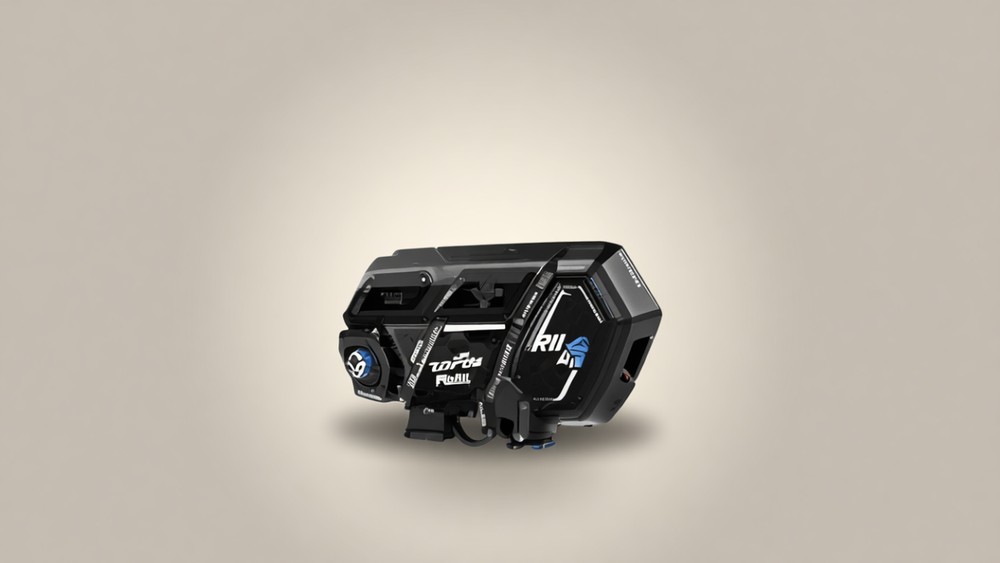
What the 2,000m and 10-rider claims rest on
The headline promises a 2,000m range. Category context says that figure belongs to the top of the market: entry-level intercoms from the major brands advertise 500 to 800 metres, and the 1,600 to 2,000m numbers come from flagship mesh units like Sena's 50R.
Standard Bluetooth reaches about ten metres in its common power class, and even Bluetooth 5 radios manage 40 to 400 metres, so a budget unit quoting 2,000m is promising best-case physics its own page never tests. No owner in the record has reported a distance of any kind.
The 10-rider group and app features only work once you upgrade to V3.0 firmware, and the listing's own bullet warns that old and new V2.0 units might fail to connect automatically, needing a manual-connect workaround. The group-size claim is real only after work you do yourself.
The page stays silent on the Bluetooth version, the battery life, and any IP rating, so you're left guessing how long the charge lasts on a trip or how it takes rain.
Pairing is the tax you pay
One reviewer spent a full hour trying to link six units before a trip, hunting for factory resets online, and gave up on the next trip when three units wouldn't connect. Another owner fought the phone app for an hour, working through wrong-code errors and Chinese-language screens they had to translate with a chatbot, and the app capped at one phone number.
The button layout draws its own complaints, because pressing the power keys together is tough while riding and the volume is hard to manage with gloves on. One rider calls the layout a step back from the FX8, which handled gloves better.
The counter-evidence exists and matters. One buyer has found the instructions surprisingly clear and installation easy, and the long-term owners got past setup once and never touched it again. You pay a one-time cost per unit, and you pay it again whenever your riding group changes.
The port, the crash, and the three-year update
The hardware survives abuse. One owner dropped a helmet off the bike at about sixty miles per hour, the case split open, and they snapped it back together and kept riding on it. The three-year report covers off-road group rides with four or five units connected and no failures.
The charging port is the weak point, and 2026 owners have found it twice. The micro-USB socket has a molded shoulder that stops ordinary micro-USB cords from fitting, which forced one owner to trim generic cords down with a knife, and another asked where to find a cord that fits at all.
A July 2026 review notes the newest version has moved to type-C, so which port arrives depends on when the stock was made.
Against that stands the longevity record: three years on one unit, two on another, one crash survived, and a damaged unit that customer service handled well. You get a tough build with a frustrating accessory, and the port you receive is a matter of production date.

Where the sound actually runs out
Music sounds above average when you're stopped, and nobody in the record calls it bad at city speeds. The complaints all arrive at highway pace: one rider could just make out most lyrics on the road and could neither hear nor be heard on calls above 35 mph.
One owner traces those loudness complaints to speaker placement, arguing the speakers sit too far inside the helmet, which is the one variable the buyer controls during install.
Since the page lists no volume figure and no driver size, the owner record is the only evidence there is, and it splits by speed rather than by unit.
Buy it for a pair, think twice for a crowd
The record supports two riders and small regular groups: the father and son on two bikes, the two friends who split the cost of a pack, the three-year group of four or five who connected once and rode. One rider even compared five intercoms and picked this one, partly because auto-answer comes disabled here while the others they tried could not turn it off.
Think twice for the ad-hoc crowd. The hour of factory resets and the abandoned second trip both happened in large groups with mixed unit ages, which is exactly the case the bullet's own V2.0-to-V3.0 warning describes. If your group rotates guests or mixes brands, the setup cost recurs every ride.
Don't buy this if you want set-and-forget group rides with rotating guests, or if your helmet has no room to place the speakers close to your ears. For a pair of riders on a budget, the seven-year record and the cheapest-fifth per-rider cost on our comparison table make the case, and the two-pack rung exists if you want both units in one order. Check the mesh options on the same table before you decide.

Frequently Asked Questions
Does it really reach 2,000 metres?
No owner in the record has reported a distance. The claim needs clear line of sight, and standard Bluetooth power classes top out far below that figure, with even Bluetooth 5 radios managing 40 to 400 metres. Treat the number as a best case the page never tests.
How hard is group setup?
The six-unit report took about an hour and factory resets. Pairs and regular groups report no trouble after the first successful pairing, and the long-term owners never had to revisit it.
What charger does it take?
Older units charge over micro-USB through a socket with a molded shoulder that blocks generic cords, so keep the included cord. The newest units have moved to type-C. Which one you get depends on when your stock was produced.
Is it loud enough at highway speed?
The record splits by speed. Around town, music and calls work fine. One rider reports calls failing above 35 mph, and another traces loudness problems to speakers mounted too far from the ear, which placement can fix.
How long do they last?
Owner reports cover two and three years of use, one 60 mph crash the unit survived, and a damaged unit the seller handled well. The written record is too consistent to ignore, and old enough to be worth something.