A rear hub built for a 20 inch fat wheel is a niche inside a niche, and the DUSNDULR 20 inch fat tire kit is one of the few 1000W options in that niche, priced in the cheaper third of the 191 conversion kits we track. The buyer record is where it gets hard. Seven ratings average 2.4 stars, and the histogram has no middle ground: nobody rated this kit three or four stars.
Three texts carry words, all three with the confirmed-purchase badge. One is a July ride report on a Ridstar fat bike that ends with the owner claiming 36 mph. The other two landed one day apart in early August, and both describe the kit dying. That is the whole record, and it splits cleanly down the middle.
This review walks the split, decodes what the box holds, checks the speed claim's arithmetic against the one owner who reported a number, and asks whether an IP54 rating belongs on a kit marketed to snow riders. If you want to see where this one sits against everything else, the ebike conversion kit comparison chart holds the live numbers.
The honest verdict up front: the DUSNDULR 1000W fat tire kit is cheap for what it claims, one owner has it working at speeds well past the listing's own top figure, and two owners reported failures one day apart, so the record reads like a coin flip with no way to tell which side you land on before you order.
A record with no middle
The star breakdown prints 30 percent five star, 28 percent two star, and 42 percent one star, with zero ratings in the four and three star bands. Seven ratings is a small sample, but the shape is the finding: buyers of this kit split into a camp where it works and a camp where it failed, with nobody in between.
The five-star text is also the most-voted one, at 2 helpful votes, and it is the only ride report on the page: "It works perfectly fine lines up with the ridstar goes 36 mph." That tells you three things. The wheel mounted on at least one Ridstar fat bike, the owner rode it, and the speed they report sits well past the listing's own ceiling. It also names the host bike, which is the only fitment datum the record offers.
The August texts are the counterweight. August 5, four words: "Burned up within a few uses." August 6, one day later: "My controller and throttle are defective. I have sent them everything they need and they just keep coming up with more excuses of what I need to do." That buyer closes with a week without the bike, no replacement parts sent, and a support process they describe as runaround.
One day separates the two failures. Nothing on the record says whether both buyers got the same build or whether something changed between their orders. What the record does say is that one text names the controller and throttle, and the other never says what burned, so the two failures may not even share a part. What they do share is timing, one day apart on the page, and a seller whose parts promises didn't arrive.
What the box actually holds
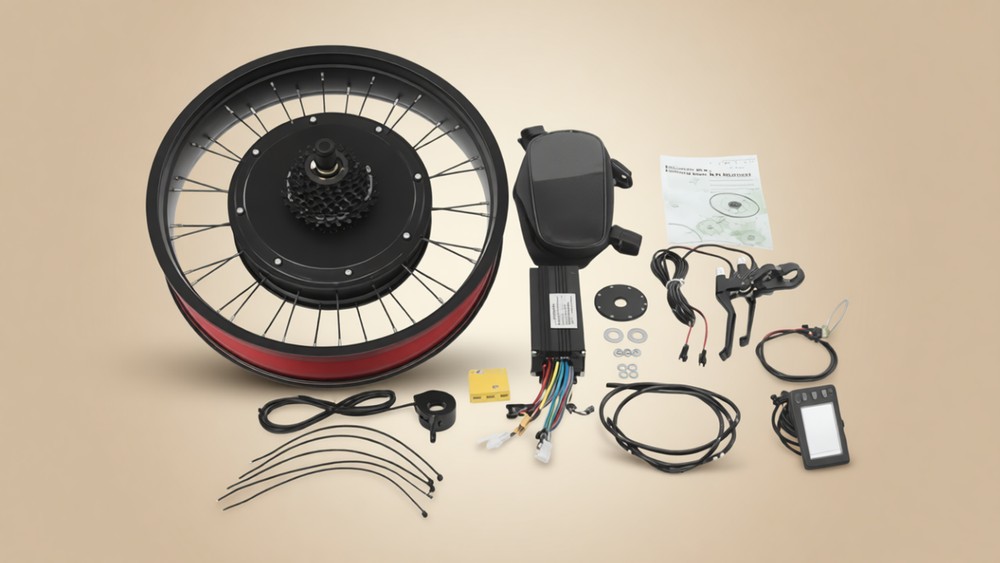
The parts list is specific: one motor wheel, one controller, one brake set, one grip, one LCD display, one sensor set, and a manual. No battery, no charger, and no torque arm anywhere on the list. If you build on this kit, the battery is the purchase that decides both the budget and whether the controller ever sees the amps it needs.
Two details in the spec table deserve a squint. Number of Items reads 2 while the parts list ships a single motor wheel, the same copy-paste artifact we keep meeting on budget kit listings. And the application line says the kit suits "snowmobile and bicycle conversions with a wheel size of 20inch", which sells a bicycle rear hub as snowmobile fitment while the spec table carries no snowmobile data of any kind. Read that line as marketing reach, not as fitment guidance.
The missing row matters more than the junk ones. There is no warranty line in the spec table. The August buyer who waited a week for parts had no written promise behind their escalation, and nothing in the listing says what support owes you if the controller arrives defective.
The speed claim and the 36mph owner
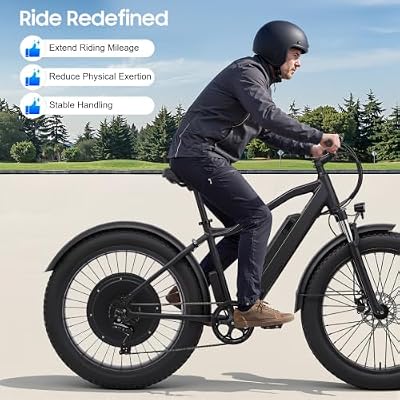
The listing claims 23.6 to 27.96 mph. Work the arithmetic on a 20x4.0 fat wheel, which rolls about 1.9 meters per turn, and the claimed top needs about 390 rpm while the bottom sits near 330 rpm. The listing never prints an rpm figure, so there's no way to check either number against the motor itself.
The owner's 36 mph needs about 505 rpm on the same wheel. That is a normal no-load figure for a 48V direct-drive hub, which suggests the claim and the owner's number can both be true if the claim is a wheel-in-the-air ceiling. It also means the owner's 36 mph is a best-case number, not a cruise speed, and the listing's band may be the more honest one to plan around.
Power tells a similar story. 1000W at 48V draws about 21 amps continuous, so the battery you pair with this needs a BMS that holds 21A or more without sagging. No battery ships in the box, and a 48V 20Ah pack stores about 960Wh, which on our battery comparison table is the band where a build's real cost gets decided. The kit's low sticker is half the budget.
IP54 on a snow bike
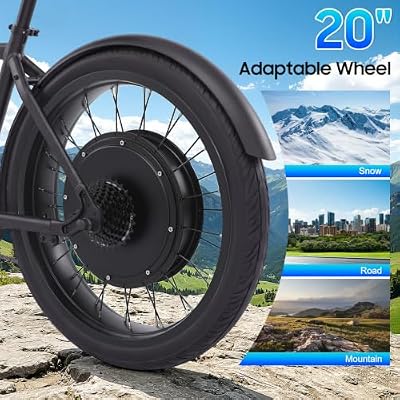
The listing markets this kit to snow riders twice, in the title's "Snowmobile Bicycle" line and in bullet copy about snow bikes. The ingress protection it claims is IP54, which decodes per IEC 60529 as dust-protected plus level-4 liquid protection, splashing water from any direction. That is one level below the jet test, and it is not immersion or melt exposure.
Fat bikes exist for exactly the terrain that makes that rating work overtime. A fatbike runs tires of 3.8 inches or larger to float over snow and sand, and most are built around 26 inch rims, per Wikipedia's fatbike article, while a 20 inch fat wheel is the smaller end of the format. Riding one through winter means slush, melt water, and road salt, all of which sit above what a splash rating promises to stop.
The placement adds its own exposure. Hub motors sit inside the wheel without shock absorbers between them and the road, so they take every hit and get less shielding from debris than a frame-mounted drive, per Wikipedia's wheel hub motor article. The one burned-up text is the only thermal or ingress datum this record offers, and it does not say what the failure looked like. Plan sealing around the connectors if winter riding is the goal, because the rating will not cover it.
Who should take the chance
Fit checks come before price on this one. Confirm your rear wheel is a 20 inch, measure your dropout spacing, and check which brake mount your frame runs, because the brake set ships but the listing never says disc or rim. The parts list names no torque arm, and a 1000W rear hub in steel dropouts is exactly the build that wants one.
This kit suits a builder who already owns a 48V battery with the amps to spare, wants a cheap fat-wheel rear hub, and will bench-test the controller and throttle before the return window closes. It does not suit a first build with no multimeter in the drawer, because the record shows what happens when the electronics arrive weak and support does not close the gap.
Against the full kit table, the price band is real and the risk is real. One working Ridstar build, two early failures, no warranty row, and a spec table that argues with itself about how many items ship. Buy it if the coin flip lands inside your budget, and test it while you can still send it back.
FAQ: the battery you supply, the torque arm you add and the 750W street cap
Does the kit include a battery?
No. The parts list holds motor wheel, controller, brake set, grip, LCD display, sensor set, and manual, and the motor draws about 21 amps continuous at 48V. Check the connector type with the seller before you buy either part, because the listing never names one.
Will it fit my 20 inch fat bike?
The listing says it works with most 20 inch rear wheels. Measure your dropout spacing and your brake mount before ordering, and note that the one ride report ran on a Ridstar fat bike, so 20 inch fat frames are represented in the record.
Do I need a torque arm?
Nothing in the parts list ships one. A 1000W rear hub can spin an axle out of plain dropouts under hard acceleration, so plan on adding one unless your frame already has integrated torque plates.
Is a 1000W kit street legal?
Most US states cap continuous motor wattage at 750W across e-bike classes 1 through 3, per Wikipedia's e-bike article. This kit claims more, so where you can ride it legally depends on your local rules.
Can it handle snow riding?
The marketing says snowmobile and snow bike, but the IP54 rating only promises protection against splashing water, and slush plus road salt is a harder test than splash. No snow-specific engineering is claimed anywhere in the spec table, so treat winter riding as your sealing problem, not the kit's.