A rear hub kit is the simplest kind of electric conversion: one wheel replaces yours, and the motor hides inside it. Most buyers pick one in the 750 to 1000 watt range. Cubellin's skips well past that, a 2000W brushless hub in a 26-inch rim wired for 72 volts, priced near the middle of the 191 kits we track.
The price is the trap, though not the only one. There is no battery in the box, and one buyer has found that out only when everything else was bolted on and ready.
The customer record is small but blunt. Every one of the five people who wrote anything bought the kit, and the text other shoppers endorsed most describes an accident.
So this page gets read here in full: the crash report and the reimbursement fight behind it, the detailed upgrade text with a frame-fit warning built into it, and a spec table that misfiles its own numbers in ways worth knowing before you order.
The Cubellin 26-inch kit is a 72V 2000W brushless hub laced into a 26-inch rim, sold at 182.88 when checked. It sits near the middle of the 191 conversion kits we track, and its record stands at 3.6 stars from 11 ratings with five written texts attached, every one from a confirmed order.
What those texts describe is not a comfortable read. Check the current Cubellin kit price on Amazon.
The most-endorsed text on this page describes a crash
Eleven ratings produce a 3.6 average, and the histogram behind it has a hole in the middle. Fifty-one percent of the ratings are five stars, 21 percent are four stars, and 28 percent are one star, with nothing at all between four stars and one. Whatever middle experience buyers have with this kit, none of them rated it.
Five texts carry words, and all five come from confirmed orders. The one shoppers have endorsed most, with eight helpful votes, is not praise. Its author writes that a cord without proper housing got stuck and caused an accident, that this is how the kit arrived, and that the reimbursement fight since then has ended in denial with an offer of fifteen.
A crash report leading the customer record of a 2000W kit is the single most important fact on this page.
The positive side of the record is real but thin: one detailed upgrade text and one short commute note. Neither mentions the accident, and neither contradicts it.
An upgrade report with a fit warning built in
The longest positive text comes from a buyer who replaced a dying home-built 1000W bike with this kit and reports double the power with no modification at all. They believe a solder iron is all it would take to reach 45 mph, and they call the result a class 2 turned class 3.
Both of those lines are about their own build and their own plans, not about the kit as sold, and the 45 mph figure is their projection rather than anything they measured. Read it as an enthusiastic owner describing a project, not as a spec.
The same text carries the fit warning this article exists for. The wire exits the side of the axle instead of threading through it, so the kit does not work with all frames, and their build took extra tools and a lot of zip ties. Their advice is to watch build videos first and be ready to learn something.
A second, shorter text reports an easy install and a 10-mile round-trip commute made easier, which is the calmest sentence on the page.
No battery in the box, and the listing never says so
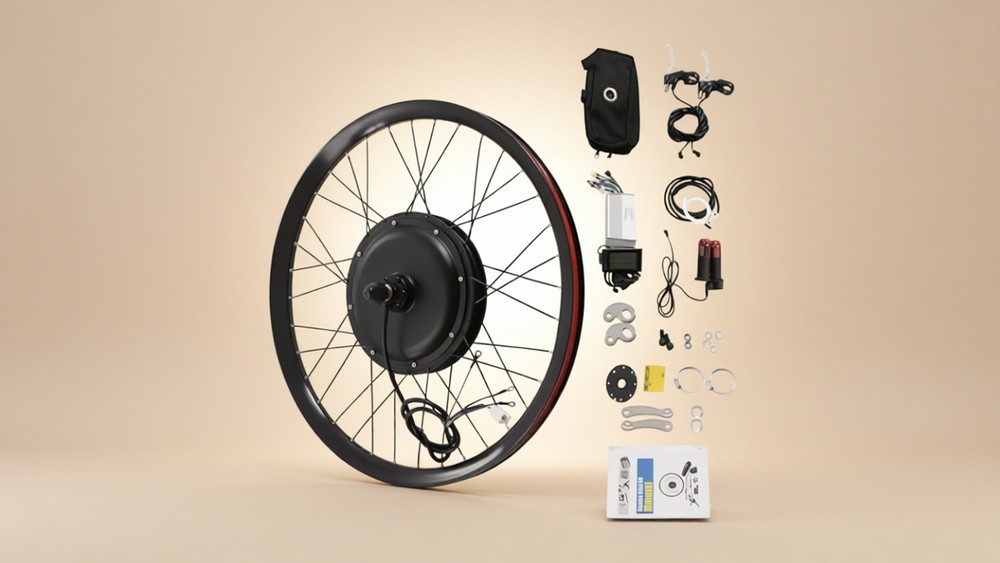
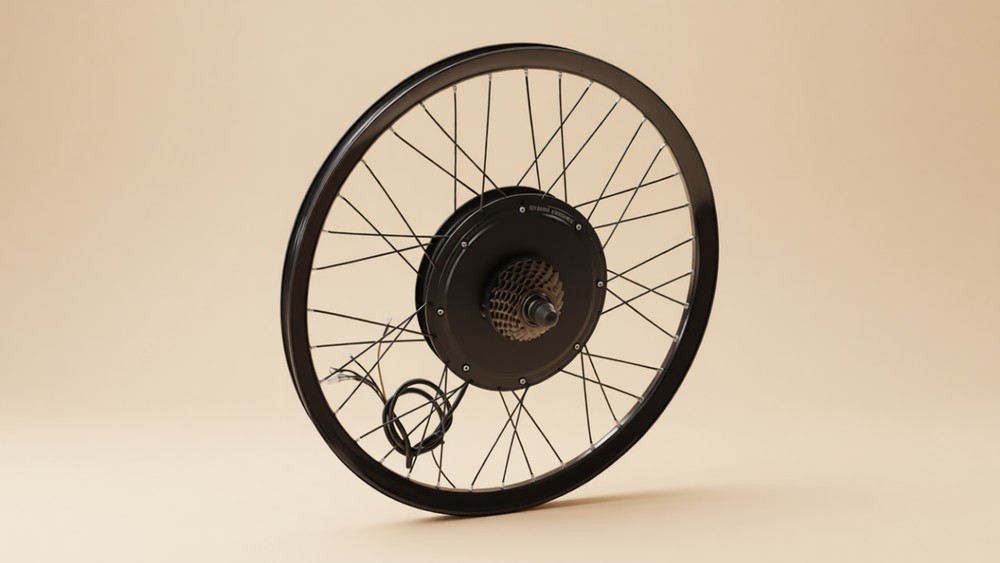
The component list holds the controller, the LCD display, an English manual, the motor wheel with a 7-speed flywheel, an ordinary throttle, the pedal assist sensor, a power-off brake lever and a controller bag. No battery appears anywhere on the page. One confirmed buyer discovered this with everything ready to install and writes that they feel scammed, calling the kit way overpriced without one.
At 182.88 when checked, the kit sits near the middle of the 191 kits we track by price. It runs a 72V system, and our own battery comparison table sorts every pack we track, none of which is a 72V. That part of the build cost cannot be priced from our data, and no text on this page says what one costs. The GOSHET 2000W 72V kit we reviewed leaves out the battery the same way, so the gap is a pattern in this price band, not a one-off.
Sticker price and build price are different numbers here, and the listing does nothing to separate them.
A spec table that misfiles its own numbers
The listing's spec table is worth reading slowly, because almost every field in it misfiles something.
Maximum Weight Recommendation reads 14 kg on a motor wheel kit, a figure that describes a wheel's shipping weight more plausibly than any bike's limit. Rim Size reads 21.26 centimeters on a 26-inch wheel, which converts to under nine inches. Number of Items says 11 beside a Unit Count of 1 Count.
The identity fields fail too. The Model Number field reads Reel Hub Motor Kit, and the Part Number field reads Ebike Conversion Kit, so neither field identifies anything. The page states no rpm figure and no torque figure at all, which means it makes no speed claim you can check against arithmetic, and the motor's 2000W rating appears only in the title.
None of these fields is disqualifying alone. Together they say nobody checked the page before it went live, so a buyer should verify against the photos rather than the table.
Two angry texts and a reimbursement fight
Two of the five texts are one-star complaints about the company rather than the hardware. One says only that the company takes money and does nothing, with no detail attached and nothing to test. The other is the crash report, which says the seller denied reimbursement and offered fifteen, in a fight the writer describes as ongoing.
No text in the record describes a successful warranty or support contact, and no text mentions the listed 2-year warranty at all. That silence does not prove the warranty is worthless. It does mean the record gives a buyer nothing to stand on when they ask what happens after a defect, which is exactly the question the crash report raises.
CUBELLIN FAQ: five questions the record cannot answer
Does the kit include a battery?
No. Nothing on the page includes a battery: the component list runs from the controller to the controller bag and no pack appears in it. One confirmed buyer found out at install time and writes that they feel scammed. Our battery table tracks 36V, 48V and 52V packs only, with no 72V listing to price one for you, so budget for the battery before ordering the kit.
Will it fit my bike frame?
Maybe not, and the record explains why. The detailed positive text reports that the wire exits the side of the axle instead of threading through it, so the kit does not work with all frames. The spec table lists a disc brake style and a 26-inch wheel.
Check your frame's rear dropout spacing and where a side-exit wire would sit, and expect to need extra tools and zip ties.
How fast does it go?
Nothing on the page answers that. The listing states no rpm and no torque figure, and no text reports a top speed the kit produced on its own.
One owner believes a solder-iron modification would take their build to 45 mph, which is a projection about their own project, not a measurement of this kit. Treat the 2000W title rating as a claim without a published speed behind it.
Is a 2000W kit street legal?
Probably not as an e-bike, depending on where you ride. Most e-bike rules cap motor power at under 750W and assisted speed at 16 to 20 mph, some at 28 mph, and this kit's rating sits far above all of it.
One owner describes their modified build becoming a class 3, which is an outcome of their own changes, not the kit as sold. Check the rules where you ride before taking it on public roads.
What does support look like after a problem?
The record answers badly. One confirmed buyer reports a denied reimbursement with an offer of fifteen after an accident, and another writes that the company took money and did nothing. No text describes a successful contact, and the listing's 2-year warranty has no owner experience attached to it anywhere in the record.