The WOOLAACOO is the cheapest way to get real front-and-rear coverage on a bike. Budget dash cams usually make you choose between picture quality and surviving weather. This one does both, which is why nothing at its price rates higher than the 4.3 average across 497 buyers.
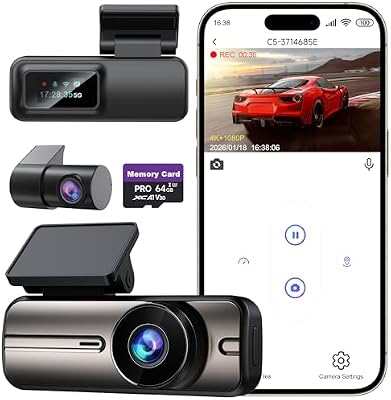
Specs and What You Get
Comparing to the lower end units (below), this unit wins on all dimensions except price. Reliability stats, WiFi usability, app quality, and the 4K front channel (the only feature none of these units have) all favor this unit. The per-channel column shows how big of a gap that is in terms of money.
Of course, comparing this unit specifically to another mid-range unit in the same "value" tier (70mai) needs its own mention. Both units occupy the top of the value tier. While 70mai has polish and app maturity, this unit has a stronger review average and 5GHz WiFi which makes transferring footage much easier. Either option could be defended as the right choice for someone wanting the capabilities they offer.
Installation and Daily Use
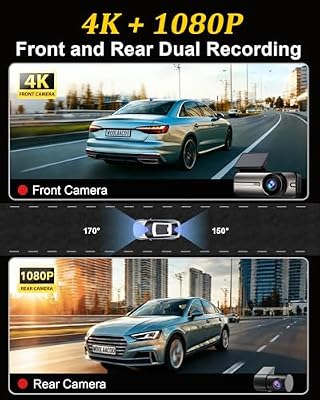
With 497 ratings overall and a 4.3 star average, the feedback about this unit perfectly captures the characteristics of a budget-but-not-cheap system. Specifically, buyers praise the daylight 4K front footage and fast WiFi transfer speeds. Complaints are instructional rather than alarming: some buyers say they had trouble using the app with certain phones, and others note that nighttime performance was less-than-optimal (i.e., the front camera resolves license plates in urban driving conditions but not on unlit backroads). As with virtually all cameras at this level of sensor price, hardware failures do occur, but at a rate consistent with a 4.3 star rating rather than being a lottery ticket.
What Amazon Reviewers Are Saying

For riders who want serious evidence-grade front footage plus a secondary angle of the rear without stepping into the high-end insurance-camera tier. Check latest price on Amazon for this model. Commuting in heavy traffic areas will give you the most bang-for-your-buck here, as plate-capture quality really does make a significant difference. Riders who spend most of their time riding at night in rural areas would likely be better served by upgrading to the higher tier or simply accepting that physics and sensor price limit the ceiling here - not this particular manufacturer.
Compare this unit to others on our full dash cam table - and explore our other reviews! To learn more about dash cams in general, check out this dash cam guide.
Who Is This For
In short, this unit's table position represents the quality tier ceiling of the value tier. Its specs represent the "best-of-the-rest" in terms of quality vs. price ratio. When comparing it to the top-of-the-line brands above it - we're essentially doing nothing more than performing basic spec math. Their components and processes cost more. And yes, there is a legitimate difference in video quality (particularly at night) - however that difference is largely limited to nighttime performance - and that is primarily due to differences in sensor size (not processor or manufacturing cost).
On daylight 4K plate capture, however...this unit is seriously competitive.
When compared to the bottom-of-the-barrel brands below it - this unit wins every single aspect except price. Reliability numbers, WiFi usability, app quality and 4K front video (which is literally the only feature these units lack) - all favor this unit. The per-channel column illustrates how large of a financial gap that is.
Sizing It Against the Alternatives
The specs on this unit place it at the top of the quality-to-price ratio chart. However, when looking at the top-of-the-line brands (above) - we're basically doing nothing more than adding up some numbers. Those brands pay more for their parts and process, and there is obviously a real difference in picture quality (especially at night) - but that difference is entirely contained within nighttime performance - where sensor size is your largest limiting factor.
In terms of daytime 4K plate capture - this unit is extremely competitive.
As far as comparing to the bottom-of-the-barrel brands (below) - this unit beats out those brands in every way except price. Reliability data, WiFi functionality, app functionality, and 4K front video (the only feature those units lack) - all favor this unit. The per-channel column illustrates the large financial gap that exists.
The 70mai comparison merits special attention since both products sit atop the value-tiers. The 70mai system brings polish and maturity to its application ecosystem. This unit brings a better review average, and more importantly, a 5GHz WiFi link which allows for relatively quick movement of your footage off the camera.
Either purchase decision has merit - and the table clearly delineates the trade-offs.
Long-Term Ownership Notes
Recording two channels of 4K video consumes storage resources quickly - thus managing your sd cards effectively becomes an essential long-term strategy for getting maximum life from your camera system. High endurance cards are required for high-volume write activity such as this. Seasonal rotation of a backup card provides a simple method to ensure your valuable footage remains available in the unlikely event of loss/camera theft. Using a high-endurance card costs approximately one accessory and significantly increases the practical usefulness of your system.
Some Firmware updates are released via the app to add new functions and sometimes create issues. Therefore, many long-term users elect to be cautious: wait until you see a specific fix that you need before updating - otherwise leave a functioning system alone. Dash cams are forms of evidence infrastructure, therefore stability supersedes novelty.
Annual inspections are recommended to verify integrity of camera seals and mounts to prevent degradation similar to other motorcycling electronics from repeated vibrations. Annual checks help catch gasket wear and connector loosening before they cause water ingress issues.
The Verdict
This product represents the highest statistical confidence score among all budget systems on this table, delivers genuine evidence-grade-quality front footage, and possesses a WiFi link capable of rapidly moving footage off the camera during normal operation. With a total reviewer count approaching half-a-thousand at an aggregate average of 4.3 stars, this product contains more statistically-reliable recommendations than almost any other comparable item on this entire table. For riders seeking evidence-quality front footage without paying premium prices, this product stands as clearly the most logical response to the table's questions.
Getting the Most From 4K
To maximize your value from 4K video captured by your front-facing camera there are several things you must do differently than you would with lower-resolution images. First, determine your bit-rate settings: if possible choose the highest bit-rate settings supported by your menu as these are the reasons why 4K exists here. The default usually shipped with this product will provide a balance between resolution details acquired and economy of storage space used.
Mount placement for capturing license plates is based upon physics: the lowest clean mounting point on your bike with the greatest amount of forward visibility will produce superior quality images. Commonly this will be under the headlight rather than directly behind your mirrors since excessive vibration can multiply when mounted in close proximity to handlebars.
Once properly configured for capturing license plates and storing clipped events onto your phone via WiFi upload - your daily usage of this product will become centered around organizing clips into meaningful files rather than manually searching through hours of recorded video for the few events you care about.
Frequently Asked Questions
Is the Front Camera Really 4K?
Yes, unfortunately like most budget offerings, some manufacturers exaggerate their specifications for marketing purposes -- but in reality this product shoots actual 4K video at daylight levels.
Does Parking Mode Come Standard?
No - basic parking mode recording requires constant power source. While this product does support parking mode recording via continuous power supply, you will need to wire in an additional switched power tap to enable proper installation for monitoring while parked.
How Fast Are WiFi Transfers?
Yes. Compared to most competitors' budgets offering WiFi transfer speeds are very fast indeed -- particularly utilizing 5ghz links. Transferring 60 seconds of 4K video takes mere seconds.
What Card Size Should I Run?
A minimum card capacity of 128gb using high-endurance cards will meet your dual-channel recording requirements and provide sufficient loop-overwrite protection to store multiple days of video before needing to replace cards.
Is It Truly Waterproof for Motorcycle Use?
While both camera modules contain weather-resistant seals designed to protect against rain and road splash - please route your recorder away from moisture exposure when installing as with any system.
How Does It Compare to the 70mai Options?
Competitor products from 70mai possess similar spec tier characteristics as this product along with WiFi that operates similarly (if slightly slower) than most competitor products' WiFi connections. However this product holds an advantageously larger customer base with a greater number of positive reviews.
The value math per-channel column also clearly illustrates advantages/disadvantages relative to competing products