At 52V and 30Ah, the VISET 52V 30Ah battery is near the top of the capacity chart for aftermarket ebike packs. Using some basic math, the total capacity is approximately 1560Wh (watt hours), which is much larger than what most ebike builders will be able to consume in the first year of riding. This is the type of battery you should consider purchasing if you are looking to reduce your range anxiety and you are creating an ebike that requires a large amount of battery capacity, not simply a replacement for a standard ebike pack used on a commuter bike.
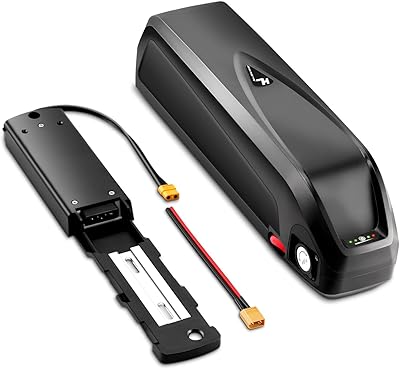
VISET is developing a reputation for producing ebike batteries in the higher capacity aftermarket space. While this pack is a great example of this focus, the number of reviews is very low, with currently only one 5-star review. Let's take a look at the specs that exist.
Core Specs
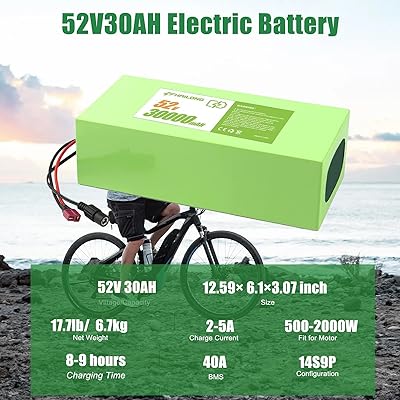
Capacity is the defining feature of this battery pack. At 52V, the 30Ah capacity results in a total of 1560Wh. As we can see, 1560Wh is greater than the 1440Wh provided by a 48V 30Ah pack, and much greater than the 960-1040Wh that is typical of the 48V 20Ah packs that are listed in the [battery comparison table(/ebike-batteries/).
The BMS is capable of providing 40 amps continuously. At 52V, this is sufficient to support all of the motor types listed including standard hub motors, and many of the higher power mid-drives, without starving the motor of current. The 40A BMS is sized correctly for the 30Ah capacity rather than being undersized for cost reasons, which is important for builds that will be drawing large amounts of current.
Physical specs
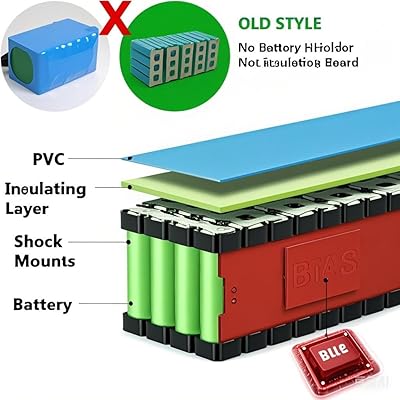
The physical specifications of this pack are 12.59 by 6.1 by 3.07 inches. When compared to other 1560Wh packs, the size is relatively small due to the PVC wrap construction. Instead of using a rigid aluminum or plastic case, the battery pack is wrapped in a flexible PVC material to help keep the overall dimensions of the pack tight. While the PVC wrap may feel softer than the rigid materials used on other packs, it should still provide sufficient protection against minor impacts and water splashes. The form factor is also similar to that of semi-rigid DIY battery builds and should mount easily into bags, racks, and custom mounts.
Charging and accessories
The LED power indicator and the USB port are both considered quality of life features at this price point. The USB port allows you to charge your phone or accessory devices directly from the battery pack during extended periods of use. To charge the battery pack, you will need to purchase a 52V rated charger that terminates at 58.8V. Many sellers include compatible chargers with this pack, but you should verify that the included charger is rated for 52V and terminates at 58.8V prior to making a purchase.
52V versus 48V at High Capacity
Using a 52V rated battery instead of a 48V rated battery will give you an additional 8 percent more voltage at the same current draw. This translates to slightly faster top speeds and increased torque headroom. For high capacity builds where you are already spending money on a 30Ah pack, the 52V specification is a good option if your controller supports 52V. Most 48V controllers actually run fine at 52V since the voltage range overlaps, but confirm your specific controller's maximum input voltage before ordering.
Since the 52V specification results in a full charge voltage of approximately 58.8V, you will need to make sure that your charger is rated for 52V lithium ion batteries that terminate at 58.8V. Most 48V chargers are rated to terminate at 54.6V and will not fully charge a 52V rated battery pack.
Range at 1560Wh
Estimated range for a 1560Wh battery pack in real world conditions is excellent. A lighter rider traveling on flat terrain with moderate assistance levels may be able to achieve 50 to 80 miles of range on a single charge. That is far above the range that most commuters would require, regardless of whether they are commuting within a city, on the highway, or on a bike path.
Even heavy usage conditions, such as hilly terrain or aggressive throttle application, would find it difficult to drain the battery pack down to 30 to 40 miles of remaining range. For most users, the fact that you would rarely completely discharge this pack in a single ride is beneficial for extending the lifespan of the cells.
Lithium ion cells, in general, experience longer lifetimes when cycled between 30% and 80% depth of discharge as opposed to being cycled from 0% to 100%. This is especially true for non-LFP lithium ion cells.
What Amazon Buyers Say
Due to the limited number of reviews for this product, a pattern cannot be established based on feedback from buyers. This is not unusual for new high capacity products that target a niche group of builders and not the masses of commuter riders. The reviewer states that the specs were accurate and that the battery pack functioned exactly as stated on his build. Since this product was released recently and is targeted towards a smaller audience of builders, you will likely evaluate this product solely on its specs until additional reviews become available.
If you are considering a high capacity pack similar to this one, it would be worthwhile to monitor the listing periodically to determine if the number of reviews increases. Check current pricing and reviews on Amazon to see if the review count has grown.
Who Should Buy This
This VISET 52V 30Ah pack will be suitable for a variety of build scenarios. Due to the high capacity of this pack, it is particularly well-suited for cargo ebikes that must carry heavy loads over long distances. Additionally, it would be an excellent choice for ebike tourers who may be completing trips of 40+ miles each day and will not always have access to a reliable source of electricity to recharge the battery. This pack would also be a good fit for high power builds where the 52V voltage and 40A BMS provide ample room for the motor to operate efficiently.
On the other hand, this pack is not a suitable replacement for a standard commuter bike pack. Due to the large capacity, the pack is quite bulky and will require custom mounting to be installed properly. Additionally, the vast majority of commuters will never utilize the 1560Wh of capacity available with this pack. If you're replacing a factory battery on a standard commuter bike, the [battery comparison table(/ebike-batteries/) has more appropriate options by voltage and form factor.
Browse 52V high-capacity ebike batteries on Amazon to compare what else is available at this capacity, and see our ebike battery reviews for more coverage across capacity ranges.
Frequently Asked Questions
Will a 52V battery work with my 48V controller? While most 48V controllers can handle 52V inputs because the voltage range is very similar, you should check the maximum input voltage of your controller prior to using it at 52V. A fully charged 52V pack reaches approximately 58.8V, and most 48V controllers have a maximum input voltage in the range of 56 to 60V.
What charger do I need for a 52V pack? You need a charger that is specifically designed to charge 52V lithium ion packs to a maximum voltage of 58.8V. Standard 48V chargers are terminated at 54.6V and will not fully charge a 52V pack. A dedicated 52V charger or one with adjustable termination voltage set to 58.8V is required.
Is 1560Wh realistic for typical ebike use? No, 1560Wh is much more than most commuters need to travel the distance they normally travel each day. A 1560Wh pack is ideal for cargo bikes, ebike tourers, or high power builds where you plan to travel a significant number of miles each day. For typical city commuting under 20 miles, a 48V 20Ah pack (960Wh) provides adequate range at lower cost and weight.
What does the PVC wrap construction provide in terms of durability? The PVC wrap construction is similar to how many DIY battery builders encase their packs. The PVC wrap provides less rigidity than aluminum or hard plastic cases, but should protect the pack adequately against minor impacts and water splashes. For external mounting, a protective bag or bracket adds useful additional protection in harsher environments.
Can I use the USB port while I am riding the ebike? Yes. The USB port is powered directly by the battery pack and is available as long as the battery has a charge level. The USB port is a nice feature to have when riding for an extended period of time and you want to keep your phone charged or charge other devices.
How many charge/discharge cycles can I expect from this battery pack? The seller does not list a cycle rating for the battery pack. Standard lithium ion cells found in quality packs are generally rated to last 700 to 1000 charge/discharge cycles to 80% of their original capacity. At one full charge/discharge cycle per day, the battery pack would last approximately two to three years. Partial charge/discharge cycles, as most riders will perform with 1560Wh of capacity, extend the actual life of the battery pack far beyond the estimated number of cycles listed.