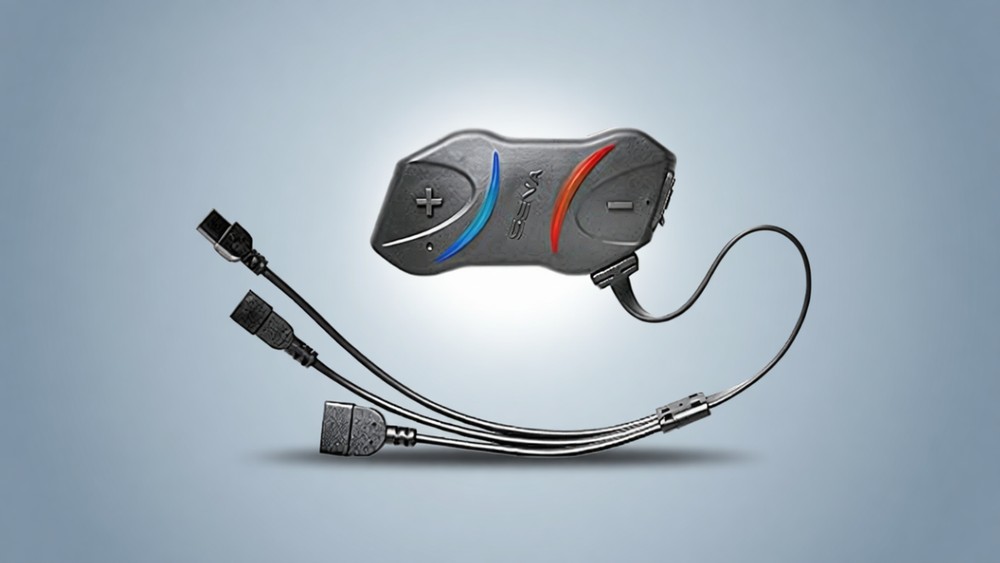
A helmet intercom that disappears against the shell used to be the whole pitch. The Sena SMH10R tucked its battery inside the helmet and left one slim control unit showing, and riders who hated the brick-on-the-side look bought it for exactly that. It's still sold new, still asking about 160, and still running Bluetooth 3.0, a radio standard from 2009.
That mix makes the decision odd in 2026. The review record is mostly a museum: seven of the eight recent write-ups date from 2013 to 2018, and the only newer one is a single one-star from a rider who came over from a mesh system. Entry-level mesh costs the same money now, so the old low-profile advantage has to carry a lot of weight.
This review reads the old praise for what still holds up, weighs the one recent dissent, and goes through the listing's own details table, which deserves a suspicious eye.
The SMH10R earns its reputation on one physical idea done well, and everything else about the purchase is a compromise you agree to up front.
A 4.3-star average across 807 ratings is a healthy score, but the record behind it has barely been added to since 2018, and the price sits in the dearer half of the intercoms we track on a per-rider basis for a single unit. The slim shape remains the reason to buy one, and the Sena SMH10R still delivers it.
Anything else on your list deserves a look at current mesh before you check out.
A decade-old radio, still full price
Start with the radio, because that's the part no amount of mounting cleverness can fix.
Bluetooth 3.0 shipped in 2009, and this listing still builds on it in 2026, at 160.03 for a single pack. Current budget units pair over Bluetooth 5.x, which brought faster pairing and steadier phone links along the way. The SMH10R's spec sheet carries the older limits, and no firmware update changes a radio.
The price needs the same context. Our table prices single units by the rider they serve, and this one lands in the dearer half of the 210 intercoms we track. That would be defensible for a current Sena.
For a seventeen-year-old design, it's the number that should make you pause before anything else in this review.
The listing itself argues about its own reach, and that fight comes later, because the rest of the spec sheet is where the SMH10R still earns respect.
What the low profile buys you
The reviews agree on the physical design with unusual consistency. One rider mounted the battery inside the helmet beside the mouth so that only the control unit showed on a black helmet, and another tucked it on the rear outside to carry spares.
Putting it on took about 15 minutes in an older helmet whose liner was never made for wiring, because each wire wears a unique connector and nothing can be plugged into the wrong socket.
Slimness pays off twice on the road. The low-profile control unit creates less wind noise than the bulkier boxes it competed against, and one rider who logged serious commute miles credited the smaller shape for a quieter left side. Voices stay clear through the wired boom microphone even with earplugs in at highway speed, which more than one owner has confirmed.
The speakers are the trade the slim design makes. They mount on velcro or under the ear pad, and Sena sells smaller optional ones for tighter helmets. Music through them drew polite words, not praise: acceptable for the ride, short on bass, with one owner feeling the drivers vibrate against the padding at speed.

What the chain costs on a group ride
Bluetooth intercoms connect riders one to the next in a chain, while mesh systems connect every rider directly to every other rider, so a mesh group stays up when one member drops out of range. That distinction comes from Cardo's own explainer, and that's the honest way to judge what four-way conference mode on the SMH10R actually delivers.
The conference exists. The rerouting doesn't.
The reach, at least, was real for the riders who wrote it down. One owner has reported a pair of units holding a bike-to-bike link across roughly three-quarters of a mile of open road, which is well past the 100-meter figure in the listing's own details table. Cross-brand pairing works too, so a mixed group can still include one of these.
What the chain costs you is a dropped link, and the alternative is no longer exotic. Budget mesh units now sell near this price, which is the check a 2026 buyer should run before settling for 2009 radio.
Five years of praise, one 2025 dissent
The old reviews read like a consensus. Owners have reported calls and voice navigation coming through clearly, passengers heard through the boom mic without complaint, and units still working five years after purchase. One rider picked it over Sena's jog-dial SMH10 and found the basic functions worth the price.
Nobody in the 2013-to-2018 record calls the sound great. Two owners said so directly while praising everything else, and one passed along other riders' bass complaints with their own music caveat attached.
Then the record goes quiet, and the single voice that breaks the silence hates the headset. A rider who moved from a competitor's flagship mesh headset bought the SMH10R for its low profile and found the sound unacceptable in every setup tried: speakers repositioned inside the helmet, a rival brand's speakers connected through Sena's own 3.5 mm adapter, and wired earbuds. Nothing in that account is ambiguous. That mesh line sells at a higher price, and our Packtalk Edge review covers what current mesh buys you.
Read together, the two eras agree more than they disagree. The sound ceiling was known a decade ago, and the 2018 owner who skipped the included speakers for noise-blocking earbuds on an adapter was working around the same limit the 2025 buyer refused to accept. If music matters more to you than a hidden control box, the record says spend the money elsewhere.
Reading the details table with suspicion
The details table on this listing is a mess, and it's worth walking through because the same pattern shows up all over this category.
Alongside the real rows sit fields that belong to a helmet listing: a mint green color option, an iridescent visor coating, a D-ring chin strap. The same table claims active noise cancellation, a 2200 ohm impedance, and a 0.704-ounce weight that no headset with a battery has ever weighed.
Trust survives on the rows that agree across sources. Eight hours of talk time appears in both the bullets and the table, the 2.5-hour charge time matches, the two-year warranty is stated plainly, and the jog-dial control shows up in the button-configuration row. Water resistance is claimed without an IP rating, which means splash-worthy, nothing more.
The range row is the interesting one. The table lists Bluetooth range at 100 meters, while the SMH10R family has long advertised about 1.6 kilometers of rider-to-rider intercom reach, and an owner's three-quarter-mile report sides with the bigger figure. The listing argues with itself, the doubled word in the pairing bullet is the smallest of its self-inflicted wounds, and the rows that match reality are the ones worth trusting.

FAQ: the pairing that crosses brands, the earbuds the jack takes and the battery a rear mount turns into a spare
Does it really pair with headsets from other brands?
Yes. Universal intercom pairing is in the listing bullets, and it matters most for mixed-brand group rides. Pairing across brands doesn't change the chain, so a rider who leaves range takes the link with them.
Can you use your own earbuds?
Yes, through the 3.5 mm jack and Sena's adapter. One owner paired noise-blocking earbuds this way and called the combination a clear upgrade over the included speakers. It is the workaround the record keeps reaching for when music quality matters.
Is the battery replaceable?
The battery pack detaches from its helmet mount, and one owner mounted it on the helmet's rear specifically to swap charged spares mid-trip. What no current review records is long-term battery replacement on a new pack, since the recent record ends in 2018 apart from one unhappy buyer.
How does it hold up over years of use?
The best evidence is a pair bought in May 2013 that an owner has reported still working in 2018, which is five years of service including regular two-up riding. Beyond that, the record is nearly empty, so longevity past the five-year mark is a hope, not a documented outcome.