Mesh intercom used to be the part of group riding you saved up for. The brands that built it still price it like a flagship feature, so a four-rider setup can cost more than a helmet. Budget makers noticed, and Moman's CPX turns up with the same headline, an open mesh that claims room for 24 riders, at a price that reads like a typo.
Then you open the listing and the ground moves. The title says the box holds two units.
A few lines lower, the spec table says it holds one. Both cannot be true, and the difference is the whole cost of the second rider.
That is not the only wrinkle. The first bullet says the CPX talks to other CPX units and nothing else, and the newest buyers tell a rougher story than the star average does.
This walk-through starts with the pack-count puzzle, because it decides what you pay per rider, then works through what mesh membership really asks of a group, the volume problem two riders hit in mesh mode, and what the record by date suggests about which unit you will get.
The Moman CPX promises flagship mesh at a budget price, and its own listing cannot tell you what arrives in the box. The title says two units, the spec table says one, and the price reads like the single-unit answer.
Around the middle of the 192 intercoms we track on price per rider, it carries a 4.3 average that the newest buyers undercut, with a defect, dropouts, and a mount that broke on the second ride. The exact slot renders live on our intercom comparison table. Buy it when the whole group buys it. Skip it for a mixed-brand group.
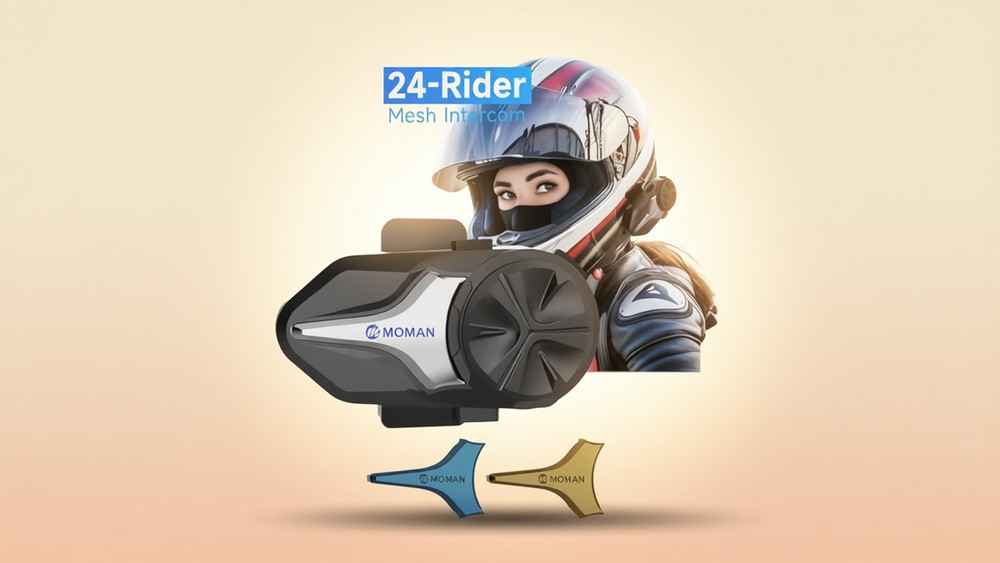
One unit or two, the listing will not say
The title says you get a two pack. The spec table for the Moman H lists Unit Count 1 and Number of Packs 1, a few lines below that title. Both can't be true, so the price is the tiebreaker.
The checked price lands almost exactly where the sibling two-pack listing sits on a per-rider basis, which is the single-unit reading. If the box really held two, its cost per rider would be about half of that sibling's, and no listing prices a pair at half its own pair price.
In practice, the title is not an order document. Check the pack count and the quantity line in the cart before you pay. When the box arrives, count the units against what you ordered while the return window is still open, because fixing it afterward costs you the difference.

The group has to buy in, all of it
The first bullet states the limit outright: the CPX pairs with other CPX units and nothing else. The 24-rider open mesh and the six private group meshes live inside that wall, so the headline capability is a bet that the whole group runs the same budget unit.
The bet has a working side. Mesh links self-heal, which means a rider who drops out of range rejoins the group without re-pairing when they come back, and that holds whether the group is two riders or twenty.
The wall is what matters for a mixed-brand group. If your friends already ride on another maker's mesh, the CPX cannot join it, so it adds nothing to the network you have. For a pair starting from zero, two matched units are the whole job, and the two-pack sibling covers exactly that.
The volume lock two riders hit in mesh mode
Two independent owners have found the same behavior: music volume locked low or unadjustable while the CPX sits in mesh mode, even with nobody talking. One reported it in September 2026, the other in May 2026.
The listing's own Intercom Priority bullet describes an adaptive system that lowers music while intercom is active and restores it afterward. Whether that mechanism causes the lock, no captured report says.
The test that settles it costs nothing. Pair the units, start a mesh session, and play music before the group ride day, while the return window is open. If the music stays quiet, you'll know before the trip, not during it.
The newest reports read differently from the average
The most-helpful captured report describes a first unit that arrived defective and a replacement that kept breaking in and out mid-conversation. Another rider's helmet clip snapped on the second ride and left the CPX dangling by its wire. Both are one-off events, and neither is the whole record.
Nine five-star reports carry the other side: a mount still glued on after seven months, a clean pair with the same brand's unit from two years earlier, speakers loud enough for daily riding. One of those nine carries no purchase confirmation from Amazon.
The pattern worth weighing is the direction. Three of the five newest captured reports are one-star, while the older European record is warm. No captured report tested the 28-hour battery claim, the FM radio, or the waterproofing.
The most useful advice in the record is one owner's pro tip: fully charge the system, test every function, and only then mount it to the helmet.

Buy it when the whole group buys it
The CPX makes sense when the whole group buys it together: a first mesh setup on a budget, or a pillion pairing where two matched units are the whole job. For that second case, Moman's smaller H2S covers rider-to-pillion talk a different way. It makes no sense for a group that already runs another maker's mesh, because the CPX can't join it, and the 24-rider headline is a promise about a future fleet, not a day-one feature.
On value, it sits around the middle of the 192 intercoms we track on price per rider, and the live figure renders in the specs box on our intercom comparison table. What the table cannot price is the ecosystem: a cheap unit nobody else in the group can join is still money spent on silence.
Order with the checklist. Confirm the pack count and the cart quantity, test mesh and music inside the return window, and mount last.
Frequently Asked Questions
Does it work with Sena or Cardo?
No. The listing states it pairs with other CPX units only, so a group running Sena or Cardo mesh stays closed to it. Everyone who wants to talk through the CPX needs the same hardware.
Does the box hold one unit or two?
The title and the spec table disagree. The spec table says one unit under the model name Moman H, and the price supports that reading. Check the quantity line in the cart before you pay.
Is it safe in rain?
The listing claims an IP65 rating, which under the IEC's IP code standard means dust-tight and protected against water projected in jets from any direction. The rating doesn't stack upward into immersion, so read it as rain-proof, not dunk-proof.
How long does the battery last?
The manufacturer claims up to 28 hours from a 1000mAh battery, and no captured report has tested the claim.
Can music play during a mesh ride?
Two riders have reported the music volume locked while mesh mode is active. Test it with your own units inside the return window, because the behavior shows up on the first pairing.