A 52V 20Ah battery at this price is really difficult to find. The majority of 52V packs are more expensive, since the voltage bump results in needing more cells, plus 1040Wh gets you solidly in the serious range. The Lithium Hellas 52V 20Ah dropped onto Amazon in early 2026 and got close to the very top of our price-per-watt-hour rankings, which is how it caught our eye. But there's a few things you'll want to understand about the battery before just hitting "buy now".
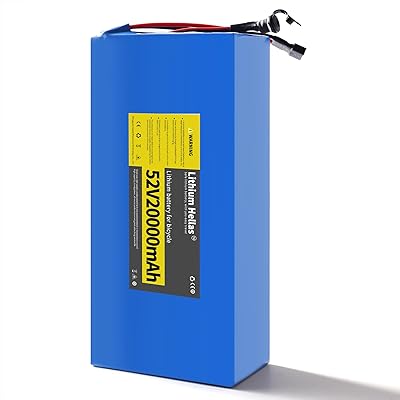
It's a generic rectangular box battery. Not a downtube, not a shark/hailong, not a rear rack design. That'll matter a lot depending on what you're building or upgrading, so let's get that out of the way first before getting into the specs.
Specs and What You're Getting
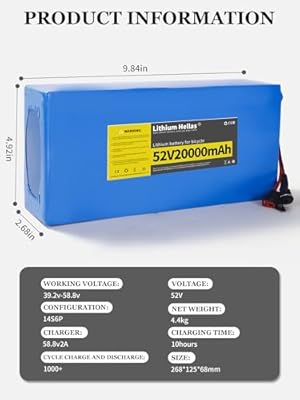
The core numbers are 52 volts, 20 amp-hours, and 1040 watt-hours. That's the actual math, 52 times 20 equals 1040. The BMS handles a continuous 30 amp discharge, covering all but the most overpowered 52V setups from 750W up through around 1500W depending on the motor. If you're pushing over 30A continuous you'll want to size up, but for the majority of hub motor builds this is plenty.
Charging and Connector
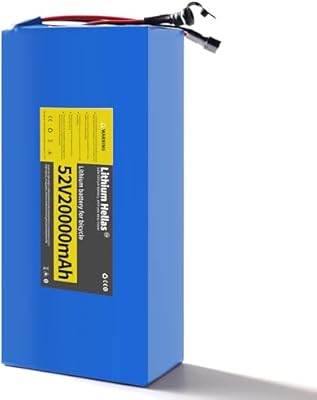
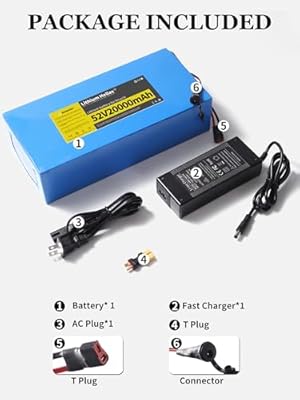
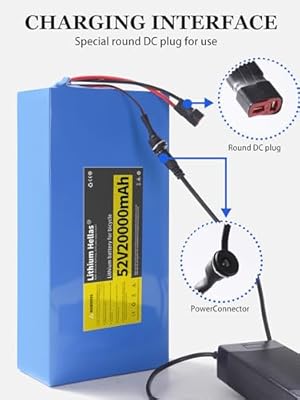
The charger included is a 58.8V 2A unit, which is the correct charge voltage for a 52V lithium pack. At 2 amps it's on the slower side. A fully depleted 20Ah pack at 2A means roughly 10 hours to full charge, though realistically charging from 20% rather than zero gets you closer to 7-8 hours. If you want faster charging you can buy a separate 5A or 10A charger that's compatible with 58.8V, but that adds to the cost. The connector is a T-Plug (aka Deans connector), which is pretty standard in the RC and DIY ebike world but not as common on consumer bikes. If your controller or motor expects something else, you may need to account for that and splice or buy an adapter.
BMS and Cycle Life
As expected the BMS protection includes overcharge, over-discharge, short circuit, temperature cutoff, and reverse polarity. The manufacturer claims 1500 cycles, which is on the high end for most lithium-ion packs, better than the 700-1000 cycle range you usually see on budget alternatives. Take that cycle count claim with a grain of salt since it depends a lot on charge habit and depth of discharge, but 1500 cycles is a great target.
The Form Factor: Know What You're Getting
This is where you wanna pay attention if you're a buyer. The Lithium Hellas 52V 20Ah is not a pack just designed to slide down into your downtube frame or click into a shark/hailong carrier. It's a rectangular slab battery. This one goes on the outside of your ebike and it's up to you to mount it on a custom bracket or battery bag or cargo rack, or else build it into a project enclosure. That also makes it perfect for DIY builds, custom electric bikes, electric scooters, trikes, golf carts, power sports projects, etc. One Amazon reviewer stuffed this in a Razor SX500 with an overvoltage controller and a brushless motor upgrade and reports the whole kit 'n kaboodle ran for 9 miles of heavily used throttle with 35-40% of the battery remaining. That's a pretty real world use case that fits this battery well, and lets you know the capacity is genuinely there.
If you need a battery for an off-the-shelf ebike that accepts a specific form factor, this probably isn't your pack. Check the [battery comparison table(/ebike-batteries/) and filter by form factor to find downtube or shark/hailong options.
Real-World Range
On paper you're going to have good range with 1040Wh. The listing claims 35-50 miles, which is optimistic as always, but not ludicrous under decent conditions. A lighter rider, flat terrain, moderate speeds around 15-20mph, and mostly pedal assist will drive toward the high end of that range. A heavier rider, doing a lot of throttle on a hilly route, will probably see more like 20-30 miles.
That reviewer who ran it hard on a Razor build with a 650W motor and was hauling a 60-pound kid at full throttle for 9 miles still had over a third of the charge left. Not an actual range test, but gives an indication that capacity can be real. At 1040Wh you have more headroom than most budget ebike batteries, and that little bit of needed overhead matters when real life range ends up 40% below the spec sheet numbers. One thing to keep in mind with 52V systems specifically: if you're running a 48V motor or controller you cannot use this battery. The nominal voltage difference between 48V and 52V seems small but the actual fully charged voltage of a 52V pack (58.8V) is outside of the safe operating range for most 48V systems. Don't cross the voltage streams.
What Amazon Reviewers Are Saying
There are only 3 reviews so far, which is to be expected given that this battery is from January 2026. The rating sits at a perfect 5 stars with what's there. The most detailed review praises both the value and the practical range: "Great battery for the price... today we rode 9 miles at almost full throttle the whole time and she still had about 35%-40% battery left. Would highly recommend this battery for a budget razor build for kids. Arrived quickly and included a good charger." Another reviewer focuses more on the BMS protection and the 30A protection, saying they feel confident about safety and long-term reliability.
There are no negative reviews yet. That does not guarantee no issues, just happy early adopters. This battery is new enough that you're kind of in the first wave of buyers so it's worth keeping an eye on it. It's spec'd well and the price is decent. Check current pricing on Amazon because new listings for this type of battery can fluctuate in price.
Who Should Buy This
The Lithium Hellas 52V 20Ah is a solid choice if you're putting together a custom 52V electric vehicle, you have an existing DIY ebike you're upgrading with an outside battery pack, or you're converting a gas scooter or bike. 1040Wh is a large pack more than enough for cruising or commuting, the BMS is rated high enough for middling motor sizes, and the price per watt hour is exceptionally low for the 52V category. It's in the wrong ballpark if you need a frame-integrated battery pack or have anything but a 52V bike. That goes as well for the T-Plug connector, which is less standard than XT60 or Anderson and will require adapters, a minor inconvenience but one to consider nonetheless.
If you want to compare it to 52V options side by side, the [battery comparison table(/ebike-batteries/) has all the specs to let you filter it down. And if you're debating between 48V and 52V generally, browse 52V options on Amazon to see what's available at each price point.
Frequently Asked Questions
Will this fit my standard ebike battery slot? Almost definitely not. The battery pack is a rectangular slab without any downtube, shark/hailong, or rear rack mounting system. It's intended for external mounting on custom builds or non-standard setups. If your bike has a specific battery form factor, you need a battery designed for that slot.
What connector does this battery use? It uses a T-Plug (Deans) connector. That's common in RC and DIY ebike builds but less common on consumer ebikes. If your controller has an XT60, Anderson, or similar connector, you will need an adapter.
Can I use this on a 48V ebike? No. A 52V pack charges to 58.8V, which is above the safe operating voltage for 48V controllers and motors. Using this on a 48V system may damage the controller or motor. Check your bike's voltage requirements carefully before ordering.
How long does it take to charge? The included 58.8V 2A charger will take roughly 8-10 hours from near-empty. For faster charging, a 5A charger with the same 58.8V output will cut that roughly in half. Just be sure any aftermarket charger has the correct charge voltage for a 52V lithium-ion pack.
How many cycles should I expect? The manufacturer is claiming 1500 charge cycles, which is above the average for this price range. Real-life cycle life depends on how you charge and discharge the pack. Partial charges, avoiding discharges to zero, and storing at around 50-60% when not in use for extended periods will all extend the life of the cells.
Is 1040Wh enough for a daily commute? For most people, yes. At 1040Wh you're looking at roughly 25-45 miles of realistic range depending on riding style and conditions. If your round trip is under 20 miles and charging is possible on either end, you will have a lot of buffer. Riding seriously hilly terrain or carrying a heavier load, bear in mind that your realistic number will be closer to the lower end of that range.