The LiFePO4 36V 12Ah battery is a new addition to the ebike battery market, offering several improvements over other ebike packs listed online. LiFePO4 battery chemistry is generally safer and longer lasting than lithium-ion chemistry, commonly found in many ebike packs. The primary benefit of the 36V 12Ah 432Wh configuration of this battery is its recharge cycle life, which is reportedly 2000 or more cycles, nearly doubling that of standard 18650 lithium-ion packs. It comes with a built-in smart BMS, a 3A fast charger, and XT90 connectors, making it a complete package for DIY builds.
Specs and Build Quality
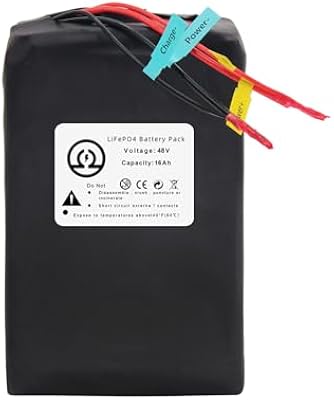
The battery itself is 36V nominal and 12Ah capacity for a total of 432Wh of electrical energy. The LiFePO4 battery chemistry used in this battery has a lower energy density than lithium-ion chemistry, resulting in a larger and heavier battery for the same capacity. However, this tradeoff provides significant advantages in terms of both safety and longevity. The LiFePO4 battery chemistry does not include toxic heavy metals, is non-toxic, and is significantly less likely to result in either a fire or explosion compared to the standard lithium-ion chemistry.
Physical specs
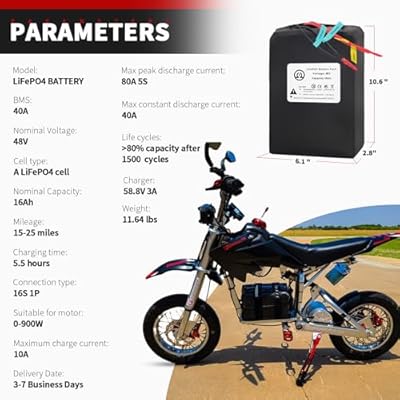
The dimensions of the 36V 12Ah battery are compact enough to accommodate most common mounting configurations. Larger than a lithium-ion battery of equal capacity, the battery still includes a 3A fast charger, allowing for a charge time of approximately 4 hours. This is considered a reasonable charge time for daily ebike usage. The 3A fast charger is included in the purchase price, saving you the expense of acquiring a separate charger. The battery features a 3-pin connector and two XT90 connectors, providing a high degree of flexibility in wiring connections to various ebike controllers.
BMS and motor range
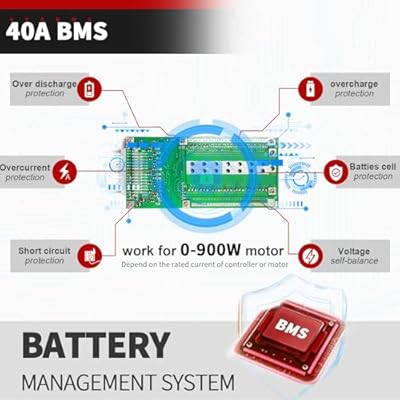
The smart BMS included in this battery protects the battery from short circuit, overcharge and over-discharge events. The smart BMS is compatible with motors ranging from 250W to 750W, and is suitable for 36V systems. Due to the flatter discharge curve of LiFePO4 compared to standard lithium-ion chemistry, the voltage remains relatively consistent throughout the discharge cycle, providing a more consistent level of power delivery during the entire duration of the ride.
Form Factor and Compatibility
This battery is designed to be mounted externally via a bag, bracket or custom enclosure and is not intended to be integrated into a specific ebike frame. The XT90 connectors are compatible with a wide variety of ebike controllers and accessories, including adapters for alternative plug types.
One thing to note regarding this listing is that it encompasses a broad range of voltage and capacity combinations, ranging from 36V and 12Ah to 72V and 50Ah. Be certain to choose the correct configuration when placing your order. The configuration reviewed here is the 36V 12Ah and is designed for 36V systems using motors of up to 750W. You can compare other configurations on our [battery comparison table(/ebike-batteries/).
Real-World Range Estimates
Based upon the 432Wh capacity of the battery, you may expect a range of 15 to 30 miles based upon factors such as motor size, terrain, rider weight and level of pedal assistance utilized. In the case of a 36V 250W motorized ebike using moderate pedal assist on relatively flat terrain, a light rider may expect a range of 25 to 30 miles. A heavier rider utilizing a 500W motor and riding on hilly terrain may expect a range of 15 miles or less.
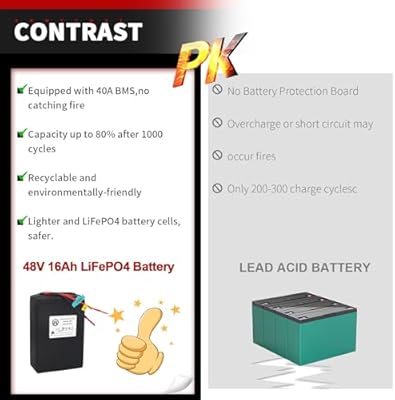
In comparison to standard lithium-ion, LiFePO4 batteries exhibit superior cycle life. While a standard lithium-ion pack may retain 70 percent of its original capacity after 1000 recharge cycles, a LiFePO4 pack retains 80 percent of its original capacity after 2000 recharge cycles. Assuming a rider charges their battery daily, a LiFePO4 battery can be expected to last approximately 5 to 6 years before needing replacement.
What Amazon Reviewers Are Saying
As of this writing, the LiFePO4 battery listing holds a 5.0 star rating across 8 reviews. Note that this is a multiple variant listing and some reviews may not pertain to the 36V 12Ah configuration reviewed here. Overall, the reviews of this product are extremely positive and consumers praise both the build quality and reliability of the battery.
Reviewers comment positively on the packaging of the battery, the functionality of the 3A fast charger and the consistency of the power delivered by the battery during use. Many reviewers also appreciate the added peace of mind provided by the safer chemistry of the LiFePO4 battery, especially for those storing the ebike battery in close proximity to living spaces.
While there is insufficient review data to confirm the 2000 cycle life claim, if you would like to view the most recent customer reviews, check the latest reviews on Amazon to see if more users have weighed in since this review was written.
Who Should Buy This
If you value safety and longevity over energy density, then the 36V 12Ah LiFePO4 battery is the ideal battery for you. If you intend to ride your ebike every day for years and would prefer a battery that will provide extended service life over standard lithium-ion, then LiFePO4 is the battery chemistry you should consider. The included charger, XT90 connectors, and smart BMS make this a complete package for DIY builders who do not want to source components separately.
The primary tradeoffs associated with the larger size and greater weight of LiFePO4 batteries relative to similar lithium-ion packs are largely offset by the longer lifespan and superior safety characteristics of LiFePO4 batteries. If weight and compactness are your top priorities, a standard lithium-ion pack may be a better fit.
To browse more 36V battery options, visit the ebike battery reviews. To view all batteries organized by price per watt-hour, visit the [comparison table(/ebike-batteries/).
Frequently Asked Questions
What are the differences between LiFePO4 and standard lithium-ion batteries? LiFePO4 (lithium iron phosphate) is a specific type of lithium battery chemistry that offers improved safety, longer cycle life (approximately 2000+) and better thermal stability than standard lithium-ion (NMC or NCA) batteries. However, the energy density of LiFePO4 is lower than standard lithium-ion, which results in a larger and heavier battery for the same capacity.
Will this battery work with my existing 36V ebike controller? Provided your controller is rated for 36V input, the battery will function properly. The XT90 connectors may require an adapter if your ebike utilizes a different plug type. Otherwise, the voltage compatibility is relatively simple to establish. Be sure to verify that the maximum current rating of your controller matches the output of the BMS.
How long will the 3A fast charger take to fully charge the battery? Using a 3A fast charger will take approximately 4 hours to fully charge a 12Ah pack. For partial charges, the time required will be proportional to the amount of charge remaining. Due to the ability of LiFePO4 to accept faster charging rates than standard lithium-ion, the 3A charger will not result in excessive heat generation or damage to the battery.
Are LiFePO4 batteries truly safer than regular lithium-ion? Yes, LiFePO4 is a safer chemistry than standard lithium-ion. LiFePO4 exhibits superior thermal stability and does not undergo thermal runaway as readily as standard lithium-ion cells. As a result, LiFePO4 batteries are much less likely to ignite or explode, even in abusive conditions. This makes LiFePO4 a good choice for indoor storage and charging applications.
Can I use this battery in cold weather? LiFePO4 batteries function adequately in cold weather, but the battery capacity may decrease in temperatures below freezing. It is not recommended to charge a LiFePO4 battery in temperatures below 32F (0C) as this may potentially damage the battery cells. If you operate your ebike in colder climates, bring your battery inside to warm it up before charging to help preserve its health.
Why is LiFePO4 heavier than standard lithium-ion for the same capacity? LiFePO4 cells have a lower energy density than NMC or NCA lithium-ion cells. This means you need more cell material to achieve the same watt-hour rating, which results in a larger and heavier battery pack. The weight penalty is the main tradeoff for the improved safety and longer lifespan.