The iSunergy X10 is the budget mesh that owners actually compare to Cardo and Sena, with an IP67 shell and a 910mAh cell that finishes touring days half-full. Mesh 4.0 with 2-10 riders and auto-reconnect is the real deal. Groups of four to six who want self-healing mesh without the premium-brand price win here. The full 10-rider group remains untested.
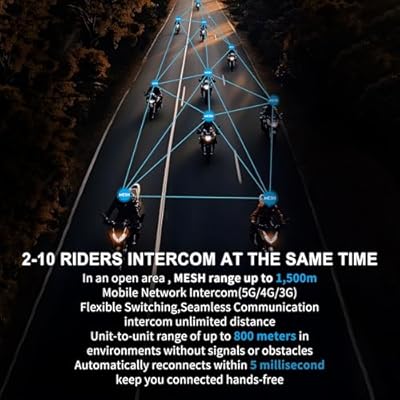
What mesh 4.0 buys you over a Bluetooth chain
When you use a Bluetooth chain, you pair each helmet in a specific order, and if one link snaps the whole chain breaks and needs a manual reset for everyone. This mesh 4.0 tech avoids that mess with free group formation, which means riders just join the talk without any pairing ceremony or menu hunting. If a rider falls behind and loses signal, the group heals itself once they return to range, so nobody stops to fix the link.
The 2-10 rider range is the honest group shape, and Bluetooth chains struggle as the pack grows or spreads through corners. Because the X10 uses mesh nodes, it stays connected while the distance between bikes changes, which is why mesh is worth the premium for groups of four or more. It keeps working.
The X10 can pair one-to-one with other brands over Bluetooth, but you can't form a mesh group with riders on different gear. That means your mesh group stays same-brand, but the price undercuts the idea that mesh belongs only to premium riders. You get a stable network that holds when the road gets tough or the pack gets wide.
The channel-switching feature is the part group leads will use most. Instead of one big chat where everyone talks over each other, the group can split across channels instead of crowding one conversation. A sweep rider can stay on the lead channel while the group chats behind. When the road turns complicated, the lead channel carries the calls that matter without the social noise.
The owner record: small but real
The pool of thirteen ratings is small, but the 4.8 average without a single one-star says most buyers got what they expected. One owner bought a second unit for a new helmet, which is a trust signal most budget intercoms never earn, because it proves the hardware held up long enough to want again. That matters more than any spec sheet.
Owners report sound as clear as the expensive brands, so you don't spend a fortune to hear your friends at speed. The 910mAh cell holds enough for a long day, since riders finish tours with about half the battery left. Owners report touring days ending near half charge, so a mid-trip death is unlikely. It's a solid pick for long days on the road.
Open questions remain: how the mesh performs with all ten riders connected, how far the signal reaches across open terrain, and how the shell survives multiple seasons. Until more riders test the limits, the early owners are the evidence. It's a good start.
If you buy into this group, run the same shakedown any budget mesh deserves. Form the full group in a parking lot and confirm every helmet joins without a pairing ritual. Stretch the group on a straight road to find where the audio actually breaks. Drop a rider back at speed and watch the reconnect happen. Log the battery at day's end. An hour of testing turns the spec sheet into facts you can ride on.
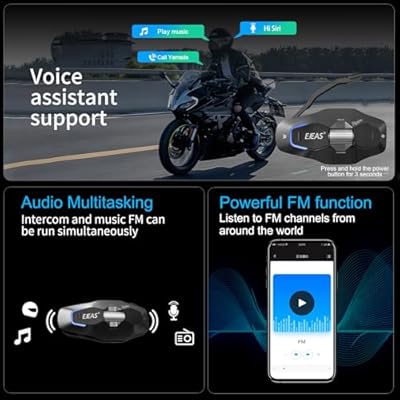
Weather, weight, and the voice-control question
The armored shell carries an IP67 rating, which means it stays dust-tight and survives submersion, though you should never pressure-wash it. That is the strongest rating you will find at this price, and it handles heavy rain without drama. A downpour is not the threat here that it is for IP65-class rivals.
At 10.2 ounces it feels mid-weight on the helmet, and the magnetic mount lets you swap it between helmets quickly. Check the mount after rough rides to make sure it stays seated. It clicks in tight. The weight doesn't pull the helmet to one side, which helps your neck on long days.
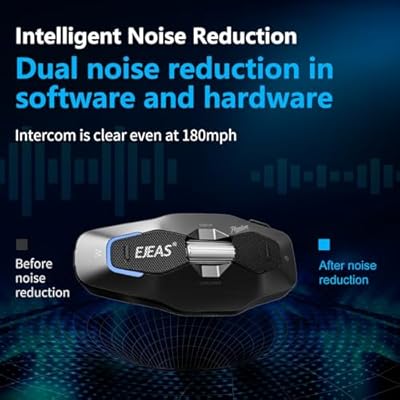
Voice control and the dual noise reduction help at low speeds, but glove fumbles and heavy rain degrade both, following the class pattern. Voice commands still beat reaching for buttons when the road gets busy. It's a sensible way to manage audio without taking your hands off the bars. Check the current X10 listing for the live price before you decide.
Who should buy it, and who should spend differently
If your group of four to six wants real mesh behavior, self-healing links, quick joins, and channels, this is the cheapest way to get all of it in one unit. It works in real weather because the IP67 shell keeps dust and water out. You'll like how the group stays connected when someone pulls away, the feature Bluetooth chains lose first. Accept that the owner record is still small.
Skip it if you need a proven 10-rider deployment, or if you want brand-backed support when hardware fails on a trip. If you ride solo, a simple two-way pair costs less and serves you better. The FreedConn Free+ is the cheaper mesh claim with an even smaller owner record, and the XGP X10 is the Mesh 3.0 equivalent at a lower price. Compare them all on the intercom table before you pick.
Frequently Asked Questions
Is mesh better than Bluetooth for groups?
Mesh technology lets the group heal itself when riders drop out, a benefit standard Bluetooth chains lack for groups of four or more. The auto-join behavior keeps everyone connected without manual resets.
Can I connect 10 riders at once?
The spec supports ten riders, but no published test confirms that maximum in real riding. Most real groups stay smaller to keep audio quality up.
How long does the battery last on a trip?
The 910mAh battery is large for this class, and owners report long touring days ending with about half the charge remaining. You won't run dry mid-ride.
Will it work with other brands?
You can pair one-to-one with units from other brands, but you can't form a mesh group with riders on different systems. The fallback covers talking to one friend on different gear.
Is this intercom waterproof?
The IP67 rating means the shell is dust-tight and submersible, the strongest rating available at a budget price. Still avoid pressure washers on the hardware.