LiFePO4 chemistry completely changes the battery conversation in several ways. In addition to providing a longer cycle life (usually 2000-plus cycles vs 500-1000 cycles for NMC), LiFePO4 offers better thermal stability and safer behavior if something goes wrong. The tradeoff is a lower energy density, so a LiFePO4 pack of the same size and weight will contain less capacity than an equivalent lithium-ion pack. The HAYAEnergy 36V 16Ah LiFePO4 battery contains 576Wh of LiFePO4 capacity, and includes a 30A BMS, XT90 connector, and a 3A charger. For riders that value longevity and safety over maximum capacity density in a 36V setup, this is a compelling option.
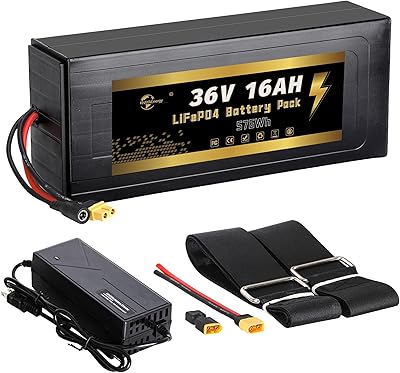
Early Amazon reviews show 5 stars based on a small number of reviews. That is a good sign for a newer listing, and the specifications look consistent with a high-quality LiFePO4 build. Here's what makes this pack worth considering for your 36V build.
LiFePO4 Chemistry: Why It Matters
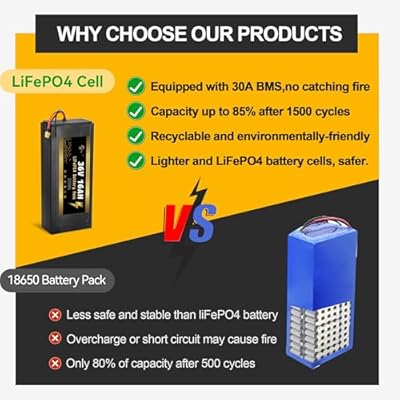
Most ebike batteries use NMC lithium-ion chemistry (nickel manganese cobalt). While it provides excellent energy density, it has a shorter cycle life and less inherent thermal stability. LiFePO4 (lithium iron phosphate) gives up some energy density for substantially better longevity and safer chemistry.
These advantages for an ebike rider are significant. A well-maintained LiFePO4 pack can provide 2000 to 3000 charge cycles before dropping to 80 percent of its original capacity. An NMC pack will usually deliver 500 to 1000 cycles. Assuming a rider uses their bike 300 days a year, an NMC pack will likely last 2 to 4 years. Under the same conditions, a LiFePO4 pack will probably last 7 to 10 years.
Additionally, LiFePO4 is more resistant to thermal runaway in failure scenarios, which is especially beneficial for riders in hot climates or for those who store their bikes in non-climate-controlled spaces.
Energy Density Trade-Off
576Wh from a 16Ah LiFePO4 pack. For comparison, a comparable NMC pack would be capable of 768-840Wh (16-17.5Ah at 48V). As LiFePO4 has a lower energy density, there will always be fewer Wh per pound and per liter than NMC for a given size and weight. The 576Wh is respectable for a 36V LiFePO4 unit, but buyers comparing it to NMC packs should understand these two chemistries operate differently.
Based on 576Wh at 36V, most riders will experience 18 to 32 miles of range per charge on typical terrain. Flat ground with light pedal assist will get you the upper end of that range. Hills and throttle use will bring you toward 18 to 22 miles.
BMS, XT90 Connector, and Motor Compatibility
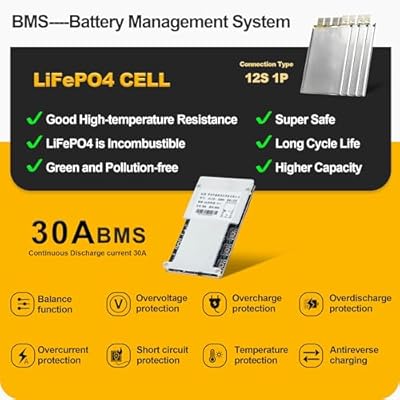
At 36V, the 30A BMS is capable of handling up to 1080W continuously. The motor compatibility runs from 0 to 540W, which is the conservative end of what a 36V system supports. The BMS has nearly double the headroom at 540W, meaning it won't be overly taxed even at the listed upper limit.
The XT90 connector is a high-quality choice for a pack at this capacity level. XT90 connectors handle higher current loads than the more common XT60 or Tamiya connectors, and they are a popular choice for LiFePO4 packs due to their superior contact quality and durability. If your controller uses a different connector type, XT90 adapters are readily available.
The 3A charger is the right pairing for this pack. A full charge on 16Ah with a 3A charger takes about 5 to 6 hours from near empty. Overnight charging works well for commuter schedules.
What the Early Reviewers Report
While five-star reviews on a small sample size don't give you a lot of data to work with, the initial positive feedback on a newer LiFePO4 listing is an encouraging sign. Amazon reviewers report the battery performing as described and delivering reliable range for their use cases. The LiFePO4 chemistry and XT90 connector both get specific positive mentions from buyers who understand what they're getting. For a newer listing in a chemistry category that tends to attract buyers who research their purchases, consistently positive early feedback is a meaningful data point.
Check current pricing and updated reviews on Amazon since the review count may have grown since this was published.
Who Should Buy This
The HAYAEnergy 36V 16Ah LiFePO4 is the right pick for riders on 36V systems who want maximum longevity from their battery, live in hot climates where thermal stability matters, or prefer the safer failure characteristics of LiFePO4 chemistry. The XT90 connector is a quality choice, the 3A charger keeps charge times practical, and the 576Wh capacity covers typical commuting distances on 36V systems.
If you need 48V compatibility or maximum energy density in the smallest package, LiFePO4 and 36V together limit you compared to 48V NMC options. Use the [battery comparison table(/ebike-batteries/) to compare voltages and capacities, and filter by voltage to find 36V options side by side.
Browse 36V LiFePO4 ebike batteries on Amazon for comparison options. And for more reviews including LiFePO4 and NMC options at different capacities, see the ebike battery reviews section.
Frequently Asked Questions
How long do LiFePO4 batteries actually last? A properly maintained LiFePO4 pack will provide 2000 to 3000 cycles at 80 percent capacity retention. Assuming a full cycle per day, that's 5 to 8 years of use. Partial cycling and keeping the battery stored at less than 100 percent charge will allow for extended battery life.
Is LiFePO4 worth the higher cost compared to NMC? It depends on how often you ride. If you ride every day and plan to keep the bike 5-plus years, the longer cycle life makes LiFePO4 cheaper per mile over the full lifespan. If you ride less frequently and might sell the bike in 2 to 3 years, the lower upfront cost of NMC often makes more sense.
What's the XT90 connector and why does it matter? XT90 is a high-quality power connector rated for up to 90A of continuous current flow. Compared to XT60 (60A), T-plug (30A), or Tamiya connectors, XT90 provides better contact quality and handles higher peak currents. For a 30A BMS application, XT90 is more than sufficient and provides long-term reliability.
Will this work with 36V motors above 540W? The 30A BMS handles up to 1080W at 36V, so motors above the listed 540W often work fine. The 540W upper compatibility claim is conservative. For motors in the 600W-750W range on 36V systems, verify the BMS amperage against your motor's peak current draw before ordering.
Does LiFePO4 work differently in cold weather? Yes. All lithium chemistries lose capacity in cold temperatures, but LiFePO4 is more temperature-sensitive at low temperatures than NMC. Below freezing, expect 15 to 25 percent range reduction. Storing the battery indoors when not riding and allowing it to warm up before use helps preserve range in cold conditions.
What charger amperage is included? The listing specifies a 3A charger, which takes 5 to 6 hours for a full charge on 16Ah. A 3A charger is the right choice for daily charging use and doesn't stress the cells the way a faster charger would.