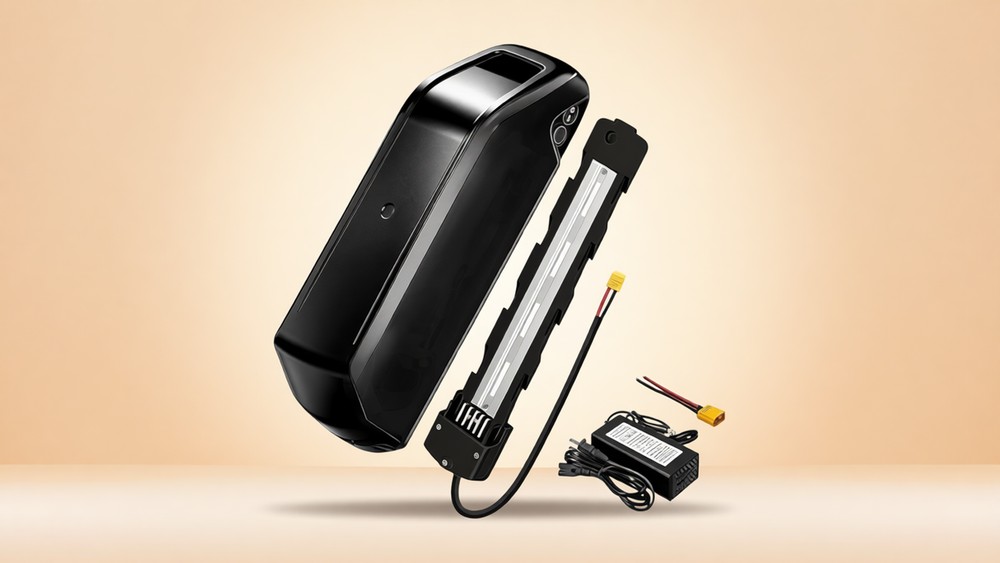
The Ecovoltix 52V 20Ah is a real bundle: modern 21700 cells, a 40A BMS, and a price in the cheapest fifth of our battery table, wrapped in a listing title that lies about capacity. The 1500Wh claim is not possible on paper for this pack. The hardware underneath is still worth buying if you run a 52V system and can ignore a marketing number. Builders of 1000W-plus 52V systems win here, and voltage-mismatched buyers lose a controller.
The 1500Wh claim, and the math that debunks it
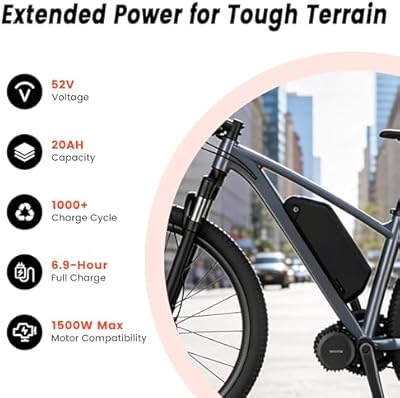
Do the math yourself, because it takes ten seconds. 52 volts times 20 amp-hours gives 1040 watt-hours. Even at the pack's top charge of 58.8 volts, the total only reaches 1176 watt-hours. No setup of these cells stores 1500Wh, so the title number is a sales tactic rather than engineering.
The honest figures still impress. From 1040Wh on paper, depth of discharge limits put usable energy at roughly 830 to 880 watt-hours. At 15 to 20 watt-hours a mile on pedal assist, that is 42 to 59 miles. Throttle-only at 25 to 30 watt-hours a mile gives 28 to 35 miles. Cold weather trims both bands, since lithium cells give less in winter, and a 40-mile summer commute becomes a 30-mile January one on the same charge. The title nearly doubled it, and the fix is simply reading the spec line instead of the title.
Why the 21700 format matters more than the brand name
The real story is the cell format. A 21700 cell stores roughly 35 to 50 percent more energy than a typical 18650 (4.0 to 5.0 amp-hours versus 2.4 to 3.5), with 20 to 30 percent better energy per size by the cell makers' own data from Panasonic and Samsung SDI. High-current 21700s also hold voltage better under load, which matters most on climbs, exactly where older cells sag and where packs age through heat.
The industry is moving to this format, and few budget-priced packs have followed, which is what makes this pack different rather than the brand name on the shell.
For a buyer comparing 52V packs side by side, the cell format is the spec that tells you how the pack runs in year three. 18650-built packs fade faster when ridden the same way, and the difference grows with every hard climb. The cycle-claim context deserves its honesty too: budget-brand figures of 1500 cycles deserve doubt across the board, but the 21700 chemistry gives this claim more credibility than most. Planning on three to five years of heavy use is the honest frame, with the first full rides as the real verdict on cell quality.
A first-week range test on your actual route tells you more than any cycle claim. Voltage sag on your steepest hill is the earliest sign of what the cells will do in year two.
The 40A BMS, and the voltage match that matters more
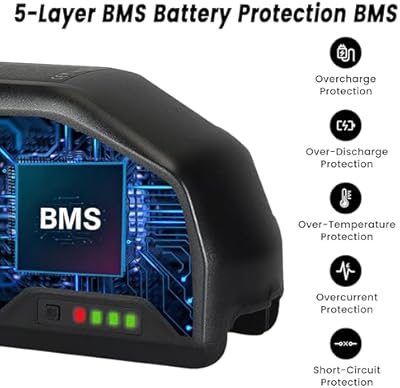
A 40A BMS at 52V supports about 2080 watts steady, which is real headroom for 1500W builds that 30A packs clip on climbs. The XT60 connector matches most aftermarket controllers, including Bafang, Voilamart, and AW kits, so the install is plug-and-play for typical swap setups.
The critical warning matters more than the headroom: a 52V pack on a 48V or 36V controller kills the controller outright with too many volts. Match pack voltage to controller voltage without exception, and check the controller's label before ordering rather than after.
Why the headroom matters in practice: a 1500W motor on a 30A pack draws against the BMS ceiling on every hard climb, and the BMS clips current exactly when the motor asks for most. The ride feels like the battery is dying on hills even at half charge. A 40A ceiling removes that problem entirely for motors up to about 2000 watts steady, so the pack never becomes the limiting factor in the system. For 750W-and-under riders the extra headroom is spare tire rather than a daily tool, and the 21700 voltage hold under load matters more for them. The distinction shapes what you buy: high-power builders are buying the BMS, and moderate-power riders are buying the cells.
The "fast charging" mention in the listing needs decoding too: 6.9 hours on the included 2A charger is standard pace for this capacity, not fast. A bigger charger is an optional extra, and the pack doesn't include one.
The physical footprint deserves a measuring tape before ordering. At about 15 by 3.7 by 3.9 inches, the pack is slightly larger than a typical 20Ah case because the 21700 cells are fatter, and frame mounts sized for 18650-built cases sometimes do not fit the extra width. The weight lands higher too, which is the price of the extra energy in the same space. Riders with bottle-cage mounts or custom trays should measure twice, and swap builders with an open frame have the easiest install path.
Who should buy it, and who should spend differently
Buy it if you run or plan a 52V system, especially a 1000W-plus build that needs the BMS headroom, and you want 21700 chemistry at a price in the cheapest fifth of the table. The honest spec sheet justifies the purchase on its own.
Spend differently if your controller is 48V or 36V, because this pack will destroy it. Spend differently if you need UL certification papers, because this listing claims none. And spend differently if the absolute cheapest watt-hours are the goal, because 18650 packs undercut it on price with older chemistry behind them. The battery table shows the trade live, and our DYMOZYNE 20Ah review covers the 48V alternative in the same price band.
Frequently Asked Questions
How much energy does it really store?
1040Wh on paper, roughly 830 to 880Wh usable. The 1500Wh in the title is false. Even at maximum charge voltage the pack holds at most 1176Wh.
What range should I plan on?
Roughly 42 to 59 miles on pedal assist and 28 to 35 on throttle alone, from about 830 to 880 watt-hours of usable energy.
Can I use it on my 48V bike?
No. A 52V pack on a 48V or 36V controller kills the controller with too many volts. Match voltages first.
Are 21700 cells actually better?
Roughly 35 to 50 percent more energy per cell than typical 18650s, with better voltage hold under load. It's the format the industry is adopting.
Is the 1500-cycle claim believable?
Budget-brand cycle claims deserve doubt, but the 21700 chemistry makes this one more credible than most. Plan on three to five years.