A rear rack basket is really two purchases in one box. The first is the basket, a wire box with a coat of paint. The second is the rack underneath it, with its own hole spacing, its own width, and its own load rating, and the basket has no opinion about any of that until the bolts line up.
The CXWXC aluminium basket makes that second purchase impossible to ignore. The listing's own note asks you to check figure 5 for screw hole dimensions before ordering, and to purchase with caution if your rack's dimensions are not suitable. That is more honesty than most basket pages offer, and the owner record backs the warning up.
Three of the thirteen texts we can read turn on measuring, drilling, or working around the mount.
This review walks through what those owners have actually found, what the clamp hardware is like to live with, how the cover and the net are holding up, and the one failure account sitting in the ratings.
The short version before the detail. The CXWXC sells for 49.98 at check time, which puts it above the middle of the 80 baskets we track on price, and it is the pricier, smaller half of CXWXC's own lineup: the same brand's rear wire basket claims 27.8 liters and sells for less.
What the extra money buys is an aluminium frame instead of coated iron wire, a clamp mount that one owner reports has not shifted in three months of commuting, and hardware that another owner praises bolt by bolt.
What you accept is a fitment problem the listing itself warns about, and one report of the basket rattling apart in use. Measure your rack before you order, and read the middle of this record before you decide.
An aluminium box with a clamp and no load rating
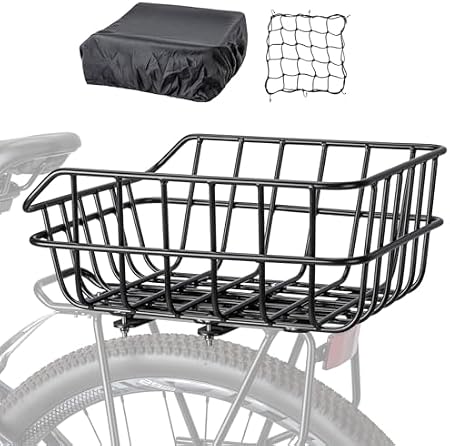
The numbers first. The basket measures 12.6 inches deep, 15.9 inches wide, and 6.9 inches high, and the listing claims 18 liters of capacity at 3.3 pounds. That is a big, shallow tray, wider than it is tall, which is the shape you want for grocery bags and gym duffels and the shape you do not want for an umbrella stand.
Here is what the spec table does not print: a load rating. The listing invites you to carry groceries, backpacks, and parcels, but no figure anywhere states what the basket itself is rated to hold. Compare that with its own sibling, which prints a 5 kilogram rating right in the table.
Your real ceiling here is the rack's, not the basket's, and a typical rear rack is designed and tested to around 25 kilograms, which is why the rack's rating matters more than the basket's.
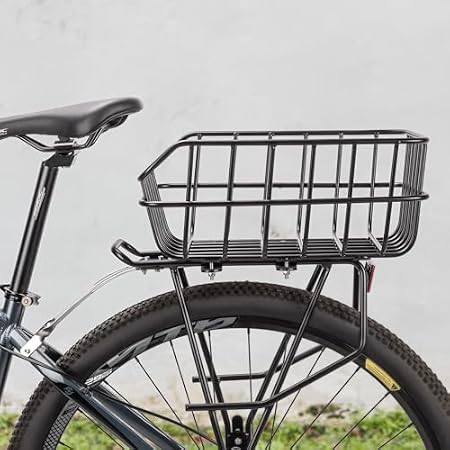
The mount is a clamp. One owner describes it as a friction pinching mechanism and admits it surprised them, then reports it has not moved an inch in three months. The box includes the mounting clips, a waterproof cover, a cargo net, and per one owner an Allen wrench and a small box wrench, so the install needs no trip to the toolbox.
On our basket table the live specs box carries the price and rating as they stand today, because our positions move on every data refresh.
The listing warns you, and the record proves it right
The note about figure 5 is not decoration. A Lectric Experience owner found the basket holes did not quite line up with the rear rack frame, so they drilled the cross bracket holes into elongated slots to let the bolts pass through. After that, they report, the basket secured strongly.
Another owner skipped the drilling entirely: they started a return request, a family member suggested heavy duty zip ties instead, and the basket has since survived store runs and a son taking the ebike off-roading without budging.
The record's most-endorsed text is a measurement caution. It carries more helpful votes than anything else on the page, it awards four stars, and its core complaint is that the owner did not check measurements before ordering, so the walls came up shorter than expected.
The net rescued the groceries anyway. That is the pattern across the whole record: nobody calls the basket flimsy, and three owners describe fitment work they had to do to get there. One daily rider notes multiple brackets on the bottom that suit more than one rack brand, which softens the problem for standard racks and does nothing for odd ones.
The fastener story has two ends
One text in this record describes a failure, and it is worth reading carefully. An owner reports the basket rattled apart and collapsed while in use, with parts lost in the crash, and names the fasteners as the engineering weak point. That is the only failure text among the thirteen this record shows us, it is recent, and it is the kind of report you cannot wave away, because a cargo box that disassembles itself at speed is a hazard no matter how rare.
The rest of the record describes the opposite experience, and it gets specific. One owner praises the clamp bar in detail: thick metal, coated, with a thick rubber layer and nylon lock nuts doing the securing. The three-month commuter's clamp has not moved.
An owner who bought the basket for two different bikes reports complete hardware in both boxes. Nylon lock nuts exist precisely to resist working loose, which makes these two accounts hard to reconcile, and honesty requires holding both. If you buy one, re-check the fasteners after the first few rides, and treat any rattle as a stop-and-tighten signal rather than a quirk to live with.
Covers, nets, and the grid floor
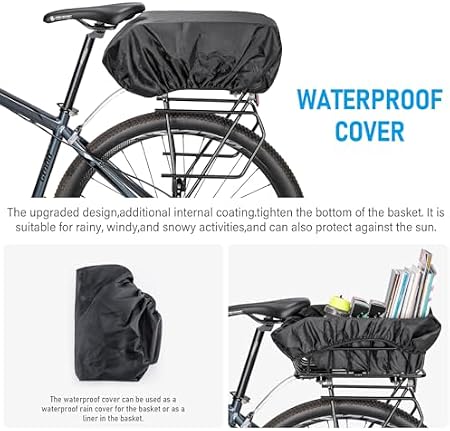
The waterproof cover has a quietly positive record. One commuter reports it has gotten real use over three months. Another, who hauls a trauma kit and supplies, calls it handy.
No text anywhere reports the cover leaking or failing, which is thin evidence but all of it points one way.
The cargo net splits the room. One owner gave up on it, calling it a hassle to get into place, and bought matching black bungees instead. Two other owners credit the bungee net by name, one for keeping a big grocery bag from escaping and one for handling oddly shaped items.
So the net works when you use it, and at least one rider decided bungees were easier and did not look back.
The grid floor itself draws one practical complaint worth planning around: the openings are fairly large, so loose small items need a bag or container rather than the basket floor.
The flip side of that same grid is that air moves through it and rain does not pool, which matters if the basket lives on the bike year round. On corrosion, the record is silent. Nobody reports rust, flaking, or coating failure, which is one better than the sibling's record, where one owner has found a spot after a rain soak.
Who this basket fits
Buy it if your rack is a standard platform with ordinary hole spacing, you want a light aluminium tray with a clean corrosion record so far, and you are the kind of rider who measures before ordering. The install hardware is complete, the clamp holds for commuters, and the cover and net mean you are hauling from day one.
Pass on it in three cases. If capacity per dollar is the goal, the same brand's cheaper sibling claims more volume and prices lower, and our review of that basket covers its own mounting drama in detail. If you want true quick-release removal, neither CXWXC design gives it to you as shipped, and you would be shopping for a MIK-ready system instead.
And if you want a printed load rating to plan around, this listing simply does not provide one, so the decision rests on your rack's plate and your own judgment.
Frequently asked questions
Does the CXWXC basket bolt to the bike or to a rack?
To a rack. The basket clamps to a standard rear rack with the included mounting clips, and the listing's first install bullet assumes a rack is already there. Riders without a rack are shopping for two products, not one.
How much weight can it carry?
The listing never prints a load rating for this basket, so there is no honest number to quote. A typical rear rack is designed and tested for about 25 kilograms, some to 40, and the rack's plate is the limit that governs your groceries. Keep the heavy stuff inside that figure and the basket's aluminium frame is not the weak link.
Will it fit my rack?
Measure first, exactly as the listing's own note tells you. Check the screw hole dimensions in figure 5 against your rack before ordering. Owners have made mismatches work by elongating holes or switching to heavy duty zip ties, but both are workarounds, and one of them cost a return request before it cost a drill.
Is the rain cover actually waterproof?
The record says used and uncomplained-about rather than tested. Two owners report putting it to work, and no text describes it leaking.
Nobody has published a storm test. Treat it as a genuinely useful bonus with a clean but short record.
How does it compare to CXWXC's other rear basket?
The sibling is bigger on paper at 27.8 liters, cheaper, coated iron wire rather than aluminium, and it prints a 5 kilogram load rating this one lacks. It also carries one rust-spot report this record does not. Choose this one for the lighter frame and the coated finish, choose the sibling for volume and price, and read both records before either clicks.