A bike without rack eyelets leaves you choosing between clamp-on hacks and no cargo at all, and the COTOUXKER adjustable rear rack bets everything on the seatpost. It clamps on without drilling, the platform extends and tilts to clear the wheel, and the box includes tie straps and a small wrench.
Twenty-one written owner reports agree on one thing and split on another: installation really is easy, but whether the clamp keeps holding is the question this review turns on.
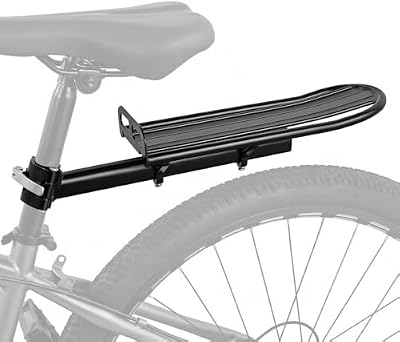
What the COTOUXKER Rack Is
The spec table runs five rows deep, which tells you the listing does most of its talking in bullets.
You get an aluminum platform in black, a stated weight of 1.48 pounds, and a mount the table calls Rear Seat Mount even though every bullet describes a seat post design. That mismatch sounds pedantic until you're shopping, because a rack bolted to frame eyelets and a rack clamped to a round post behave differently under load, and the table row is the only place the listing hedges on which one this is.
Two things the listing never states stand out. There's no load rating anywhere, and there are no platform dimensions, so you're buying an adjustable rack you cannot size on paper.
The bullets fill some of that gap. The clamp takes seat posts up to 32mm across, the platform adjusts for both length and angle, and the box includes tie-down straps plus the mini installation wrench. The dual-support claim, two contact points instead of one, is the closest thing to a structural argument the listing makes.
On our own basket and cargo comparison table this lands among the cheapest listings we track, which is worth knowing before you read the complaints, because some of them read like what you'd expect at this tier.
The Clamp Decides Everything
The text that leads the helpful sort spends most of its words on a defect. Its owner says other buyers report the bracket swinging sideways even when tightened, confirms the same thing happened on his rack, and then documents a fix. He drilled a small hole in the bracket, added a set screw, and reports the rack now holds with no shifting. The metal drilled easily and needed no tapping.
That's a satisfied customer engineering around the rack's weakest part, and the fact that his account sits at the top of the helpful sort tells you how many readers had the same problem.
Four accounts land in four different places after that. One owner fought the tightening until he gave up, watched the rack roll downward no matter what he did, and closed by recommending a pricier rack or a bike shop install. Another, running the rack on a grandson's 20-inch mountain bike, reports it still moves when bumped even with two of the included rubber pads on the post.
A third holds the moderate position, that the rack stays solid as long as you really lean on the tightening.
One shared cause runs under all four. A clamp gripping a round tube has to carry a lever-arm load, and small differences in how hard you clamp decide which side of the line you land on.
The Quick Release Needs a Wrench
Here's the decode the listing buries in its own bullet text. The quick-release clamp structure, the same sentence says, works using the included mini wrench.
In cycling, a quick release means a tool-free skewer you flip open with a lever. This is a bolt clamp with a wrench, and two owners say so from experience. One devoted most of a two-star account to it.
Installing means holding the rack, positioning the bolt washer between two rack parts, and tightening the bolt, which he says takes three hands.
Removal means backing the bolt way off before dozens of turns to refasten it. The other puts it shorter. You have to unscrew the release a lot to separate the halves.
If you plan to leave the rack on permanently, none of this matters, and one of the two even grants a real benefit. The rack rotates on its mount, which helps you position the platform before the bolt goes tight.
But if the quick release is why you're here, because you picture swapping the rack between bikes or pulling it off for a road ride, the record says you'll be carrying a wrench instead.
One consolation for the clamp itself: the rack arrives with rubber pads, per the two owners who mention them, that keep the hardware off your seatpost finish. You can check the current price on Amazon before deciding which tradeoff suits your bike.
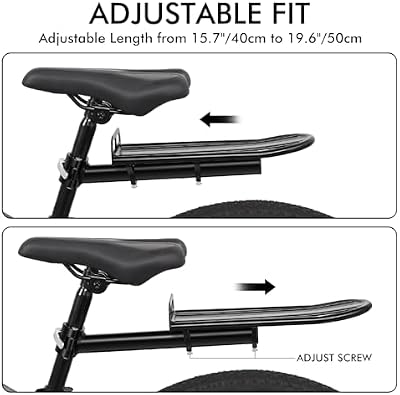
Fit Rules Before You Order
Wikipedia's luggage carrier page, current as of this writing, notes that a style of rack clamps only to the seatpost and needs no eyelets, and it gives the tradeoff in two words: limited capacity (Wikipedia, luggage carrier). The COTOUXKER's complaint record shows what that tradeoff looks like in practice, because almost every fit complaint traces back to how much seatpost your bike exposes.
The clearest rule comes from the owner whose adjustment screws rubbed his rear tire unless the saddle sat way up. His advice: make sure you have more than six inches of exposed post to work with, or the shelf hardware drags on the tire. A second owner puts the same wall a different way, that a small frame can't mount the rack high enough to clear the wheel at all.
The 20-inch-kid's-bike owner had to raise the saddle just to make it fit. Two more report total failures, one clamp that wouldn't go around the post at all and one plain didn't-fit-on-my-bike. Even a successful installer notes the platform angles upward more than he'd like on a standard seatpost.
None of that is a defect in the rack. It's geometry. A seatpost rack hangs everything off the post, so the post height sets the platform height, and if the platform sits low the extended hardware meets the tire.
Measure your exposed seatpost before you order and most of these complaints stop applying to you.
One more fit note, from a happy one. Fully extended, your cargo rides close behind your back. He carries a soft bag and doesn't mind.
A hard box swinging at your hips is a different story, so think about what you'll actually strap down.
Durability and the Verdict
Three of the 21 written reports describe the rack breaking. One took a month.
One made it under six months and failed while its owner was riding, and he adds that he couldn't find a way to contact the seller about a replacement. The third is a single line, mine broke.
Against that, one owner's wording stands out: not metal, only aluminum. Read it as a wish for steel, because aluminum is a metal, and what he's really describing is the thin stamped construction you'd expect at this weight. The rack weighs 1.48 pounds, light enough that a load rating would be welcome, and the listing doesn't give one.
No owner reports hauling anything heavy on it, so the record can't settle the load question either way.
The positives survive scrutiny too. One buyer put racks on two different-style bikes and reports both worked out.
The rubber pads earned specific praise for keeping the clamp off the seatpost finish. Installation speed gets repeated approval, and so does the look. The strapping story is simple: you can strap your items down and they stay.
On our comparison table this sits among the cheapest listings we track, and the record reads like a cheap rack that does its job if two conditions hold. Your seatpost needs the clearance, and your loads need to stay light. If both hold, you get rear cargo capacity on a bike that can't take a bolted rack, for about as little money as the category offers.
If your frame is small or your cargo runs heavy, look instead at a rack-mounted basket like the SAMRELAX on a proper carrier, or go front with the MEEQUE handlebar tote, whose quick release the record actually praises. Riders comparing the whole field should start at the basket and cargo comparison table.
Compare the rest of the category on the full comparison table, or check the current COTOUXKER price on Amazon.
FAQ
Will it fit my bike?
Only if two things are true. Your seatpost has to measure under 32mm across, and you need enough post showing above the frame to mount the platform clear of the rear tire.
One owner's rule of thumb is more than six inches of exposed post. Small-frame bikes are the fit the record rejects most often.
Is the quick release actually quick?
No, and the listing half admits it. The same bullet that promises quick-release operation names the included mini wrench as the tool.
Owners describe dozens of turns to remove and refit the rack. Buy it to leave it on.
How much weight can it carry?
The listing doesn't say, and no owner reports a heavy load. As category context, typical rear racks are designed and tested for about 55 pounds, some to 90, and a seatpost-only clamp design carries a limited capacity by its nature. Treat this as a light-duty errand rack.
What do I do if the clamp slips?
Tighten it harder first, because the moderate records say a firm clamp holds. Use the included rubber pads, which add grip and protect the post. If it still swings, the top helpful report documents the drilled-hole-and-set-screw fix as a five-minute job. If none of that settles it, return it, because one owner's rack rolled downward no matter what he tried.