A UL certification on an ebike battery is an actual statement. It means the battery has been tested by a third-party lab against specific safety standards for lithium cell construction, BMS design, and thermal management. Most batteries sold on Amazon haven't gone through that process. The BSTBAT 52V 25Ah battery carries UL certification, which puts it in a different category from the uncertified options at similar specs. At 1300Wh with a 50A BMS, compatibility across 250W to 1925W motors, and explicit Bafang compatibility, this is a serious high-capacity option for buyers who want certification backing their purchase decision.
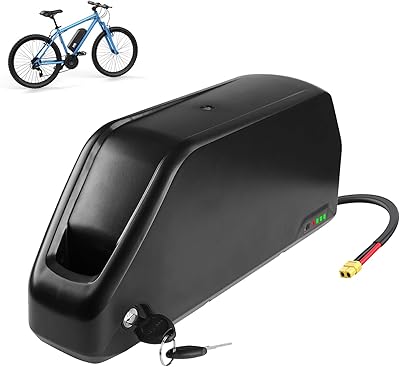
Early Amazon reviews sit at 5 stars on a small sample. The UL certification is the more meaningful signal for a newer listing. Both together make this one of the more carefully evaluated and independently verified options in the 52V high-capacity battery tier currently available on Amazon for conversion builds.
The UL Certification Question
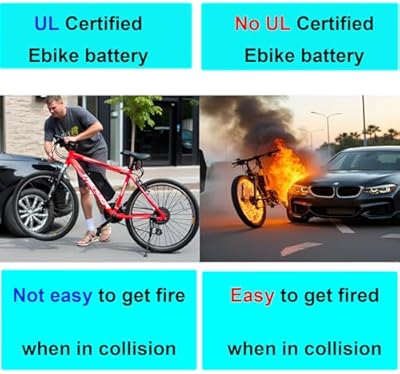
UL (Underwriters Laboratories) certification for lithium batteries means the product has passed specific tests for cell quality, BMS function, charging behavior, temperature management, and failure mode safety. The tests are not trivial and the certification requires ongoing compliance.
For ebike batteries specifically, UL 2849 is the standard for ebike battery packs. A battery carrying this certification has been tested as a complete system rather than just having certified individual cells. This is a meaningful distinction because many battery issues arise from pack construction and BMS design rather than the cells themselves.
Not every buyer needs UL certification. But for riders who are storing their bike indoors, commuting in environments where a battery failure would be particularly problematic, or using the bike in insurance or regulatory contexts where certification matters, UL carries real value beyond marketing language.
The process to obtain UL 2849 certification involves third-party lab testing that the manufacturer pays for and cannot control the outcome of. That financial commitment signals a level of product confidence that is worth noting when comparing against uncertified alternatives at similar prices. The certification is also renewable, meaning products must continue meeting standards over time rather than passing once and coasting on a historical credential.
Specs: 1300Wh, 50A BMS, 52V
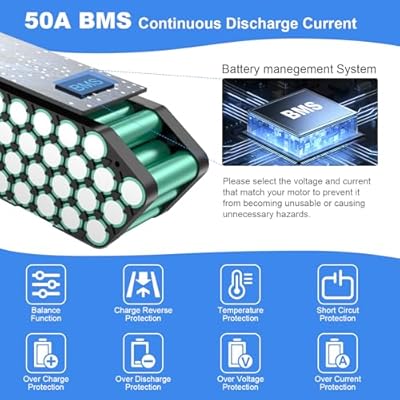
The core specs are strong at this capacity tier. 52V times 25Ah is 1300Wh, which delivers real-world range in the 40 to 65 mile per charge range for most riders on moderate terrain. The 50A BMS at 52V handles 2600W continuous, which gives the 1925W upper motor compatibility about 35 percent overhead. This is not a BMS running near its limits. It is sized appropriately for the power class.
The 250W lower bound on motor compatibility is standard for this BMS size. The explicit Bafang compatibility is worth noting: Bafang is one of the most popular mid-drive kit brands, and a pack specifically called out for Bafang builds is sized for the current draws those motors produce.
52V System Considerations
52V requires 52V-compatible controllers, displays, and motors. Verify your system is 52V before ordering. A 52V battery on a 48V controller will exceed the controller's voltage tolerance and cause damage. If you're building new and choosing between 48V and 52V, the 52V system provides more power at the same current and better motor efficiency at higher speeds.
The 1300Wh capacity at 52V means the pack is physically and mechanically larger and heavier than compact 48V options. Factor the weight into your mounting plan before ordering.
Bafang Compatibility in Practice
Bafang mid-drive kits, particularly the BBS02 and BBSHD, are widely used in conversion builds. BBSHD kits can draw 30-plus amps at maximum assist on steep climbs. The BSTBAT's 50A BMS handles those peak draws with significant headroom, making it a well-matched option for BBSHD builds specifically. The 52V voltage also matches the BBSHD's 52V-compatible operation, delivering slightly more power and speed than the same motor on 48V.
BBS02 builds at 48V don't directly apply here, but the 52V BBS02 variant (where it exists) would also benefit from the 50A BMS overhead.
The Bafang BBSHD at 52V is one of the most common high-power conversion setups in the North American market. A 50A BMS at 52V means this pack is properly matched to run that motor without the BMS becoming the weak link in the build. For BBSHD builders who have had issues with lower-rated BMS cutouts during sustained high-power climbing, the overhead here resolves that problem at the pack level rather than requiring a BMS upgrade later.
Check current pricing and the latest Amazon reviews for updated user feedback.
Who Should Buy This
The BSTBAT 52V 25Ah is for builders who want UL certification backing their high-capacity choice, are running Bafang or other mid-drive kits at 52V in the 250W to 1925W range, and need 1300Wh of long-range capacity. The 50A BMS is appropriately sized for the power class, and the UL certification provides documented safety testing that most competitors don't have.
If you don't need UL certification and are comfortable with uncertified alternatives, the Joyisi 52V 25Ah at similar specs is worth comparing on price. Use the [battery comparison table(/ebike-batteries/) to compare 52V options. And for more reviews in the high-capacity tier, see the ebike battery reviews section.
Browse UL-certified ebike batteries on Amazon to compare options in the certified category.
Frequently Asked Questions
What does the UL certification actually test? UL 2849 for ebike battery packs tests cell quality, BMS function, charging behavior, overcharge and over-discharge protection, short circuit protection, temperature management, and failure mode behavior. The certification requires testing as a complete assembled system, not just individual components.
Is UL certification worth the premium over uncertified packs? For buyers with indoor storage concerns, liability considerations, or regulatory requirements (some workplaces and apartments restrict uncertified lithium storage), UL certification is worth the cost difference. For outdoor storage and less regulated contexts, the practical safety difference is smaller.
What Bafang motors is this compatible with? The BBSHD at 52V is well-matched to the BSTBAT's 50A BMS, which handles the BBSHD's peak current demands with significant overhead. BBS02 at 52V is also compatible. Verify connector type for your specific Bafang kit before ordering.
How does 1300Wh affect real-world range? On a typical 52V system with a mid-drive in PAS 2-3, most riders get 40 to 65 miles per charge. High-power BBSHD use at PAS 5 or throttle will reduce that toward 25 to 35 miles. For extended touring, 1300Wh provides the kind of range buffer that makes long routes feasible on a single charge.
What's the weight of a 25Ah pack? Typical weight for a 52V 25Ah pack is 15 to 20 pounds. This is significant for bike handling and transport. Plan mounting accordingly, preferably at a low center of gravity rather than on a high rear rack.
Does UL certification cover the charger as well? Check the current listing for what's certified. Some packages certify the battery pack only, while others certify the pack and charger together. If the charger is not separately certified, using a non-certified charger is a known risk with lithium packs.